



Cerebral palsy (CP) is often described as trying to navigate a world that is pushing back at you. For many people on the NDIS, everyday life means dealing with stiff muscles and tricky movement hurdles—when even simple, routine tasks can feel like a massive workout. This exertion is not merely physical; it involves managing neurological barriers that can affect a participant’s confidence and their ability to participate in community life.
Without a targeted clinical intervention, these physical barriers can compound over time. When you aren’t able to move as much as you’d like, it can lead to other problems—like nagging pain, joints that feel stuck, or getting winded more easily. These issues make it even harder to do things on your own. But here in Australia, there is a better way to manage your health than just gritting your teeth and getting through the day.
Exercise physiology cerebral palsy NDIS programs are built to help you move from basic rehab to long-term health. By using proven movement techniques, exercise physiology gives both children and adults with CP a clear plan to build strength, move more easily, and enjoy a better quality of life.
The Main Content Body
Understanding the Role of an Accredited Exercise Physiologist (AEP)
Exercise Physiology is an allied health profession where university-qualified professionals—Accredited Exercise Physiologists (AEPs)—prescribe clinical exercise interventions for individuals living with chronic conditions, injuries, or disabilities. Unlike a general personal trainer, an AEP must maintain accreditation with Exercise & Sports Science Australia (ESSA) and possess an in-depth understanding of the complex pathophysiology of neurodevelopmental conditions like cerebral palsy.
For an NDIS participant, exercise physiology is a clinical service that targets both the neurological and musculoskeletal systems. The role of an AEP in disability support is to assess how a participant’s specific presentation of CP—whether it is classified as spastic, dyskinetic, or ataxic—affects their biomechanics. From there, they develop a program that utilises the principles of neuroplasticity and clinical biomechanics to support the body’s ability to coordinate movement more efficiently.
The Distinction: General Fitness vs. Clinical Function
While regular exercise is about getting fit in general, clinical exercise physiology is all about helping you do more in your daily life. For someone with CP, a standard gym workout can actually backfire. If the exercises aren’t tailored to you, they might accidentally teach your body bad habits or put too much strain on muscles that are already tight or stiff. AEPs utilise targeted functional movement training to confirm that every repetition serves a specific clinical goal, such as supporting the ability to stand from a seated position or improving the gait cycle for safer community access.
The NDIS knows that staying active and improving how you move are keys to a better life. That’s why they include Exercise Physiology as a professional health service, usually covered under the “Capacity Building” part of your plan.
Funding Categories
Within an NDIS plan, exercise physiology generally falls under two primary categories:
Improved Health and Wellbeing: This is often utilised for programs focused on cardiovascular health, metabolic regulation, and general physical maintenance to support long-term outcomes.
Improved Daily Living: This category is utilised when clinical intervention is directly linked to supporting a participant’s ability to perform daily tasks and improve their functional independence.
The “Reasonable and Necessary” Framework
To access exercise physiology cerebral palsy NDIS support, the program must meet the NDIS criteria for being “reasonable and necessary.” This means the clinical intervention must be directly related to the participant’s disability, represent value for money, and be likely to contribute to the participant’s stated life goals. AEPs support this process by providing detailed clinical reports that document progress using objective data, such as the Gross Motor Function Measure (GMFM) or timed walking tests.
7 Clinical Benefits of Exercise Physiology for Cerebral Palsy
1. Support for Strength and Muscle Coordination
A primary hallmark of CP is muscle weakness (hypotonia) or excessive tightness (spasticity). Targeted strength and conditioning for CP focuses on balancing these opposing forces. By focusing on underactive muscle groups that support posture and movement, exercise physiology helps create a more stable physical foundation. In a clinical setting, getting stronger isn’t about building huge muscles. It’s actually about muscle coordination—helping your brain and your limbs talk to each other more clearly so your movements feel smoother and more under your control.
2. Mobility Support and Gait Training
Mobility is a cornerstone of functional freedom. Through functional movement training, exercise physiologists work on the specific mechanics of walking, transferring, or navigating stairs. By breaking these complex movements into smaller, manageable clinical components, participants can observe a tangible mobility improvement. This direct translation from a clinical exercise to a real-world task is what makes EP a vital component of a participant’s NDIS support team.
3. Support for Balance and Postural Stability
For many people with cerebral palsy, falling is a constant worry. Issues with balance or a weak core can make walking on uneven ground feel like a real challenge. Exercise physiology uses “proprioceptive training”—basically, practice for your body’s internal GPS—to help you get better at sensing where your limbs are and how to stay steady on your feet. This clinical focus leads to greater stability and helps manage the risk of fall-related injuries, helping participants explore their environments with increased confidence.
Looking to Support Your Strength and Mobility? Take the first step toward supporting your physical goals and functional capacity. Our qualified professionals are ready to help you navigate your NDIS goals with a personalised clinical program.
[Request Your NDIS Exercise Physiology Clinical Assessment]
4. Supporting Independence in Daily Living
When movement becomes more efficient and strength increases, the requirement for constant physical assistance may decrease. This is where independence in daily living is supported. Whether it is the ability to dress with less assistance, prepare a meal, or navigate a workplace, the physical gains made in a clinical environment translate into greater self-reliance. For many NDIS participants, the goal is to move from being a recipient of care to an active participant in their own life.
5. Management of Fatigue and Aerobic Endurance
Moving with CP requires significantly more metabolic energy than it does for a non-disabled person. This often leads to fatigue cycles, where a participant may lack the energy to engage in social or physical activities. Exercise physiologists design cardiovascular and metabolic conditioning programs that support the body’s efficiency. By improving aerobic capacity, participants may find they have more fuel in the tank at the end of the day, enabling greater community participation.
6. Preventive Management of Secondary Complications
While the initial brain injury in CP is non-progressive, the secondary effects on the musculoskeletal system can evolve over time. Chronic muscle tightness can contribute to joint misalignment, discomfort, and gradual loss of mobility. A consistent exercise physiology cerebral palsy NDIS plan acts as a preventative approach. By maintaining joint range of motion and bone mineral density through weight-bearing exercises, participants can support better long-term health outcomes and potentially reduce the requirement for invasive interventions later in life.
7. Contributing to Confidence and Quality of Life
The relationship between physical autonomy and mental health is well-documented. When you finally perform a physical task that used to feel impossible, it gives you a huge boost in confidence. That progress in the clinic often acts like a spark, giving you the push to try new hobbies, head back to school, or spend more time with friends. At the end of the day, feeling better physically is the foundation for a much happier and more active life.
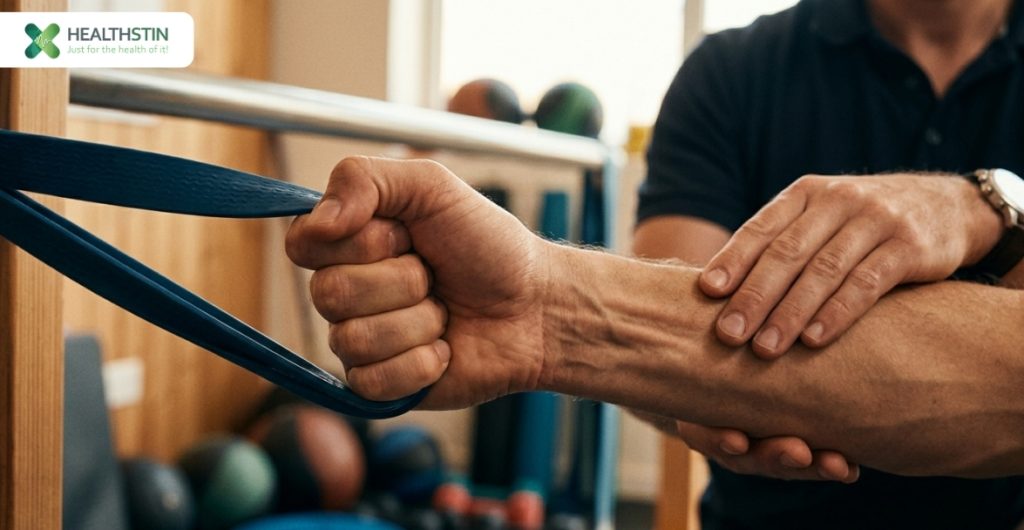
The Multi-Disciplinary Model: Exercise Physiology vs. Physiotherapy
A common question for NDIS participants is: “Do I need a Physio or an EP?” In the context of cerebral palsy, these two professions often work in a “Synergy” model to provide holistic care.
| Feature | Physiotherapy | Exercise Physiology |
| Primary Focus | Acute management, assessment, and manual therapy. | Chronic management and functional progression. |
| Core Methods | Manual techniques, joint mobilisation, and initial rehab. | Clinical exercise, strength conditioning, and lifestyle habits. |
| Clinical Goal | Managing discomfort and restoring basic movement. | Supporting long-term function and independence. |
While a Physiotherapist may work on managing a specific acute issue or providing manual support for spasticity, an Exercise Physiologist takes those improvements and integrates them into the participant’s lifestyle through movement. They collaborate within an allied health model to confirm the participant moves from a stage of recovery to a stage of peak functional performance.
What to Expect from a Healthstin Clinical Program
At Healthstin, our approach to exercise physiology cerebral palsy NDIS support is based on a structured clinical pathway:
Initial Clinical Assessment: We begin by reviewing your history, current physical capacity, and your NDIS goals. This assessment involves objective measurements to create a baseline for your progress
Goal Setting: We define success based on your requirements. Whether it is walking a certain distance or sitting without support, we set measurable milestones.
Personalised Clinical Plan: Your AEP will design a program that addresses your specific type of CP, focusing on the core pillars of strength, coordination, and mobility.
Aquatic and Land-Based Integration: Depending on your needs, we may utilise our dedicated hydrotherapy pools, our inclusive gym facilities, or a combination of both to support your progress.
Ongoing Progress Tracking: We utilise tools like the MyHealthPal app to provide exercise videos for home use and to track your data. We provide the regular reports required for NDIS plan reviews to support your ongoing funding requirements.
Frequently Asked Questions
Does the NDIS cover exercise physiology?
Yes, provided it is deemed “reasonable and necessary” to support your plan goals. It is generally funded under the Capacity Building budget.
How often should clinical sessions occur?
Every participant is different. Most participants experience consistent progress with one to two sessions per week, though your AEP will recommend a frequency based on your clinical assessment.
Is clinical movement suitable for all ages?
Yes. We tailor our programs for all life stages, from early intervention for children to support seniors living with CP to maintain functional independence.
Do I need a doctor’s referral to start?
If you are an NDIS participant, you can contact us directly to begin the intake process. While a GP referral is not always required for NDIS funding, having your medical history can support a more comprehensive assessment.
Can these sessions be conducted at home?
Yes. Healthstin offers mobile services, allowing you to work on “independence in daily living” within the environment where you actually live and work.
Supporting Strength, Mobility, and Independence
Cerebral palsy presents specific challenges, but it does not define a person’s potential for movement. With the right clinical support, it is possible to navigate physical barriers and work toward goals that support a more active, self-reliant life. At Healthstin, we are dedicated to helping NDIS participants turn their clinical goals into functional realities.
Are you ready to see how a targeted clinical program can support your requirements? Contact Healthstin today to book your initial clinical assessment at one of our dedicated facilities or in the comfort of your own home.
How would you like to prioritise your initial clinical goals—focusing first on mobility for community access or on building the foundational strength needed for daily tasks at home?
Schedule a Consultation with Healthstin Allied Health Today
The journey toward improved mobility starts with a single conversation. If you are ready to see how a structured, professional treatment plan can support you or your loved one, we are ready to help.
Contact Healthstin today to book your initial NDIS assessment and take a proactive step toward your physical future.
Healthstin provides exercise programs for participants with cerebral palsy across multiple states in Australia.
- Sans Souci, NSW – Supporting southern Sydney residents
- Hurstville, New South Wales (NSW) – Conveniently located for serving the St George community
- Salisbury & Elizabeth, South Australia (SA) – Accessible for Adelaide’s northern suburbs
- Brimbank & Melton, Victoria (VIC) – Supporting communities in Melbourne’s west
- Belmont, Western Australia (WA) – Expanding to meet growing local demand
Our team can deliver therapy in our clinics or within the community.
Know Someone Who Could Benefit Our Services?
Help someone take the first step. If you know a friend, a former subbie, or a loved one who is struggling to stay active or feeling socially isolated, we make the referral process simple. Whether they need physiotherapy for cerebral palsy, we’ll help them navigate the D904 or NDIS requirements with ease.
Refer Someone Today and help them start their path to better health and independence.
Get accredited Exercise Physiology, Physiotherapy, and Hydrotherapy support at Healthstin
Make the most of your NDIS funding with Healthstin’s personalised physiotherapy and exercise physiology services. Our team helps you build strength, improve mobility, and maintain your independence—right in your home or at our clinic.
Call 1300 090 931, request a callback, or submit a referral form today to get started. Whether you’re a client, family member, or care manager, our referral process is quick and easy, helping you access the right services without delay.
*Disclaimer: The information provided in this guide is for general educational purposes only and is not a substitute for personalised advice. NDIS services may vary based on your individual assessment and care plan. For accurate guidance about what you can spend your funding on, please contact your care manager or authorised aged care provider.





