


It’s an interesting fact to note that at present, over a million Australians aged 15 and up are actively practising yoga. That’s a figure which is ahead of other popular lifestyle pursuits such as tennis, soccer, and golf. And that number is on the rise. For a practise that’s been around for ages, that’s saying a lot about yoga’s popularity. Considering the many benefits that yoga confers to the people who practise this blend of art and science, it’s not really surprising why.
What is Yoga?
The term yoga is actually an umbrella name for a variety of practices that range from the really challenging types such as vinyasa and ashtanga, to the gentler and more calming yin and restorative yoga. Regardless of the type of yoga you decide to practise, you may be able to reap the many benefits it is known for – enhanced flexibility, improved balance, and boosted strength as well as support in reducing your levels of stress, blood pressure, and pain.

Yoga for people with disabilities
Yoga is a practice that can benefit everybody, regardless of age. You can never be too young or too old to reap the benefits of practising it. But what if you’re diagnosed with a disability? Experiencing mobility issues? Or suffering from a disease that’s causing chronic pain or inflammation?
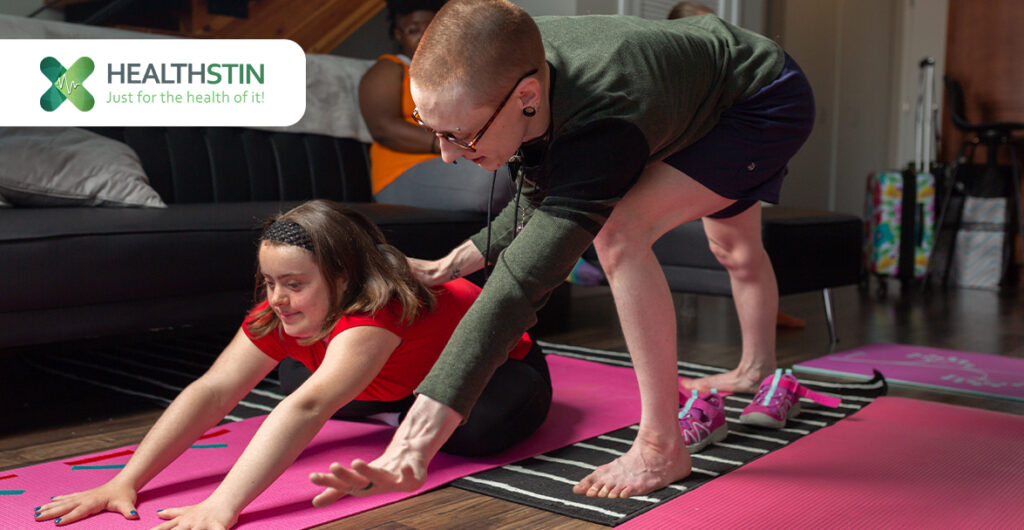
Enter the concept of adaptive yoga. By itself, the philosophy behind the practice of yoga is about meeting the students where they are. In a sense, all yoga practices are adaptive in nature as each individual will execute a pose or asana a bit differently. Adaptive yoga then is about modifying traditional yoga poses according to the body of the one practising it through the use of breathing as well as props that include chairs, blankets, straps, and blocks. The purpose is to adapt the asana to the individual’s unique abilities and needs. This is aimed at creating an inclusive environment that accommodates people with differing physical or cognitive limitations.
In adaptive yoga, the yoga teacher not only adapts the movement, poses, equipment, and props used but also the method by which the class is taught. It’s about customising the aspects of the practice to fit the participant or student, the opposite of a one-size-fits-all methodology where the student has to conform to the teacher, the poses, and the equipment. The bottom line is to make yoga accessible to all, including people who have disabilities or mobility issues that may otherwise keep them from practising yoga at all.
How beneficial is adaptive yoga for people with disabilities?
Modifying the traditional yoga poses to suit the needs and challenges of people living with disabilities offer a lot of significant benefits. These include the following:
- Adaptive yoga may help improve one’s body awareness, balance, and motor skills which in turn, can lead to overall physical fitness and reduce the risks of falls and injuries. It may also promote a better mind-body-breath connection and sharpen one’s capability to focus.
- Yoga can help boost your body’s strength. By utilizing your bodyweight in lieu of free weights or machines, your muscles are challenged and become stronger.
- If you’re seeking to improve your flexibility, yoga is a good way to do so. Yoga not only strengthens but also lengthens your muscles through a fuller range of motion. You not only stand to get stronger but also more nimble in the process.
- Suffering from aches and chronic pain? Practising yoga may help improve blood circulation, release excessive muscle tension, and promote proper body alignment. In the process, this may help alleviate your aches and pains.
- If you want to lift your mood or relieve stress and anxiety, yoga may be of help. Yoga helps increase the production of serotonin, the hormone that is said to affect the mood, among many other benefits.
- Practising adaptive yoga may lessen the severity of the symptoms of neuromuscular conditions such as Multiple Sclerosis (MS). Though it is not a cure, yoga may help people living with disabilities gain improved strength and flexibility as well as develop coping skills to deal with the symptoms better.
- Joining an adaptive yoga class may also provide increased social interaction and connection with people whose experiences parallel your own. It can boost your sense of belonging to a community who shares your experiences and understands what it takes to live with a disability or mobility issue.
Is adaptive yoga the best yoga for older adults, too?
Adaptive yoga can also be beneficial to older adults who may want a gentler practice adapted to their own mobility issues and health challenges. The thing to remember is that yoga’s benefits will be different for every individual, depending on their specific health condition. As with taking up a new regimen of exercise, it is highly recommended that you first consult a health professional who can assess and recommend if adaptive yoga is suitable to your needs, goals, and condition.
Yoga as a restorative practice stands to benefit a lot of people. With adaptive yoga, the health benefits of yoga can extend to individuals who are living with disabilities or mobility issues and who may otherwise be unable to perform traditional yoga poses. Aside from the physical benefits that yoga offers, it may also be very supportive of one’s mental health, helping ward off the symptoms of stress, anxiety, and depression. Getting into adaptive yoga can be instrumental to reaching one’s health and well-being goals.
At Healthstin, you can consult our Exercise Physiologists, Physiotherapists, and Occupational Therapists in our Allied Health clinics, including the one in Elizabeth, to determine if incorporating adaptive yoga into your treatment program will be well-suited to your particular needs and goals. To know if joining a class in adaptive yoga in Elizabeth, SA or your location can be beneficial to you, get in touch with our Allied Health experts at 1300 090 931.
If you liked this post or found the information useful, we have more in store for you. Just follow us on Facebook and Instagram for more relevant health tips and information.





