Finding the right therapy or recovery service can feel overwhelming when you are already dealing with a health condition, a disability, or caring for someone you love. Australia offers many options—including hospital programs, private clinics, community services, and NDIS-registered providers—and each one has its own rules for getting a referral, joining a waitlist, and figuring out payments.
With so many choices out there and so much on the line, picking the wrong support team can lead to stalled progress, wasted funding, or months spent on a program that simply does not fit your goals. Many families do not realise how differently providers operate until they have already jumped in—and by that point, switching feels like having to start all over again.
Understanding what disability rehabilitation actually involves, who delivers it, and how it is funded makes the decision far more manageable. This guide walks through the main “rehabilitation providers Australia” offers, the allied health professionals you might work with, and what to ask before you commit, so you can find “rehabilitation services for people with disabilities” that fit your goals and your funding.
What Is Disability Rehabilitation?
Disability rehabilitation is the ongoing process of building, restoring, or maintaining the physical, cognitive, and daily living skills a person needs to live as independently as possible. Rather than a single treatment, it’s usually a mix of therapies, equipment, and support delivered over months or years, adjusted as goals and circumstances change.
The goal is not to “fix” a disability. Instead, it is about helping someone move, communicate, take care of themselves, and take part in everyday life with as much independence and personal choice as possible. For some people, that means rebuilding your strength and skills after an injury or stroke. For others—especially those with lifelong or changing health conditions—it is about learning new ways of doing things, adjusting your daily routines, and staying as strong and healthy as you can.
Good rehab is all about your personal goals. Your therapist starts by asking what you want to achieve—like walking to the mailbox on your own, getting back to work, or joining a local club—and builds a plan to get you there.
Most rehab follows a simple four-step path: an initial check-up, setting your goals, doing the actual therapy, and a review to see what’s working and what needs tweaking. How long each step takes depends entirely on you, your condition, and your budget or insurance.
Why Rehabilitation Is Important for People Living with Disabilities
Rehabilitation touches far more than the physical body. For people living with disabilities, consistent allied health support can change what an ordinary week looks like, in five key ways.
Improving Mobility
Families usually want to focus on movement first. Therapists can help build your strength, balance, and coordination—whether that means walking farther, moving safely from a bed to a chair, or pushing a wheelchair with less shoulder strain.
Enhancing Daily Living Skills
Getting dressed, cooking, or managing medication can take far more energy when a disability is involved. Exercise physiologists focus on breaking these daily tasks down and finding easier, safer ways to do them, sometimes with assistive equipment, sometimes just with a different technique.
Supporting Community Participation
When your mobility or confidence goes down, it is very easy to end up feeling isolated. Therapy that includes practicing out in the real world—rather than just working out in a clinic gym—can help you feel ready to catch public transport, visit friends, or get back to hobbies you enjoy.
Increasing Independence
“Functional independence” is often the main goal behind all the others: needing less help from other people with daily tasks, and having more control over how your day goes. Even small, steady improvements in strength or confidence can add up to real independence over time.
Improving Quality of Life
Getting stronger physically can improve other areas of your life, too. When your body works better, it often leads to better sleep, an improved mood, stronger connections with friends and family, and a greater sense of control over your day. For many people, therapy stops being about just working on one specific physical goal and turns into feeling like yourself again.
Types of Rehabilitation Providers in Australia
“Rehabilitation providers Australia”-wide fall into a few broad categories, from hospital teams to “NDIS rehabilitation providers” working in the community, and most people accessing “disability rehabilitation services” end up using more than one over time.
Community-Based Rehabilitation Providers
These providers deliver therapy right in your home, at a local clinic, or out in the community—like at a public pool or local gym—rather than inside a hospital ward. “Community rehabilitation” tends to suit people working toward everyday, real-world goals rather than acute recovery.
Hospital Rehabilitation Services
Hospital-based recovery programs usually start after a major medical event, like a stroke, surgery, or spinal injury. These programs are run by hospital teams—either while you are staying in the hospital or visiting for appointments. They are usually short-term and focus on getting you medically stable so you can safely leave the hospital.
Private Allied Health Providers
You can also find physiotherapy, exercise physiology, and other allied health support outside of public hospitals. These private options usually have shorter waitlists and give you more freedom to choose when, where, and who you see.
NDIS Registered Providers
NDIS-registered providers have met the NDIS Quality and Safeguards Commission‘s requirements to deliver funded supports, including specific quality and safety checks. Depending on how your plan is managed, self-managed and plan-managed participants can often also use unregistered providers, while agency-managed plans generally require registered ones. Registration status isn’t a guarantee of clinical quality on its own, but it does confirm a provider has met a baseline set of compliance requirements.
Telehealth Rehabilitation Services
Telehealth appointments let you see a physiotherapist or exercise physiologist by video call, which can cut down on travel for people in regional areas or those who find getting to a clinic difficult. Many programs mix telehealth check-ins with in-person sessions.
Allied Health Professionals Involved in Rehabilitation
“Allied health rehabilitation Australia”-wide typically involves several professions working together rather than one clinician managing everything alone.
Physiotherapists
Physiotherapists look at how your body moves and create programs to help you get stronger, move easier, and manage pain. A typical session might include hands-on muscle or joint care, a custom exercise routine to do at home, or practicing how to do everyday movements safely—like getting up out of a chair without hurting yourself.
Exercise Physiologists
“Exercise physiology” focuses on structured, medically guided exercise programs designed for people managing a disability or a long-term health condition. These sessions are usually longer-term than regular physiotherapy and focus on building your body’s overall strength and capacity—whether that means improving your heart health, building muscle, or mastering the specific movements you need to handle daily tasks on your own.
Multidisciplinary Care Teams
Multidisciplinary rehabilitation” works best when all these different professionals actually talk to each other. In practice, that means they share their notes, meet regularly to discuss your progress, and update your plan whenever someone notices a change—such as a physiotherapist spotting a new balance issue that changes how an exercise physiologists needs to check your home for safety.
Looking for a Rehabilitation Team That Understands Your Goals?
If stiff joints, fatigue, balance problems, or simply not knowing which service to call first are getting in the way, you’re not alone, and you don’t have to work it out by yourself. Healthstin’s physiotherapy, exercise physiology, and hydrotherapy teams work with NDIS participants, DVA clients, and aged care recipients across Australia, in the home, in the community, or at one of our clinics.
A free 30-minute chat is a zero-pressure way to talk about your situation before making any commitments. We will ask about your goals, the support you already have, and how your funding works, and then explain what working with us on a rehab program would actually look like.
Book your free 30-minute consultation online, or call our team on 1300 090 931 to ask a question first.
Conditions Commonly Supported Through Rehabilitation Services
Rehabilitation looks different depending on the condition involved. Here’s a general guide to what support commonly looks like across some of the conditions we’re asked about most, though every program should be built around your own assessment rather than a standard template.
Cerebral Palsy
People with cerebral palsy often work with physiotherapists and exercise physiologists to help with strength, movement, and muscle tightness, alongside support for daily tasks and equipment. This care usually continues throughout life, changing as your needs shift with age.
Stroke
After a stroke, recovery is usually all about helping you rebuild your movement, coordination, and confidence with daily tasks. This kind of care is generally at its most intense during the first few months after a stroke, and then shifts into a steadier, more gradual pace to help you hold onto those gains over the long term.
Multiple Sclerosis
“Neurological rehabilitation” for multiple sclerosis tends to focus on managing fatigue, maintaining strength and mobility, and adapting as symptoms fluctuate, since MS can present differently from one flare to the next.
Parkinson’s Disease
“Exercise physiology” and physiotherapy programs for Parkinson’s disease often emphasise balance, gait, and functional strength, with exercise increasingly recognised as a meaningful part of ongoing management alongside medical care.
Intellectual Disability
For people with an intellectual disability, rehab support is usually all about building confidence in new places, taking part in the community, and mastering everyday life skills. This kind of support is typically provided side-by-side with daily care workers to help you feel more comfortable and independent.
Spinal Cord Injury
Spinal cord injury recovery usually starts with an intensive early phase focused on building independence and finding the right equipment. This is followed by longer-term physiotherapy and exercise physiology support to help you stay strong, prevent secondary health issues, and get out and about in your community.
Acquired Brain Injury
Recovering from an acquired brain injury is rarely a straight line. Therapy usually combines physical therapy, and structured exercise programs, and the plan is adjusted regularly as your thinking skills and physical needs become clearer over time.
Musculoskeletal Conditions
Muscle and joint issues—like long-term pain, arthritis, and recovering from surgery—are usually helped by physiotherapy and exercise physiology. These programs focus on movement, building strength, and finding ways to manage pain.
These are just a few of the more common situations people ask about, but therapy support isn’t limited to a set list of conditions. If you aren’t sure whether your situation fits, most providers are happy to chat with you about it, no matter what your diagnosis is.
How Rehabilitation Services Are Funded in Australia
“Rehabilitation providers Australia”-wide funding can be confusing for families weighing up their options. Here’s a general overview of the main pathways, though eligibility and coverage always depend on your individual assessment. Many people also combine more than one funding source over time, for example, using NDIS supports for disability-related therapy while claiming a separate Medicare rebate for an unrelated condition.
NDIS Funding
For NDIS participants, allied health rehabilitation is usually funded under Capacity Building supports and must meet the NDIS test of being “reasonable and necessary”: related to your disability, good value, and likely to help you reach your stated goals. The NDIS is progressively rolling out changes through 2026 and beyond, including new functional capacity assessments, so it’s worth checking your current plan rules with your planner or support coordinator.
Support at Home
Home Care Packages have been replaced by the Support at Home program since November 2025, though many people still search using the old name. Clinical allied health services like physiotherapy and exercise physiology are generally funded in full under Support at Home, based on what’s identified in your aged care assessment.
DVA Rehabilitation Services
If you have a DVA Gold Card, you can usually get allied health and recovery services for any health need your provider checks and agrees you need. If you have a White Card, the treatment must be directly linked to an accepted service-related condition.
Medical equipment and aids are usually provided through the Rehabilitation Appliances Program. Because there are specific rules about doctor referrals and treatment limits, it is always a good idea to check the details with DVA or your provider before booking your first appointment.
Medicare Programs
Medicare’s Chronic Disease Management arrangements can provide a limited number of subsidised allied health visits each year for people with a chronic condition, arranged through a GP management plan. This won’t cover an entire rehabilitation program, but it can help offset some of the cost.
Private Health Insurance
Many private health insurance plans offer rebates for physiotherapy, exercise physiology, and other health services if you have “extras” cover. However, the exact amount you get back depends on your specific policy and your yearly limits. It is always a smart idea to call your insurance provider before you start a program so you know upfront how much you will have to pay out of pocket.
Funding at a Glance
| Funding Type | Typically Covers | Who’s Generally Eligible |
| NDIS | Allied health under Capacity Building, if “reasonable and necessary” | NDIS participants with an approved plan |
| Home Care Package (now Support at Home) | Clinical allied health identified in your aged care assessment | Older Australians assessed as needing home support |
| DVA | Allied health rehabilitation and equipment via the Rehabilitation Appliances Program | Gold and White Card holders (per card conditions) |
| Medicare | A limited number of subsidised allied health visits per year | People with a chronic condition and a GP management plan |
| Private Health Insurance | Partial rebates on allied health, per policy | Extras policyholders, subject to annual limits |
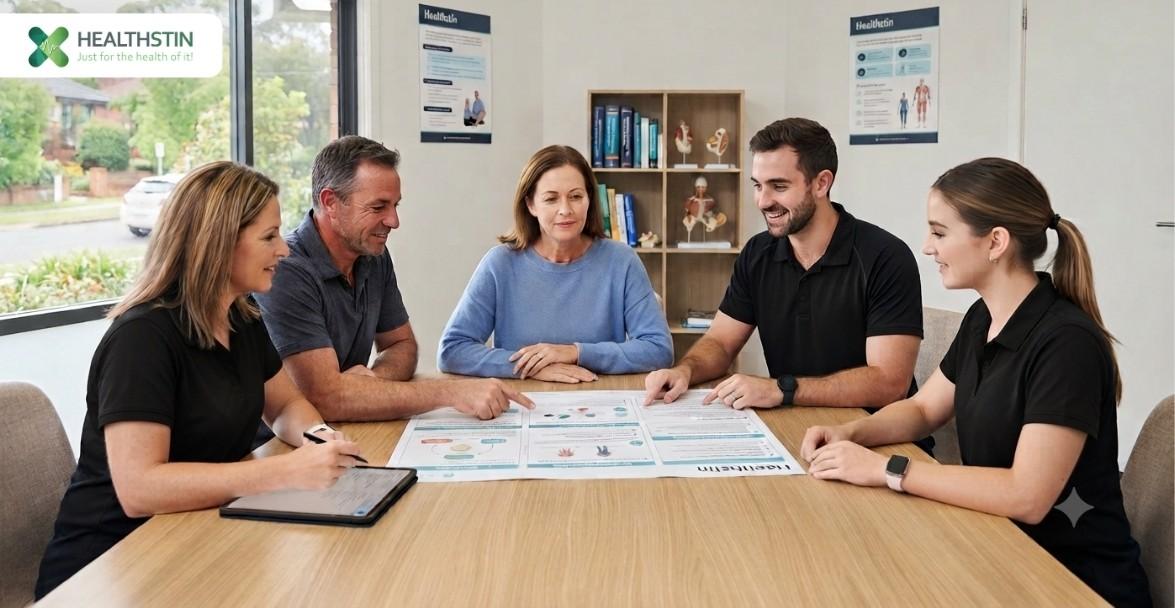
How to Choose the Right Rehabilitation Provider
“Rehabilitation providers Australia” offers can be narrowed down quickly once you know what to actually look for. These six factors tend to matter most.
Experience Supporting Your Condition
Ask how much recent experience a provider has with your specific condition or disability, not just disability rehabilitation in general. A team that’s worked with cerebral palsy, stroke, or spinal cord injury regularly will usually move faster in understanding your situation.
Multidisciplinary Team Access
Check if services like physiotherapy and exercise physiology are all offered under one roof or through a coordinated network. This saves you from having to manage several separate providers and having to repeat your story to a brand-new person every time.
Flexible Service Delivery Options
Whether a provider offers visits to your home, group sessions in the community, appointments at a clinic, or telehealth video calls can make a big difference. Having a genuine mix of options gives you more control over how your therapy fits around your work, school, or caring responsibilities.
Goal-Focused Rehabilitation Plans
A good provider builds a plan around what matters most to you, rather than using a one-size-fits-all template. They will also check in on those goals and update your plan as your situation changes, instead of keeping you on the exact same routine forever.
Reporting and Outcome Tracking
Ask how they track and report your progress. The reports should be useful for you and, if applicable, for your NDIS or DVA plan reviews. Clear reporting also makes it much easier to see whether your therapy is actually working.
Participant-Centred Care
Participant-centred care means decisions are made with you, not just for you, considering your needs, culture, preferences, and communication needs throughout the process.
Provider Comparison Checklist
| What to Check | Why It Matters |
| Recent experience with your condition | Familiarity can mean a faster, more relevant assessment |
| Access to multiple disciplines | Fewer handoffs and repeated intake conversations |
| Home, community, clinic, and telehealth options | Fits therapy around your life, not the other way around |
| Clear, personalised goal-setting | A plan built around your priorities, not a template |
| Regular progress reporting | Useful for you and for NDIS, DVA, or aged care reviews |
| Participant-centred communication | Decisions made with you, respecting your preferences and culture |
Questions to Ask Before Choosing a Rehabilitation Provider
A short conversation before you commit can save months of mismatch later. Consider asking:
- What experience do you have with my condition? Recent, relevant experience often means a faster, more accurate assessment.
- Can services be delivered at home? This is a great option if getting to a clinic is hard due to travel, fatigue, or distance.
- How do you measure progress? Look for clear, specific answers instead of vague promises.
- Do you provide NDIS reports? This is crucial if you need official paperwork for your plan reviews.
- How often will progress be reviewed? Regular reviews help catch any issues early on and let you see when treatment is working well.
Why Community-Based Rehabilitation Is Becoming More Popular
“Community rehabilitation”, therapy delivered at home or in everyday settings rather than only in a clinic, has grown steadily across Australia. A few reasons come up again and again:
- Real-world relevance: practising a task in your own kitchen or street tends to translate better than practising in a gym alone.
- Convenience: fewer appointments missed to travel time or transport costs.
- Engagement: some participants focus better and feel more comfortable in familiar surroundings.
- Family involvement: carers and family members can take part in sessions and learn how to support progress between visits.
- Less travel burden: particularly valuable for people with fatigue, mobility limitations, or those in regional areas.
Community-based care isn’t always the right fit. Some conditions and recovery stages still call for the equipment, monitoring, or intensity of a clinic or hospital setting. Many people move between the two as their needs change.
Why Choose Healthstin as Your Rehabilitation Provider?
Healthstin supports NDIS participants, DVA clients, and older adults needing aged care right across Australia. What that looks like in practice:
- National service delivery across multiple states, not just a single local clinic
- Experience working within NDIS, DVA, and aged care funding rules
- Home, community, clinic, and telehealth options, so you’re not locked into one format
- “Multidisciplinary rehabilitation” programs spanning physiotherapy, “exercise physiology”, hydrotherapy, and coordinated allied health support
- Personalised goal-setting built around what matters to you, not a standard template
- Regular reporting so you and your funding body can see how a program is tracking
Exact services and disciplines available can vary by location. Our team can confirm what’s available in your area during a free consultation.
Frequently Asked Questions
What does a rehabilitation provider do?
A rehabilitation provider assesses your current function, sets goals with you, and delivers therapy, most often physiotherapy, “exercise physiology”, to help you move, self-care, and take part in daily life as independently as possible.
What rehabilitation services are covered by the NDIS?
Allied health rehabilitation is typically funded under Capacity Building supports if it’s assessed as reasonable and necessary for your goals. Exact coverage depends on your individual plan.
How do I choose a rehabilitation provider?
Check how much experience the team has with your specific health condition, which types of therapy they offer, how flexible they are with where sessions take place, and how clearly they report on your improvements. Asking a few direct questions right from the start usually tells you a lot about what to expect.
Can rehabilitation improve independence?
For many people, yes, therapy can help you make real gains in your movement, everyday skills, and confidence. However, your progress depends on your unique situation, your condition, and sticking consistently with your program. Because everyone is different, results can vary and are never guaranteed.
What allied health professionals are involved in rehabilitation?
Most rehabilitation teams include some combination of physiotherapists and exercise physiologists often working together as a multidisciplinary team rather than in isolation. Which professionals you actually need depends on your goals and your condition, so it’s worth discussing this at your first assessment.
Are home-based rehabilitation services available?
Yes. Many providers—including Healthstin—offer home visits alongside clinic appointments, group sessions in the community, and telehealth calls, depending on where you live and what you need. Having therapy at home can be especially helpful because you get to build and practice your skills right in the exact environment where you will actually use them every day.
Take the Next Step Towards Greater Independence
Rehabilitation is about more than recovery. It’s about helping people achieve meaningful goals, build independence, and improve quality of life through personalised, evidence-based support. Whether you’re just starting to explore your options or ready to change providers, understanding the landscape of “rehabilitation providers Australia” offers, and the “disability support services” that sit alongside them, is the first real step.
Achieve Greater Independence with Personalised Rehabilitation Support
Finding the right therapy program can help you walk further with less pain, handle your daily chores with less help, or just feel more confident getting through your week. None of that happens by accident—it comes from having a plan built specifically around your goals and your life.
Booking an assessment with Healthstin starts with a conversation about where you’re at now and where you’d like to be. From there, we build a rehabilitation plan around your goals, your funding, and the disciplines that make sense for your situation, whether that’s physiotherapy, “exercise physiology”, hydrotherapy, or a coordinated mix.
Book an assessment online, or get in touch if you’d like to talk it through first.
Disclaimer
This article is general information only and doesn’t replace personalised medical, clinical, or financial advice. Rehabilitation needs, funding rules, and eligibility criteria for the NDIS, Home Care Package/Support at Home, DVA, and Medicare change over time and vary by individual circumstances. For advice specific to your situation, speak with your GP, treating clinician, support coordinator, plan manager, or the relevant government agency (NDIS, My Aged Care, or DVA) directly, or check Healthdirect Australia for general health information.