Many families and participants find it overwhelming to choose the right NDIS cerebral palsy support services in Adelaide. With so many therapy options, such as physiotherapy and occupational therapy, it can be hard to know which will best support mobility and long-term independence.
NDIS cerebral palsy exercise physiology is becoming a valuable option for people with CP in Adelaide. A skilled NDIS exercise physiologist can create movement and strength programmes that help improve daily function and overall health. This guide explains how exercise physiology supports cerebral palsy rehabilitation in Adelaide and offers tips on choosing the right provider.
What Support Services Are Available for Cerebral Palsy Under NDIS?
The NDIS funds various therapies that help people with cerebral palsy move more easily, become more independent, and manage daily tasks. Many disability services in Adelaide under NDIS work together to help participants build strength and feel more confident in everyday activities.
Below are some of the most common CP therapy services in Adelaide that you can access with NDIS funding.
Physiotherapy
Physiotherapy is often part of cerebral palsy rehabilitation in Adelaide. It helps improve movement, posture, balance, and muscle flexibility. Physiotherapists also give exercises to support walking and standing.
Exercise Physiology
Exercise physiology provides safe, structured exercise programmes for people with neurological conditions like cerebral palsy. An experienced NDIS exercise physiologist in Adelaide can work with participants to design programmes that improve strength, endurance, and functional movement.
Occupational Therapy
Occupational therapy helps people improve their daily life skills. Therapists can support individuals with things like dressing, eating, personal care, and other everyday activities. They might also suggest equipment or home changes to make day-to-day life easier and help people be more independent.
Many of these therapies are part of NDIS capacity building supports. These supports are designed to help people improve their skills and independence over time. They help participants gain the physical abilities and confidence they need for daily life.
Why Exercise Physiology Is Essential for Cerebral Palsy
NDIS cerebral palsy exercise physiology services in Adelaide focus on structured exercise programmes to help improve physical function, mobility, and long-term health for people with CP. A qualified exercise physiologist designs personalised plans that support daily movement and independence.
Key focus areas include:
- Strength and Conditioning
People with cerebral palsy often have muscle weakness or tightness, which can affect posture and movement. Exercise physiology uses strength training for CP to help build muscle control and support better physical function in daily activities.
- Functional Movement
Exercise physiology helps improve everyday activities like moving from one place to another. These functional movement programmes allow participants to practise real-life tasks, making daily activities easier and safer.
- Lasting Health
Regular exercise helps keep bones strong and supports overall wellbeing. Participants can build stamina and stay active over time with this disability exercise therapy.
- Greater Independence
Participants often feel more confident in daily activities as their overall health improves. This can lead to greater independence at home and in the community over time.
Key Benefits of Exercise Physiology for CP Participants
Exercise physiology offers tailored programmes to help people with cerebral palsy move and function better in daily life. These programmes aim to build physical abilities in a safe and supportive setting.
1. Boost Strength and Muscle Control
Strength training helps muscles work together more effectively. This can lead to better posture, balance, and overall control of the body.
2. Improved Mobility and Movement
Exercise programmes focus on everyday movements, like changing positions. Practising these movements often can improve coordination and make daily tasks easier.
3. Better Independence
With improved strength and mobility, participants often feel more confident doing daily activities independently. This might include moving around at home or handling day-to-day routines with greater confidence.
Looking for CP Support in Adelaide?
If you’re exploring therapy options for cerebral palsy, our team is here to help. At Healthstin, our experienced clinicians provide personalised exercise physiology programmes for people with cerebral palsy under NDIS.
Start with a free 30-minute consultation to speak with our Adelaide team, ask questions about NDIS supports, and learn how exercise physiology can support long-term progress.
4. Reduced Fatigue and Improved Endurance
People with cerebral palsy often get tired during physical activity. By starting with slow, planned exercise, they can build up their endurance and stay active longer without getting too tired.
5. Prevention of Secondary Complications
Doing regular movement and strength exercises can help loosen tight muscles, keep joints healthy, and make it easier to move over time.
How to Choose the Best NDIS Provider in Adelaide
There are many therapy providers to choose from, so finding the right one for cerebral palsy support can seem overwhelming. Understanding what to look for makes it easier for families and participants to find a provider who offers the right care and support.
Experience with Cerebral Palsy
Choose providers who have worked with people who have cerebral palsy. Therapists who understand the condition can create exercises and programmes to improve mobility, reduce muscle stiffness, and enhance coordination.
NDIS Knowledge and Support
A provider who knows the NDIS system can make sure your therapy matches your plan and funding. They should also be able to answer your questions about how support is given.
Personalised Treatment Plans
Everyone with cerebral palsy has their own needs and goals. Good providers will take time to assess your abilities and make a program that fits your challenges and helps you improve.
Flexible Service Delivery (Home, Clinic, Community)
Some people find therapy at home helpful, whilst others like going to a clinic or community space. Providers who offer different options make it easier for you to get support.
Focus on Functional Outcomes
The best providers help you make real progress so you can move with more confidence and do daily activities more easily.
Exercise Physiology vs Physiotherapy for Cerebral Palsy
Physiotherapy and exercise physiology are often part of rehabilitation programs for people with cerebral palsy. While both aim to help with recovery, each one focuses on different aspects of physical development.
| Key Area | Physiotherapy | Exercise Physiology |
| Main Focus | Improving mobility, flexibility, and movement patterns | Building strength, endurance, and physical capacity |
| Therapy Methods | Stretching, mobility exercises, hands-on treatment | Structured exercise programs and strength training |
| Primary Goal | Manage movement difficulties and improve mobility | Improve physical function and long-term health |
| Best For | Addressing movement limitations and muscle stiffness | Improving strength, endurance, and functional movement |
When Both Services Are Helpful
Many participants benefit from working with both professionals. Physiotherapy helps with movement and stiffness, whilst exercise physiology focuses on building strength and making everyday tasks easier.
A Complementary Approach
Combining physiotherapy and exercise physiology provides participants with support for both their movement and lasting strength. This often means better mobility, more independence, and being more active in daily life.
Healthstin Exercise Physiology Services in Adelaide
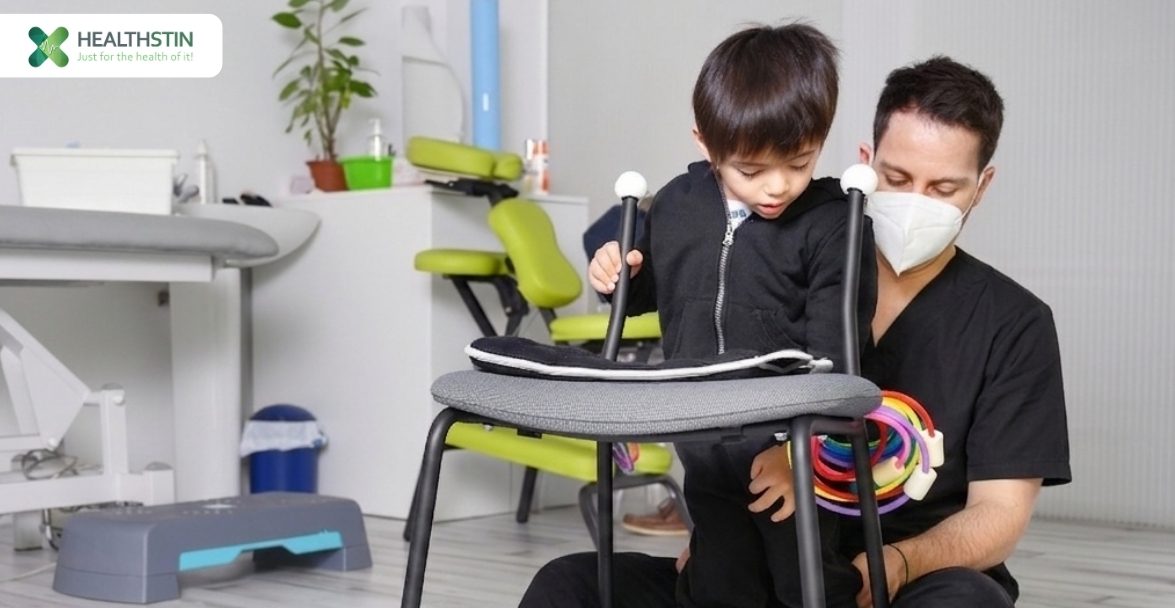
At Healthstin, we offer NDIS exercise physiology services in Adelaide to help people with cerebral palsy build strength, move more easily, and become more independent. We create personalised programmes based on each person’s needs and goals.
Our services include:
- Home-based therapy lets participants receive support in the comfort of their own homes.
- Community sessions in gyms or other accessible places around Adelaide
- Personalised exercise programmes are tailored to the needs and goals of each participant.
- Flexible scheduling to make therapy easier to fit into daily routines
What to Expect from Your First Session
It’s normal to feel unsure when beginning therapy, but your first exercise physiology session is meant to be welcoming and helpful. We want to get to know your needs and work with you to build a plan that helps you move forward.
1. Assessment
At the start of your session, our exercise physiologist will check your current physical abilities. They may look at your strength and how you move. This helps us see where you might require extra help.
2. Goal Setting
You’ll have a chance to talk about what you want to achieve, such as walking more confidently or becoming more independent in daily life. Your therapist will help you set clear and realistic goals.
3. Programme Development
After you’ve set your goals, your exercise physiologist will create a personalised exercise plan that matches your abilities and helps you move better in everyday life.
4. Progress Tracking
As you keep coming to sessions, we’ll regularly check your progress to make sure your exercises are still working well and fit your goals.
Why Families in Adelaide Choose Healthstin
Families look for a therapy provider who helps them make real progress and improve daily life. Here are some reasons why people in Adelaide choose Healthstin for Cerebral Palsy support:
- Strong Experience with Cerebral Palsy Support – Our clinicians understand the unique movement challenges of CP and provide tailored support for each participant.
- NDIS-Friendly Services – We work to ensure therapy aligns with each participant’s NDIS plan and goals.
- Mobile Services Across Adelaide – Sessions can take place at home, in the community, or at our clinic for your added convenience.
- Integrated Allied Health Care – Exercise Physiologists and Physiotherapists collaborate closely to support progress.
- Focus on Real-Life Outcomes – Our goal is to help participants improve their movement and live more independently.
Service Areas in Adelaide
Healthstin offers NDIS exercise physiology and physiotherapy for people with Cerebral Palsy throughout Adelaide. Most of the families we help live within 30 minutes of our Elizabeth and Salisbury clinics.
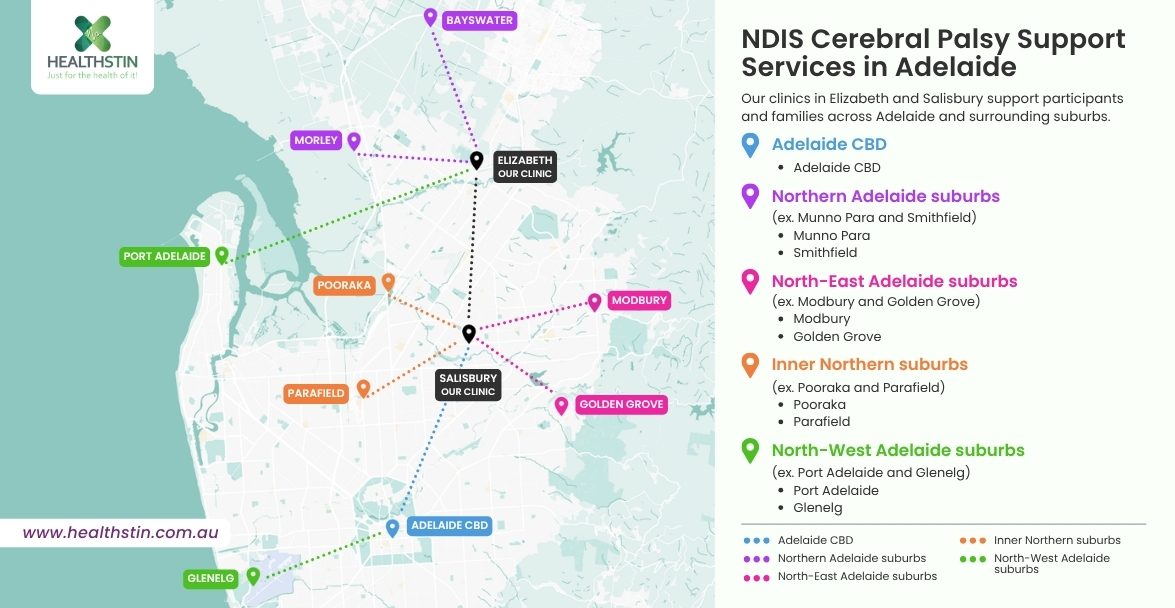
Our team regularly provides services in the following areas:
- Adelaide CBD and nearby city suburbs
- Northern Adelaide suburbs (ex. Munno Para and Smithfield)
- North-East Adelaide suburbs (ex. Modbury and Golden Grove)
- Inner Northern suburbs (ex. Pooraka and Parafield)
- North-West Adelaide suburbs (ex. Port Adelaide and Glenelg)
Our mobile therapy service means our clinicians can visit you at home or in the community, making it easier for families in these areas to get the support they need.
If you are not sure if we cover your area, just give us a call at 1300 090 931, and we will be happy to help.
FAQs About NDIS Cerebral Palsy Supports in Adelaide
1. Can exercise physiology be covered under NDIS?
NDIS Capacity Building supports usually cover exercise physiology for people with cerebral palsy. These services help boost mobility and promote overall physical health.
2. Do you offer home visits in Adelaide?
Yes. Many participants choose home-based therapy in Adelaide because it can be easier and more comfortable. Healthstin also offers appointments in the community and at our clinics in Elizabeth and Salisbury.
3. How often should sessions occur?
There isn’t a set schedule that works for everyone. How often you have sessions depends on your goals, your NDIS plan, and the support you need right now. Your clinician will help you find a plan that suits you.
4. Is exercise physiology suitable for children and adults?
Yes. Exercise physiology supports both children and adults with cerebral palsy. Programmes are tailored to each participant’s abilities and goals.
5. What should I bring to my first session?
For your first session, please bring any important medical information, and wear clothes that are comfortable enough to move around. Your clinician will assess you and discuss your goals to create a programme that meets your needs.
Start a Personalised CP Exercise Programme in Adelaide
Finding the right provider is key when planning long-term support for cerebral palsy. With the right guidance, exercise physiology can improve functional movement and support greater independence for a better quality of life.
Healthstin provides NDIS-approved exercise physiology services throughout Adelaide. We offer flexible options like home visits, community sessions, and personalised therapy programmes.
If you are looking into cerebral palsy rehabilitation or need a trusted NDIS exercise physiologist in Adelaide, our team is here to help.
Book an appointment with Healthstin here to arrange your NDIS exercise physiology assessment today.
*Disclaimer: This article is intended for general educational purposes only and does not replace personalised advice. NDIS funding decisions depend on individual needs, goals, and plan details. For specific guidance on how your funding can be used, please speak with your NDIS planner, Local Area Coordinator, or support coordinator.
More Related Posts
NDIS Physiotherapy Management of Cerebral Palsy
NDIS Cerebral Palsy Physiotherapy Treatment: What Actually Works
Weightless Freedom: Why Hydrotherapy is a Game-Changer for Cerebral Palsy
5 Benefits of NDIS Exercise Physiology for Cerebral Palsy
7 Life-Changing Benefits of Exercise Physiology for NDIS Participants with Cerebral Palsy
NDIS Spasticity Management & Cerebral Palsy Physiotherapy
NDIS Exercise Physiology for Cerebral Palsy in Perth
How To Find Exercise Physiology Near Me
NDIS Allied Health Services Near You: Expert Physiotherapy & Exercise Physiology Across Australia