


A spinal cord injury can change a person’s life in an instant. Suddenly, everyday tasks such as getting out of bed, returning to work, enjoying time with family, or simply moving safely can feel unstable. Families, parents, GPs and carers often look for the best rehab for spinal cord injury that can provide hope, direction, and a clear path forward for people with SCI.
The right spinal cord injury rehabilitation focuses on supporting their confidence, strength, independence, and long-term well-being. In this guide, we break down what quality rehab looks like, why neurological experience matters, and how services like Hydrotherapy, accessible gyms, and NDIS support can greatly contribute to achieving meaningful SCI goals.
Defining Excellence: What to Look for in Spinal Cord Injury Rehabilitation
Choosing the most-fitting SCI rehab provider for yourself or your loved one is a big decision, especially when care may continue for months or years. Knowing what “quality” really means can help families and participants dodge generic programmes that don’t meet neurological needs. Here are a few key areas to check:
-
Experience in Spinal Cord Injury
Spinal cord injuries affect feeling, movement, balance, and often, breathing and fatigue. That’s why rehabilitation should be done by professionals trained in managing neurological conditions, specifically by someone like a physiotherapist who has worked directly with people who have spinal cord injuries.
They can help manage fatigue, changes in muscle tightness, changes in feelings, and other problems that can occur after a spinal cord injury. Choosing a provider with extensive SCI experience, like Healthstin, ensures therapy is safe and helps people reach their nerve and brain health goals.
-
Individualised, goal-basedprogrammes
An effective spinal cord injury physiotherapy provider starts by gaining insight into the person with SCI. Families, parents, and carers must seek an allied health team that develops tailored programmes based on the participant’s daily activities, community access, personal priorities, and work goals.
Feeling heard and cared for can make a big difference in rehab. It’s important to find a physiotherapist who listens, explains things clearly, respects your pace, and treats you as a partner in your care.
-
Easy access to the right equipment and facilities
A good rehabilitation care for a person with SCI often requires easy-to-reach locations, helpful equipment, and versatile spaces that can be used in different ways. Whether participants focus on balance, strength, or functional movement, an easily accessible environment allows therapy to be instructed safely and confidently.
Healthstin, for instance, offers the most convenient location across NSW, VIC, SA, and WA. We provide spinal cord injury support services from Hydrotherapy pools, gyms, and private clinics, all in one place.
-
Ongoing and consistent care
Real progress usually comes from ongoing, steady support. Instead of starting over in every appointment, the best SCI rehab builds on previous gains. A spinal cord injury session in Healthstin includes take-home tools to help people with SCI stay on track with exercise even after the sessions.
The Clinical Edge: Why a Neurological-Focused Team Matters
Spinal cord injury rehab is actually more complicated than general exercise, as it requires an understanding of different neurological changes. For the therapy to remain safe and appropriate over time, it needs to be planned carefully and adjusted over time.
A neurological-focused team designs sessions around real-life goals, such as balance, safety, functional movement, and fatigue management. Meanwhile, a typical gym setting focuses more on exercise programmes that follow a standard routine for the general population. Check the table below to see more of their differences:
| Rehabilitation with a Neurological Focus | Standard Gym Environment |
| Therapy plans are developed for people with spinal cord injury and neurological conditions. | Exercise plans are designed for the general fitness population. |
| Exercises are adapted to suit individual movement and energy levels. | Exercises are usually based on standard movement patterns. |
| The rehab care team is familiar with working alongside allied health and support teams. | The exercise team has limited integration with clinical or care teams. |
| Focuses more on functional movement and day-to-day activities. | Focuses mostly on fitness, strength, and general conditioning. |
| Utilises different accessible spaces and supportive equipment. | Accessibility may be limited depending on the gym facilities. |
| Participants’ progress is reviewed and adjusted as needs change. | Exercise programmes often remain fixed or self-directed. |
| Can align rehab session with NDIS SCI provider goals and documentation. | Not typically covered for NDIS-funded rehabilitation. |
“From the very first session, I felt heard. The Healthstin team assigned to me, especially Jack, took their time to understand my goals and adjusted each session based on how my body was responding that day.”
– Peter S., NDIS Participant
Innovative Recovery: Hydrotherapy and Accessible Gym Facilities
When searching for spinal cord injury rehabilitation options, facilities matter. Having access to both Hydrotherapy and gym facilities allows the use of appropriate therapy programmes that adapt to the changing needs, comfort levels, and goals of the person with SCI over time.
Movement in Water
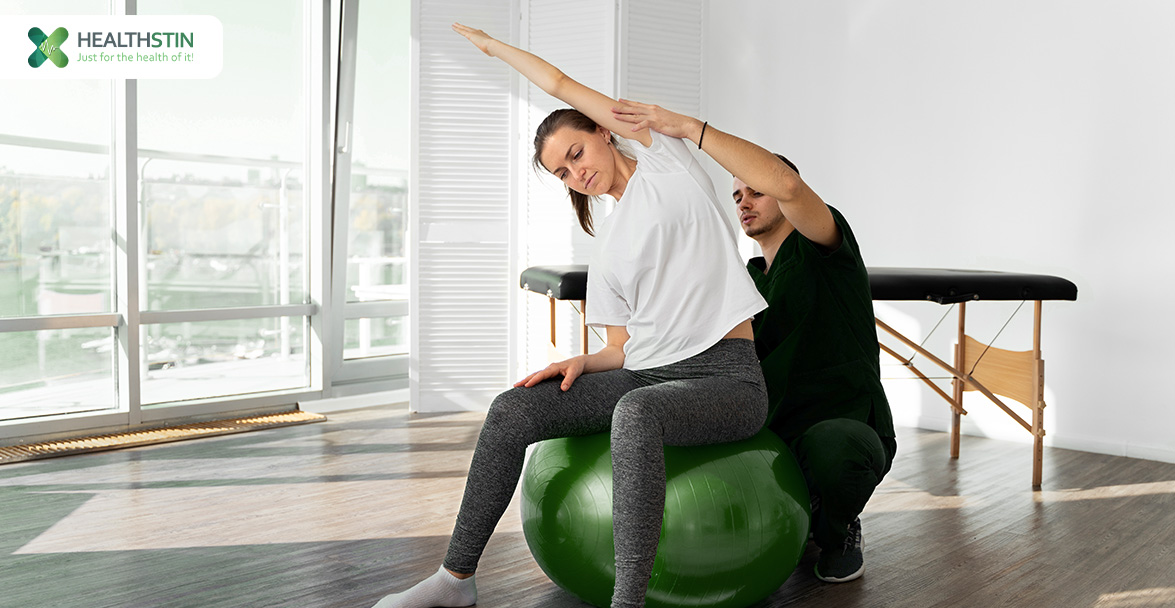
Hydrotherapy gives a warm, supportive setting where movements feel more manageable and can be explored with less risk of falling. Pool exercises for spinal cord injury can help people practise controlled movements and build confidence in a safer and more supported environment.
Improving Skills on Land
An accessible gym is designed to minimise barriers. It often includes adjustable equipment and flexible exercises that you can match to the participant’s abilities, helping them practise movements relevant to their daily lives.
NDIS funding serves a key role in accessing spinal cord injury rehabilitation, but the system processes can be hard to understand. Many families, parents, and carers are confused about what information is needed when preparing for a review and seeking therapy support.
Our team at Healthstin works with participants, families, parents, and carers to ensure rehab aligns with Capacity Building supports and NDIS goals. By keeping track of progress, talking openly, and giving helpful advice during plan reviews, we help them make good decisions about ongoing care.
Experienced SCI Support Near You: Our Clinic Locations
Access to rehabilitation is much easier when support is available in convenient locations. Healthstin provides spinal cord injury physiotherapy services across several states in Australia, making it simpler for them to receive genuine care without the added stress of long travel.
- Sans Souci, NSW – Supporting people over southern Sydney
- Hurstville, NSW – Serving the St. George and surrounding areas
- Salisbury & Elizabeth, SA – Accessible for Adelaide’s northern suburbs
- Brimbank & Melton, VIC – Working with communities in Melbourne’s west suburbs
- Belmont, WA – Opening more local access as demand continues to grow
Healthstin offer services in clinics, at home, or in the local community, based on what’s suitable for the participant’s wellbeing.
FAQs about Best Rehab for Spinal Cord Injury
-
What is the best therapy for spinal cord injury?
There is no one therapy that works best for everyone with SCI. Rehab depends on factors such as injury severity, daily challenges, and personal goals. It often combines physiotherapy, exercise physiology, and functional training, focusing on safe movement and long-term participation.
-
Can you fully recover from a spinal cord injury?
Recovery after a spinal cord injury depends on one person to another. Some see changes over time, whilst others may continue to live with physical limitations. Spinal cord injury rehabilitation supports people in working toward enhanced function, greater independence, and participation in everyday life. However, keep in mind that progress also looks different for everyone, and goals are often based on what is important and achievable for the participant.
-
Can a person walk again after a spinal cord injury?
Walking after SCI vary depending on many factors, such as the type and level of injury. Rather than concentrating on a single result, rehabilitation supports functional goals that help people move as safely and confidently as possible. Walking is only one part of independence, and therapy often looks beyond this to day-to-day activities and mobility needs.
-
Does rehab help with spinal cord injury?
Rehabilitation plays a key role after a spinal cord injury. Rehab programmes are typically designed to maintain movement, manage physical changes, and support everyday activities. Rather than quick results, the focus is often on the participant’s steady progress.
-
How long is rehab after a spinal cord injury?
SCI rehab doesn’t have a fixed duration. The length differs based on the injury type and personal goals. Some people may start with more frequent sessions, and later on, reduce or adjust them as their goals change. Rehabilitation is a long-term process that emphasises daily functioning rather than something with a set finish point.
Take the First Step Toward Greater Independence
Whether you’re a person living with a spinal cord injury or caring for someone who is, having the right information to find the best rehab support makes decision-making much easier. Knowing your options is the first step toward establishing confidence and planning what comes next.
If you would like to understand more about spinal cord injury rehabilitation, Healthstin offers support across multiple locations, including exercise physiology, physiotherapy, and Hydrotherapy services designed to integrate into daily life.
Explore our spinal cord injury page to learn more about SCI rehab. Call 1300 090 931 or book online to discuss your goals, funding, and preferences with our compassionate team.





