Meet Sarah. She’s a 60-year-old grandmother in Western Sydney who survived a stroke last year. Before that, she spends her retirement days chasing her toddlers across the grass and strolling to the local bakery. Now, she sits in her living room, staring at a stack of NDIS paperwork that appears like a white stone slab and reads like mathematical equations rather than a support system. For thousands of Australians like her, overcoming the NDIS paperwork is a major obstacle to accessing funding support.
She hopes she can regain her movement and balance again, but she’s not sure what rehab pathway from NDIS she needs specifically. This is a common quandary among new NDIS participants, including their families and even their assigned Support Coordinators.
NDIS Physiotherapy plays a central role in the support plan. It remains one of the most versatile and critical services covered by the program, bridging the gap between diagnosis and functional lifestyle.
On the other hand, learning about specific conditions supported by NDIS physiotherapy and the nuances of NDIS physiotherapy coverage are essential keys in activating the pathway to a proper rehab program.
If, like Sarah, you’re a senior looking for options to improve your mobility, a parent of a child with developmental delays, or a professional looking for Allied Health NDIS Sydney-accredited physios, you may find this guide your gateway to the NDIS program.
How the NDIS Funds Physiotherapy: Capacity Building
Generally, under the National Disability Insurance Scheme (NDIS), physiotherapy is not considered a “medical treatment” for short-term injuries such as a sprained ankle. Instead, the funds come from the “Capacity Building” budget, found within the “Improved Daily Living” category.
The scheme’s main principle is to provide reasonable and necessary support to its participants. This means that, for NDIS physiotherapy coverage, the service must directly relate to the participant’s disability and support the participant in achieving a specific goal.
In other words, NDIS does not fund a “cure”; it supports return to functionality.
Through capacity building, physiotherapy and exercise physiotherapy’s (EP) services aim to help participants with their current physical struggles, which may include:
Gross Motor Skill Development: Regain the ability to walk across uneven surfaces or climb/descend stairs.
Transfer Training: Move from a bed to a wheelchair or chair to a standing position.
Community Participation: Stamina-building aims to enable taking long walks, riding the bus, attending a community group, etc.
Equipment Prescription: Use customised equipment, such as standing hoists or walking frames, under the NDIS assistive technology devices category.
At Healthstin, we focus on capacity-building programs to help participants live more independently by improving strength, skills, and confidence.
10 Common Conditions Supported by NDIS Physiotherapy
Here are the ten areas where physiotherapy provides professional support.
-
Stroke and Acquired Brain Injuries (ABI)
Stroke survivors often struggle to cope with paralysis (on one side), coordination, and balance. You can find Neurological physiotherapy NDIS support as critical here. Physios/EPs enable participants to undergo a program focused on neuroplasticity, which teaches the brain to reorganise itself and build new neural connections. EPs guide participants in performing repetitive, task-specific training, upper-limb rehab, and gait training to help them regain lost functional movement. Discover how NDIS Physiotherapy accelerates stroke recovery.
-
Multiple Sclerosis (MS)
MS affects the central nervous system over time, causing sensory loss, tremors and muscle weakness. Individuals with this condition can seek physios to help them manage fatigue-related mobility issues through custom strengthening programs and energy conservation techniques. The goal is to slow down their body’s functional decline. Maintaining the current level of mobility is a recommended action to prevent secondary complications. Discover how NDIS Physiotherapy helps you stay ahead of MS progression.
-
Cerebral Palsy (CP)
Adults and children with CP need physiotherapy to improve their quality of life. EPs help them to keep their joints moving freely and ease muscle stiffness. They can also seek a physio’s advice on choosing the right equipment to ensure they’re comfortable, supported, and protected against aches over time. Experience the difference NDIS Physiotherapy makes in managing Cerebral Palsy symptoms.
-
Parkinson’s Disease
People with Parkinson’s feel like their feet are glued to the floor, and their tremors make it impossible for them to stay steady. Sessions with EPs use sound and sight cues–like markers or rhythms–to help them unstick their feet and move better. They also need to make big movements during sessions, where physios guide them to take larger, more confident steps to overcome the shuffle walk often caused by Parkinson’s.
Experience how NDIS Physiotherapy helps you overcome the shuffle and regain your stride with Parkinson’s.
-
Spinal Cord Injuries (SCI)
Following a spinal cord injury, physiotherapy plays a critical role in helping individuals get the most out of what their bodies can still do. Alongside this, intensive SCI rehab includes maintaining healthy skin and strong breathing. If the individual has any movement left, physios can customise exercises (such as walking practices) to strengthen the necessary muscles. If the individual is now fully dependent on the wheelchair, physios teach the best way to move in and out of the chair. Unlock your physical potential with NDIS Physiotherapy tailored for spinal cord injury recovery.
-
Global Developmental Delay (GDD) in Children
In developmental delay physios, the service involves children reaching physical milestones through play to make sessions more engaging. A pediatric physio team helps infants and toddlers learn to sit, crawl, roll, and walk. The focus here is on getting help early to ensure the child builds the foundation for growth. See how NDIS Physiotherapy builds the foundation for your child’s growth through play.
-
Autism Spectrum Disorder (ASD) – Focus on Motor Skills
Physiotherapy can help people with Autism cross the bridge that links thinking and doing. They do so by focusing on motor skills development–like balance, coordination, and strength. By helping the child improve these physical tasks, EPs can help them feel more comfortable in other parts of their daily lives, such as at school or in the park. They can gain a normal social life. Explore how NDIS Physiotherapy bridges the gap between thinking and doing for children with Autism.
-
Chronic Pain and Fibromyalgia
If the disability is causing the individual constant pains and aches, they can seek NDIS physiotherapy coverage. Here, exercise physios use movement as medicine, moving away from just sitting and receiving care to involve learning pacing and gentle land- or pool-based exercises. Learn how NDIS Physiotherapy transforms pain management through movement and pacing.
-
Arthritis and Joint Degeneration
While the NDIS doesn’t cover standard age-related arthritis, you can look up musculoskeletal NDIS support aimed at permanent conditions that limit mobility. This program includes helping children with rare arthritis or individuals recovering from major surgeries. EPs guide participants in moving joints safely to reduce pressure, thus helping them to reduce pain and make everyday tasks easier. Understand how NDIS Physiotherapy protects your joints and makes everyday tasks easier.
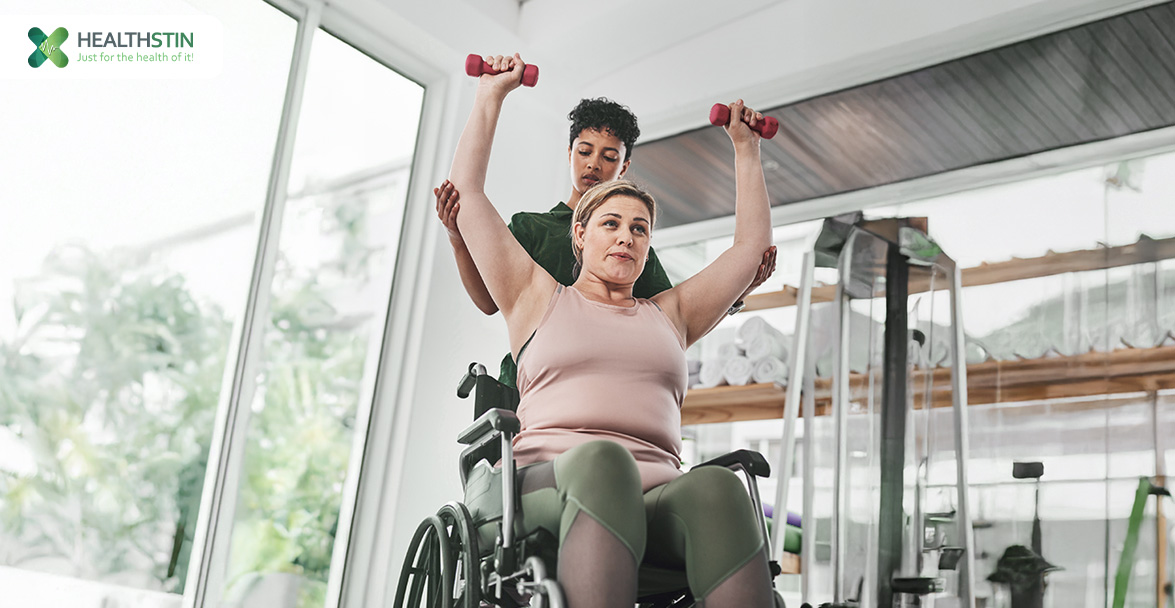
Studies consistently show that physical exercise supports mental health. EPs help participants become more active by getting them to do exercises that aren’t intimidating. Done regularly, participants can build their fitness and learn to listen to their body. At the same time, they can be more involved in their community and engage in their preferred social activities. Uncover how NDIS Physiotherapy boosts your mental health and helps you reconnect with your community.
Why Choose Healthstin for NDIS Physiotherapy
Choosing the right allied health provider is not just about finding a clinic for treatment; it’s about finding a partner experienced with the NDIS ecosystem. Healthstin NDIS services bridge the gap between university-qualified and accredited professionals and real-world goals. Healthstin also understands the administrative workload of Support Coordinators and the emotional state of participants and their families.
Multi-Disciplinary Collaboration
At Healthstin, all physiotherapy programs are a team effort between physios and exercise Physiologists, with close collaboration with the participant’s physician or GP. So, if part of the rehab needs high-intensity metabolic conditioning, an EP is ready to help.
No Long Waitlists
We believe that waiting for a month is too long for someone to get started with their rehabilitation program. Healthstin is responsive and can match a physio with a participant within a week of initial inquiry.
Healthstin provides physiotherapy and EP services across multiple states in Australia.
- Sans Souci, NSW – Supporting southern Sydney residents
- Hurstville, New South Wales (NSW) – Conveniently located for serving the St George community
- Salisbury & Elizabeth, South Australia (SA) – Accessible for Adelaide’s northern suburbs
- Brimbank & Melton, Victoria (VIC) – Supporting communities in Melbourne’s west
- Belmont, Western Australia (WA) – Expanding to meet growing local demand
Our team can deliver therapy in our clinics, in your home, or within the community.
Know Someone Who Could Benefit from Our Services?
Whether you know someone struggling like Sarah or are looking for the best care for their family, the right support can make all the difference. We at Healthstin have a dedicated team of professionals to support your rehabilitation and wellness journey. We offer accredited neurological physiotherapy and exercise physiology, customised to your individual goals and NDIS coverage.
If you know a friend, client, or loved one who is working to regain their movement, help them take the next step in their NDIS journey right away. Simply fill out our quick Referral Form to connect them with our allied health team for a complete assessment.
Refer Someone Today and help them start their path toward improved health, increased mobility, and lasting independence.
FAQ about NDIS Physiotherapy
What is the difference between Physiotherapy and Exercise Physiology under the NDIS?
While both fall under the “Improved Daily Living” or “Health and Wellbeing” categories, their focus differs. Physiotherapy is generally the first line of support for managing pain, improving joint range of motion, and neurological rehabilitation (like learning to walk again after a stroke). Exercise Physiology focuses on using high-level exercise programs to prevent or manage chronic conditions and improve overall physical function once a baseline of movement is established.
When do I need a Physiotherapist vs. an Exercise Physiologist?
You typically need a Physiotherapist if you require hands-on treatment, help with a new or acute physical limitation, or specific assessments for mobility aids. An Exercise Physiologist might handle your sessions when your condition is stable, and your goal becomes long-term strength, cardiovascular health, or community-based fitness habits. Often, Healthstin’s clients work with both for their recovery.
How many hours of physiotherapy will the NDIS fund?
The NDIS fund is not set according to the number of hours. Instead, it is based on your specific goals and progress provided in your physios report. For example, a child with developmental delay requires weekly sessions for a year, while an individual needs an equipment assessment might only need a day. We provide reports necessary to justify the hours required for your progress.
Do I need a doctor’s referral to start NDIS physiotherapy?
No, you do not need a GP referral to access Healthstin NDIS services. If you have an NDIS plan with funding for “Improved Daily Living,” you can contact us directly or have your Support Coordinator reach out to start the intake process immediately.
Can physiotherapy help with “invisible” disabilities like ASD?
Absolutely. NDIS physiotherapy coverage includes motor-planning issues like Autism. We focus on balance, core strength, and coordination, which helps participants feel more grounded in their bodies and improves their ability to participate in social and physical activities with their peers.
Not sure which NDIS funding category or rehab pathway fits your specific condition?
We’ll help you understand the difference between “medical treatment” and “Capacity Building” so you can access the right movement program for your goals.
Call 1300 090 931 or Book Online to get a clear recommendation
No obligation. Just clarity.