Numbness, tingling, or nerve pain in your feet can change how you walk and make it harder to stay independent. If you ignore these symptoms, they might get worse over time. Here, you’ll find information about what causes peripheral neuropathy, as well as treatment options, exercises, and support from health professionals to help you move better and manage your symptoms.
What Is Peripheral Neuropathy?
Peripheral neuropathy happens when the peripheral nerves, which are the nerves outside your brain and spinal cord, become damaged. These nerves send messages between your brain and the rest of your body, including your feet. If they are not working as they should, you might notice numbness, weakness, burning, pain, or tingling in your feet.
Since the feet are usually affected first, peripheral neuropathy can make it hard to feel the ground, keep your balance, or walk safely. If the condition is not treated, the risk of tripping, falling, and getting hurt can go up over time.
Peripheral neuropathy can have many causes. Diabetes is one of the most common causes, but nerve damage can also happen because of injuries, other health problems, vitamin deficiencies, infections, or some medicines. Finding out what is causing the problem is the first step to choosing the best treatment and recovery plan.
Common Symptoms of Peripheral Neuropathy in the Feet
The symptoms of peripheral neuropathy are different for everyone. It depends on which nerves are involved and how much damage has occurred. Some people feel only mild discomfort at first, whilst others find it harder to walk or do daily tasks. Noticing these early signs can help you get the right care and look into peripheral neuropathy treatment before things get worse.
Common symptoms include:
- Tingling or burning sensations – You might feel pins and needles, burning pain, or your feet may be more sensitive than usual.
- Foot numbness – You may notice less feeling in your feet, which can make it harder to sense changes in temperature, pressure, or even injuries.
- Muscle weakness – Weak muscles in your feet or lower legs can make it harder to stand, climb stairs, or get up from a chair.
- Balance problems – When you have less feeling in your feet, it can affect your balance and make you more likely to trip or fall.
- Difficulty walking – Changes in feeling, pain, or weakness can change the way you walk and make it harder to move around confidently.
What Causes Peripheral Neuropathy?
Peripheral neuropathy is not a condition by itself. It’s usually a sign that something has harmed the peripheral nerves. Finding out what caused it is important because it helps choose the right treatment for neuropathy in the feet and manage symptoms over time. Here are some of the most common causes.
Diabetes and Diabetic Neuropathy
High blood sugar can slowly harm the small nerves in your feet, which is why diabetes is the most common cause of peripheral neuropathy. This nerve damage, commonly called diabetic neuropathy, can cause pain, tingling, numbness, and make it harder to notice injuries or changes in temperature.
Injuries and Nerve Compression
Physical injuries, surgery, or putting pressure on a nerve again and again can also cause peripheral neuropathy. For example, a broken bone, a sports injury, or anything that presses on nerves can affect how they work. Depending on the cause, treatments like physiotherapy for neuropathy may help you move better, get stronger, and recover.
Chronic Health Conditions
Some long-term health problems can also damage nerves. These include kidney disease, autoimmune disorders, thyroid problems, and certain infections. Treating the main health issue is often key to easing symptoms and staying healthy.
Vitamin Deficiencies and Lifestyle Elements
Your nerves need certain vitamins, especially B vitamins, to stay healthy. Not getting enough of these can cause nerve damage over time. Habits like drinking too much alcohol, smoking, or being around certain poisons can also raise your chance of peripheral neuropathy.
Effective Treatment Options for Peripheral Neuropathy in Feet
Managing peripheral neuropathy usually involves several treatments working together, not just one. A personalised rehab plan can ease symptoms, help you move better, and support your independence. If you’re wondering how to relieve neuropathy pain in feet, treating both the symptoms and the underlying cause is often the most effective approach.
Physiotherapy for Balance and Mobility
Physiotherapy can make it easier for you to move and help prevent falls. Your treatment plan will be based on your symptoms, how you move, and your personal goals.
It may include:
- Gait training helps you walk more efficiently and steadily
- Strength exercises can help you gain better control over your muscles
- Balance training and advice on how to prevent falls
Exercise Physiology for Functional Strength
Regular exercise is important for managing peripheral neuropathy. An exercise physiologist can create a safe, personalised programme to help you stay active without placing excessive strain on your body.
Your exercise physiology programme may focus on:
- Helping your circulation by moving regularly
- Getting stronger so daily tasks feel easier
- Staying fit and independent for the long term
Pain Management Strategies
Nerve pain can be tough to deal with, but there are many ways to manage it. A personalised chronic pain management plan can help ease discomfort and improve your quality of life.
Treatment may involve:
- Heat or cold therapy, depending on your symptoms.
- Massage therapy to ease tight muscles
- Adopting healthy habits that support your nerves and overall health.
Foot Care and Supportive Footwear
When you have less feeling in your feet, even small injuries can turn serious if you don’t catch them early. This is why taking care of your feet every day is so important.
Here are some helpful habits to try:
- Check your feet every day
- Wear shoes that support your feet and fit well
- Keep your feet clean, dry, and protected
Need Help Managing Neuropathy Symptoms?
If you’re dealing with nerve pain, numbness, or balance issues, you don’t have to accept them as your new normal. At Healthstin, our physiotherapists and exercise physiologists team up to design personalised rehab plans. We focus on helping you move better, feel more comfortable, and stay active and independent.
You can start with a free 10-minute consultation. This is a chance to talk about your symptoms, ask questions about possible treatments, and see how our team can help you recover.
Call 1300 090 931 or fill out our referral form to get started.
Can Exercise Help Peripheral Neuropathy?
It’s common to worry that exercise might make symptoms worse, but choosing the right kind of movement can actually help manage peripheral neuropathy. A personalised exercise plan can boost your strength, mobility, and confidence, making daily activities easier.
Being active helps your blood flow, supports healthy movement, and lowers your risk of falling. With the right functional movement support, you can move with more confidence and stay independent.
Best Exercises for Peripheral Neuropathy in Feet
Exercises for peripheral neuropathy should build strength, flexibility, balance, and walking skills without putting too much stress on your body. Staying active can help you move with more confidence, ease stiffness, and keep you mobile. Choose exercises that fit your current abilities, and talk to a healthcare professional if you are unsure how to begin.
Please note: These exercises are just general examples and might not be right for everyone with peripheral neuropathy. People can have different symptoms, balance, strength, and reasons for nerve damage. Before you start any new exercise programme, talk to your Exercise Physiologist, Physiotherapist, or healthcare professional, especially if you have severe numbness, major balance issues, foot ulcers, or other health problems.
Ankle Mobility Exercises
Moving your ankles gently can help reduce stiffness and make it easier to move your feet and ankles. Having good ankle mobility can also help you walk more naturally and improve your balance.
Resistance Band Ankle Mobility
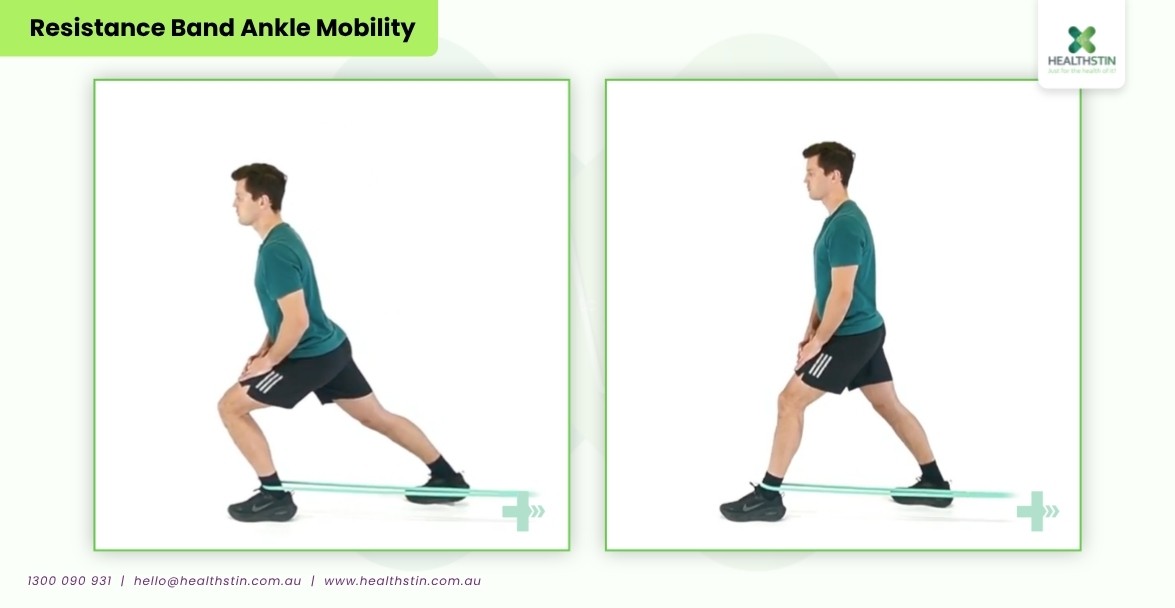
Instructions:
- Attach a resistance band behind you and loop it around your ankle.
- Step forward into a lunge, making sure your heel stays flat on the floor.
- Gently lean forward so your knee moves over your toes.
- Keep your heel pressed to the ground the whole time.
- Shift back a little, then repeat the movement without going all the way back to the start.
Helpful Tip:
Move slowly and stop if you feel any discomfort. If you find it hard to balance, hold onto something sturdy for support.
Toe Strengthening Exercises
Building strength in the small muscles of your feet and toes can help you keep your balance and feel steadier in everyday activities. These exercises may also make walking a bit easier.
Toe Strengthening Exercise
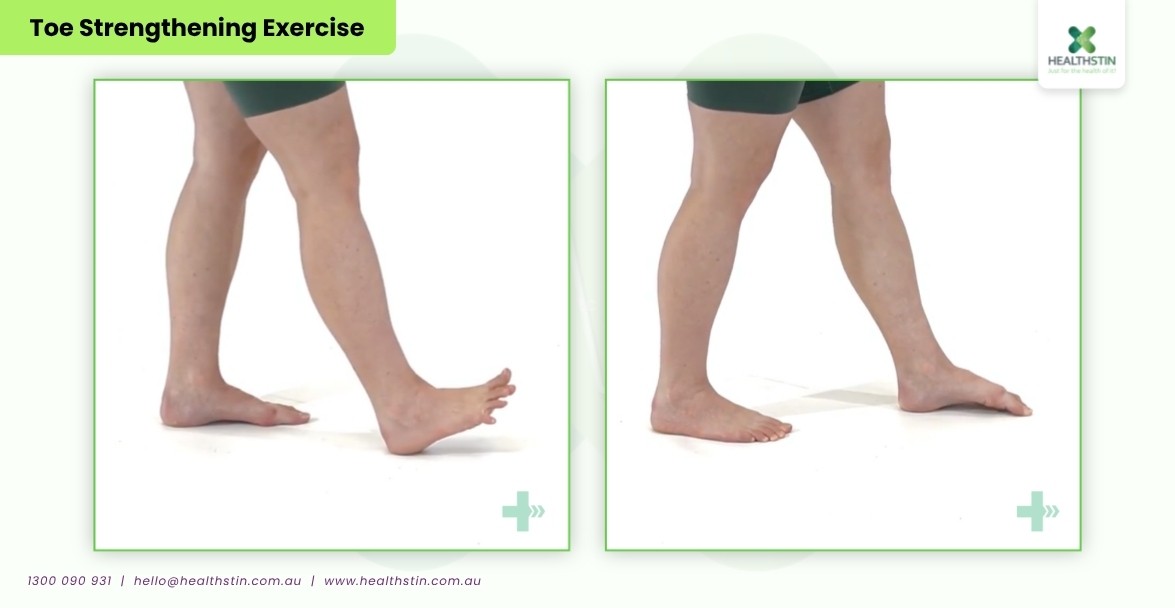
Instructions:
- Stand up straight and place your feet a comfortable distance apart.
- Take a step forward, but keep most of your weight on your back leg.
- When your front foot lands, gently press your toes into the ground, almost as if you are lightly gripping the floor.
- Make sure the movement stays gentle and controlled, and avoid curling or clawing your toes.
- Repeat this with each step, or try practising with one foot at a time before switching to the other side.
Helpful Tip:
Try to activate your toes lightly instead of gripping the floor too hard. If you need more balance, hold onto something stable.
Balance and Stability Training
Balance exercises help you stay steady when you stand or walk. They make moving around easier, help you feel more confident, and reduce your chances of tripping or falling.
Balance and Stability Training

Walking and Endurance Activities
Walking is an efficient way to stay active and healthy. Start with short walks and add more time when you feel comfortable. This will help you build endurance and make moving around easier.
Walking

Instructions:
- Walk at a pace that feels comfortable for you on a safe, flat surface.
- Follow the walking times and rest breaks your Exercise Physiologist or Physiotherapist suggests.
- As you get stronger, slowly add more time or distance to your walks.
- Repeat these steps as your provider recommends.
Helpful Tip:
Wear shoes that support your feet and take breaks when you need to. Stop walking if you feel pain, dizziness, or unsteadiness.
How Peripheral Neuropathy Affects Balance and Walking
Your nerves let you sense the ground under your feet and help you stay balanced as you move. If these nerves are damaged, your brain has a harder time knowing where your feet are or how they move. This can change how you walk and make daily activities feel less steady.
If you have peripheral neuropathy, you may notice:
- Increased fall risk: When you have less feeling in your feet and weaker muscles, it becomes easier to lose your balance, especially on uneven ground or in low light.
- Reduced foot sensation: You might not feel where your feet land, which can make walking safely more difficult.
- Changes in gait and coordination: Your walking pattern might change as your body tries to adjust for pain, numbness, or less stability. This can make you feel less confident during daily activities.
When Should You Seek Professional Treatment?
Feeling sore or tired feet once in a while is common, but if you have numbness, tingling, or nerve pain that doesn’t go away, it’s important to pay attention. Getting help from a professional early can help you find out what’s causing your symptoms, lower the chance of more nerve damage, and help you keep moving and living independently.
Think about seeing a healthcare professional if you notice any of these signs:
- Numbness or pain that sticks around or keeps coming back.
- Falling often or feeling unsteady, especially when you walk.
- Symptoms that are getting worse, like more pain, weakness, or losing feeling in your feet.
- Having trouble with daily tasks, like walking, climbing stairs, driving, or standing for a long time.
How Healthstin Supports People with Peripheral Neuropathy
Peripheral neuropathy affects each person in their own way, so treatment needs to fit your unique situation. At Healthstin, our allied health team creates personalised rehabilitation plans to help you move with greater comfort and confidence.
Physiotherapy Services
Our Physiotherapists work with you to improve mobility, balance, and walking through focused rehabilitation. This may include strength exercises, gait training, and helpful tips to help you move safely at home and in your community.
Exercise Physiology Programmes
We tailor exercise to your needs, abilities, and goals. Our Exercise Physiologists create safe programmes to boost your strength, fitness, flexibility, and confidence, whilst supporting your long-term health.
Chronic Condition Management
If your peripheral neuropathy comes from diabetes or another chronic condition, we’ll help you manage the physical challenges with structured exercise and ongoing support.
Home and Clinic-Based Care
You can choose between clinic appointments or home visits, so it’s easier to get the care that suits you. We can adjust your rehabilitation plan as your needs and goals change.
Here are the Healthstin clinic locations across Australia:
- Sans Souci, NSW – Serving southern Sydney
- Hurstville, NSW – Easy to get to for the St George community.
- Salisbury & Elizabeth, SA – Easy to reach for people in Adelaide’s northern suburbs.
- Brimbank & Melton, VIC – Serving the people in Melbourne’s west.
- Belmont, WA – Now offering mobile appointments in this area.
Multidisciplinary Rehabilitation Support
Our team works together to give you coordinated care. Your rehab plan will focus on mobility, balance, strength, and overall physical function in a way that works for you.
FAQs About Treatment Options for Peripheral Neuropathy in Feet
1. Can peripheral neuropathy be reversed?
If the cause of your peripheral neuropathy is found and treated early, you may start to feel better. In other cases, treatment is about managing symptoms and helping you stay active. Getting help from a professional early on can slow down your symptoms.
2. What is the best treatment for neuropathy in feet?
The best treatment for neuropathy in your feet depends on what is causing your symptoms and how serious they are. Many people do well with a mix of physiotherapy, exercise, medical care, healthy habits, and regular foot care.
3. Can exercise improve neuropathy symptoms?
Exercise can help you get stronger, improve your balance, and feel more confident when you move. A programme designed for you can help you stay active, reduce your risk of falling, and make daily tasks easier.
4. Is walking good for peripheral neuropathy?
Yes, walking helps many people with peripheral neuropathy. Begin with short, easy walks and slowly do more as you feel comfortable. If you are not sure how to start, a healthcare professional can help you.
5. When should I see a physiotherapist?
If your symptoms make daily life more difficult or you feel less steady on your feet, think about booking an assessment. A physiotherapist can find out what is causing your movement problems and create a plan that works for you.
Take the First Step Toward Better Mobility and Pain Relief
Peripheral neuropathy doesn’t have to keep you from what you love. The right rehab plan can help you get stronger, improve your balance, and feel more confident as you learn ways to manage your symptoms.
At Healthstin, we’re here to help you at every stage. When you’re ready to begin, you can book your assessment online at a time that works for you. We’ll create a treatment plan that fits your needs.
There are no waitlists, extra fees, or complicated paperwork. It’s easy to get started—just reach out to our friendly team today.