Skip to content

We are looking for a Physiotherapist to join our team. Click here to apply

Free 10-Min Phone Consultation
[email protected]
1300 090 931
HealthStin logo with tagline.
a green rectangle with white text
a purple sign with white text
  • About Us
    • Why Choose Us
    • Our Team
    • Blog
    • News
    • Contact Us
    • FAQs
  • Services
    • Exercise Physiology
    • Hydrotherapy
    • Group Classes
    • Heal Program
    • Physiotherapy
    • Remedial Massage Therapy
    • Acupuncture
    • Insurances
    • NDIS
    • Home Care Packages
    • Commonwealth Home Support Program
    • Support at Home
    • Workers Compensation
    • Department of Veterans’ Affairs
    • Delivery Methods
    • In Clinic
    • Hydrotherapy Pool
    • Gym
    • Mobile
    • In-home Visits
    • Local Community Visits
    • Telehealth
  • Our Clinics
    • Sans Souci, NSW
      • Exercise Physiology at Healthstin Sans Souci
      • Hydrotherapy at Healthstin Sans Souci
      • Physiotherapy at Healthstin Sans Souci
    • Hurstville, NSW
      • Exercise Physiology at Healthstin Hurstville
      • Hydrotherapy at Healthstin Hurstville
      • Physiotherapy at Healthstin Hurstville
    • Brimbank, VIC
      • Exercise Physiology at Healthstin Brimbank
      • Hydrotherapy at Healthstin Brimbank
      • Physiotherapy at Healthstin Brimbank
    • Melton, VIC
      • Exercise Physiology at Healthstin Melton
      • Hydrotherapy at Healthstin Melton
      • Physiotherapy at Healthstin Melton
    • Elizabeth, SA
      • Exercise Physiology in Elizabeth
      • Hydrotherapy in Elizabeth
      • Physiotherapy in Elizabeth, SA
    • Salisbury, SA
      • Exercise Physiology in Salisbury
      • Hydrotherapy in Salisbury
      • Physiotherapy in Salisbury
    • Belmont, WA
      • Exercise Physiology in Belmont, WA
      • Hydrotherapy in Belmont
      • Physiotherapy in Belmont
  • Our Expertise
    • Health conditions we support include:
    • Stroke Rehab
    • Intellectual Disabilities
    • Autism Spectrum Disorder
    • Cerebral Palsy
    • Multiple Sclerosis
    • Anxiety & Depression
    • Obesity
    • Spinal Cord Injury
    • Down Syndrome
    • Arthritis
  • Careers
    • Explore Job Opportunities
    • Exercise Physiologists Careers
    • Physiotherapists Careers
    • New Graduate
    • Recruitment FAQs
  • Resources
    • Free e-book
    • Free NDIS Consultation
    • Free Aged Care Consultation
    • New Patient Form
    • Referral Form
    • HealthLink Referral
  • Free 10-Min Phone Consultation

a green rectangle with white text
a purple sign with white text

Popular Keywords

Categories

No Record Found

View More
HealthStin logo with tagline.
We are looking for a Physiotherapist to join our team. Click here to apply
[email protected]
1300 090 931
  • About Us
    • Why Choose Us
    • Our Team
    • Blog
    • News
    • Contact Us
    • FAQs
  • Services
    • Exercise Physiology
    • Hydrotherapy
    • Group Classes
    • Heal Program
    • Physiotherapy
    • Remedial Massage Therapy
    • Acupuncture
    • Insurances
    • NDIS
    • Home Care Packages
    • Commonwealth Home Support Program
    • Support at Home
    • Workers Compensation
    • Department of Veterans’ Affairs
    • Delivery Methods
    • In Clinic
    • Hydrotherapy Pool
    • Gym
    • Mobile
    • In-home Visits
    • Local Community Visits
    • Telehealth
  • Our Clinics
    • Sans Souci, NSW
      • Exercise Physiology at Healthstin Sans Souci
      • Hydrotherapy at Healthstin Sans Souci
      • Physiotherapy at Healthstin Sans Souci
    • Hurstville, NSW
      • Exercise Physiology at Healthstin Hurstville
      • Hydrotherapy at Healthstin Hurstville
      • Physiotherapy at Healthstin Hurstville
    • Brimbank, VIC
      • Exercise Physiology at Healthstin Brimbank
      • Hydrotherapy at Healthstin Brimbank
      • Physiotherapy at Healthstin Brimbank
    • Melton, VIC
      • Exercise Physiology at Healthstin Melton
      • Hydrotherapy at Healthstin Melton
      • Physiotherapy at Healthstin Melton
    • Elizabeth, SA
      • Exercise Physiology in Elizabeth
      • Hydrotherapy in Elizabeth
      • Physiotherapy in Elizabeth, SA
    • Salisbury, SA
      • Exercise Physiology in Salisbury
      • Hydrotherapy in Salisbury
      • Physiotherapy in Salisbury
    • Belmont, WA
      • Exercise Physiology in Belmont, WA
      • Hydrotherapy in Belmont
      • Physiotherapy in Belmont
  • Our Expertise
    • Health conditions we support include:
    • Stroke Rehab
    • Intellectual Disabilities
    • Autism Spectrum Disorder
    • Cerebral Palsy
    • Multiple Sclerosis
    • Anxiety & Depression
    • Obesity
    • Spinal Cord Injury
    • Down Syndrome
    • Arthritis
  • Careers
    • Explore Job Opportunities
    • Exercise Physiologists Careers
    • Physiotherapists Careers
    • New Graduate
    • Recruitment FAQs
  • Resources
    • Free e-book
    • Free NDIS Consultation
    • Free Aged Care Consultation
    • New Patient Form
    • Referral Form
    • HealthLink Referral
  • Free 10-Min Phone Consultation

a green rectangle with white text
a purple sign with white text
Popular Keywords
Categories

No Record Found

View More

Exercise After Cancer: Finding the Motivation After Treatment

  • Published Date: Monday 05, February 2024
Last Update: Thursday 30, October 2025
Written by: Rachelle Sultana (PhD, Accredited Exercise Physiologist)
Author Profile Image

Rachelle Sultana (PhD, Accredited Exercise Physiologist)

Allied Health Coordinator

Dr. Rachelle leads the Allied Health Team at Healthstin Pty Ltd as Senior Exercise Physiologist and Allied Health Coordinator. She…

View Profile
  • Linkedin circle Logo
  • Email circle Logo
  • Call circle Logo
  • Link circle Logo

Summary

How can I possibly exercise after my cancer treatment when I’m constantly exhausted?” This is the core problem facing survivors who battle severe fatigue and deconditioning. Yet, avoiding physical activity only agitates the condition, tragically slowing recovery, worsening side effects like muscle loss, and sacrificing the proven benefits that boost survival and quality of life. Healthstin offers the solution: structured, safe programs led by Accredited Exercise Physiologists. We use the FITT (Frequency, Intensity, Time, Type) Principle to customise your routine, helping you safely overcome barriers and gradually rebuild the strength and confidence needed for a renewed, independent life.

Topics covered in this article:

Contents
1. Exercise and cancer
2. Can exercise help people living with cancer?
3. Strategies for finding the motivation to exercise after treatment
4. The importance of a customised treatment program: Exploring the FITT Principle
5. Getting FITT in a SMART way
6. Physical Exercise and Cancer

Not sure what the right next step is for your situation?

We’ll help you understand which type of support fits your goals, needs, and circumstances.

See What Support Fits

Clear advice. Zero commitment.

We’ll review your situation and tell you which service makes sense—and why.
Loading
exercise after cancer

It may seem ironic and counterintuitive to heed the advice to exercise after you’ve recovered from a cancer treatment. You’re likely often tired and drained. Maybe, the only thing you can think of doing most of the time is to lie down and rest. And that’s perfectly understandable.

Cancer and its treatment impact different people in different ways, so, a good rule of thumb is to learn to listen to your body.

In any case, experts point out the many wonderful benefits of regular physical activity for cancer patients after treatment. The benefits are too valuable to forego, so, taking up exercise once you’ve fully recovered from treatment is essential to maintaining, and even improving your wellbeing.

Healthstin Blog EEAT Exercise Cancer Content Photo 1


Exercise and cancer

The latest statistics from the Australian Institute of Health and Welfare (AIHW) reported that there were around 165,000 cases of cancers diagnosed in 2023. The AIHW also stated that from 2015-2019, 71% of people diagnosed with cancer survived five years after the diagnosis. Other emerging research studies suggest that exercise may play a significant role in improving life expectancy and enhancing life quality after a diagnosis.

Before embarking on an exercise program either before or after your cancer treatment, it is always prudent to talk with a qualified health professional such as an oncologist, Exercise Physiologist, Physiotherapist, or general practitioner who has experienced working with cancer patients to sort out what precautions you need to take.

Living life with a cancer diagnosis can be overwhelming so seeking the advice of a health professional can greatly help you navigate through an exercise program that can aid in enhancing your health. In particular, an Exercise Physiologist is trained and highly qualified to provide you with a customised, individualised training program best suited to your health condition and functional abilities.

Your Exercise Physiologist will also modify your exercise program should you have complex or uncontrolled conditions that include the following:

  • moderate to severe fatigue
  • pain
  • lymphoedema
  • anemia
  • shortness of breath
  • low platelet count
  • burns resulting from radiation therapy
  • nerve damage or peripheral neuropathy
  • depressed or compromised immune function
  • metastatic bone cancer

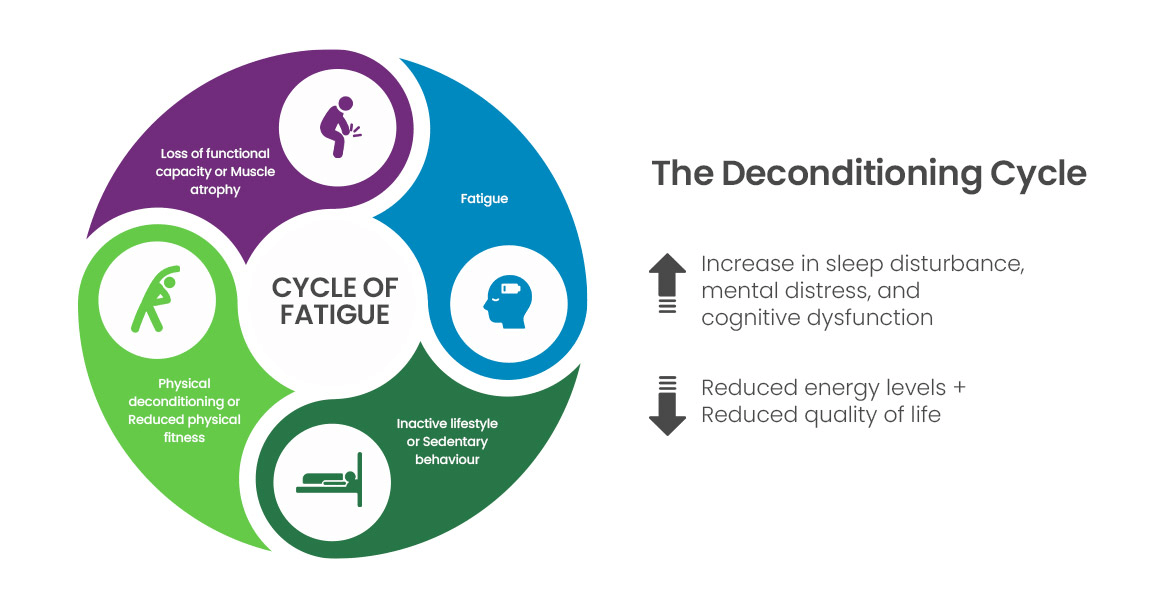
Fatigue is among the top barriers to exercise for cancer patients as treatments such as radiation therapy and chemotherapy can cause significant tiredness. Side effects such as nausea, neuropathy, muscle weakness, and joint pain can also limit your functional ability.

In addition, your EP may delay the commencement of your exercise program if you have a fever, severe anaemia, or severe weight loss.
Healthstin Blog EEAT Exercise Cancer Content Photo 2


Can exercise help people living with cancer?

Exercise is universally accepted as beneficial for everyone. However, research suggests that it can be especially beneficial to the management of cancer. Its wide- ranging benefits include the following:

  • Helps improve treatment and may aid in reducing the side effects of treatment
    Generally, exercise may enhance the body’s response to treatment, regardless of the type or stage of cancer. Moreover, physical activity may also combat the fatigue that comes after treatment. In over 60 studies led by the Memorial Sloane Kettering (MSK) Cancer Centre in the U.S. across different cancer types and treatments, exercise was found to have a very positive effect on patients with fatigue. The Centre’s site stated further that while the human body may be programmed to say it’s too tired, the opposite is actually true: exercise makes the body less tired.
    In cases where surgery was performed such as in lung cancer patients, exercise may enhance recovery and reduce the time required for in-patient recovery. Physical activity may also help ease and address the side effects of cancer treatment such as neuropathy, muscle weakness, and joint pain.
  • Improve your overall health and wellbeing
    Regular physical activity may help enhance your overall health and quality of life after your cancer treatment as it confers benefits such as allowing you to stay active and mobile, help in falls prevention, build strength, prevent muscle and bone loss, aid in maintaining healthy weight, and support heart and lung fitness, among many others.
    There are also studies that associate exercise with better survival rates for some cancers such as breast and colorectal cancers.Building muscle strength is crucial in addressing the body’s decline in mass and strength as well as the deconditioning that occurs after cancer treatment.
  • May help reduce the risks of co-existing conditions and other cancers 
    Other health concerns that you may have in addition to cancer are termed co-existing conditions. One of the most frequently asked queries regarding the cancer and exercise link is “Does exercise prevent cancer?” The Cancer Council of Victoria states that exercise is essential in reducing the risk of many cancers. In addition, regular physical activity may also help manage co-existing conditions and other maladies such as diabetes and heart disease.
  • Improve your mental health
    Regular physical activity may help reduce the risk of anxiety and depression, two concerns of special consideration among cancer patients.


Strategies for finding the motivation to exercise after treatment

One thing that can put perspective into having cancer and getting treatment is realising that each day is different, and there will be days when you feel better than the others. So, the advice given earlier about learning how to listen to your body holds.

Here, we list some strategies to help you get motivated to be physically active.

  • Pick the activities you enjoy 
    Perhaps, this is the most important strategy to employ since this will help ensure compliance in the long term. One of the frequently asked questions regarding the matter is probably this: “What are the best exercises for cancer patients?” The answer, of course, depends on your health condition and goals. Another good response would be the exercises that you enjoy doing because these will ensure compliance.
    Do you like to walk instead of running? Swim instead of lifting in the gym? Practice yoga in place of calisthenics? Choosing what you really enjoy doing can help ensure that you’ll stick with it.
  • Set realistic goals
    As it is, having a cancer diagnosis and getting treatment can already be overwhelming. So, it pays to start with small, achievable goals rather than dream big and then lose motivation when you don’t meet your goal. Conversely, meeting small goals can reinforce your commitment and further motivate you to exercise.
    An offshoot of this strategy is learning how to celebrate your achievements, no matter how small. Positive reinforcement can help you keep going even when circumstances become challenging.
  • Establish a routine
    The way you can get office work done is to plan a specific time for it and treat it like an appointment. The same goes for exercise. Build the habit of exercising by being consistent and creating a routine. Having said that, it is also important to allow variety in your program so it can keep you from being bored and make the habit a lot more fun.
  • Keep an exercise diary
    Journalling your progress allows you to monitor your progress as well as learn what exercises work and what doesn’t. An exercise journal can also serve as an important reminder of the need to keep to an appointed time for regular physical activity.
  • Be mindful of your body
    Are you feeling tired or experiencing soreness or discomfort? Talk to your Exercise Physiologist if your program requires modifying or your body needs a break. Ease into exercise instead of cranking up the intensity especially if you’ve been inactive for a while or have been sedentary for a long time. If your immunity has been considerably weakened by treatment, ask your Exercise Physiologist if you can exercise outdoors or in a less-crowded facility. Stay hydrated and eat a healthy diet.
  • Tap into technology to help fuel your motivation
    Used correctly, fitness apps and wearable devices can be excellent sources of motivation. These can help you monitor your progress as well as keep you on track with your health and well-being goals.
  • Join a group
    Exercising with other people can be motivating and at the same time, the camaraderie can provide you with a sense of support and community.
  • Put your focus on the health benefits and visualise your goals
    Setting your attention to the benefits of exercise and staying positive by visualising your health goals can provide extra motivation and keep you on track even when the going gets tough.

 

Healthstin Blog EEAT Exercise Cancer Content Photo 3


The importance of a customised treatment program: Exploring the FITT Principle

Every individual’s cancer journey is different – how the body reacts to cancer and its treatment, the rate of recovery, etc. Hence, a customised exercise intervention program specially tailored to your condition and needs is vital to ensure optimal results as well as avoid aggravating your state of health.

One tried and tested way of putting together a well-designed exercise intervention program is by following the FITT Principle.

FITT stands for Frequency, Intensity, Time, and Type. Each component works in tandem with each other to help come up with a sensible program and support you in achieving your goals. Let’s explore each component in more detail:

  • Frequency
    It means how often you exercise, the point being how to achieve your health goals without overtraining. Planning for frequency involves the number of times you must perform cardiovascular exercise or strength training to achieve your health goal. It also includes putting in ample rest days to aid in your body’s recovery.
  • Intensity
    This refers to the level of difficulty of the exercise. For strength training, intensity is measured by these variables: the amount of weight lifted, the number of repetitions per set that are completed, and the total number of sets done. For cardiovascular exercise, you can measure how hard you’re working by monitoring your heart rate and aiming to exercise within your target heart rate zone.
  • Time
    This is the duration that you perform your exercise. The recommended guideline for Australian adults is at least 150 minutes (around two and a half hours) of moderate-intensity exercise weekly or half that number for high-intensity exercise.
    The guidelines call for at least 30 minutes of cardio workouts per session while strength training usually lasts anywhere from 45 minutes to one hour. Your Exercise Physiologist will adjust the duration according to your condition and needs.
  • Type
    Type is about the kind of exercise you’ll be performing under the categories of cardiovascular and strength training. Cardio training can involve running, brisk walking, cycling, dancing, swimming, and other aquatic exercises.
    Resistance training may include squats, pullups, pushups, situps, and other moves that use free weights, machines, resistance bands, or body weight to promote muscular hypertrophy or the building of muscle mass.
    Using the FITT principle as a tool is a good way to design a well-structured exercise program for individuals of all fitness levels. It considers variety to help alleviate boredom and burnout because even the most ardent exerciser is bound to get bored doing the same routine day in and day out for months. The FIIT principle is also especially helpful in addressing training plateaus – when your program isn’t working as well as it did in promoting weight loss, for example, or building muscle mass.


Getting FITT in a SMART way

Another useful strategy to ensure optimal outcomes is to use the FIIT principle in tandem with SMART goal setting.

SMART stands for Specific, Measurable, Achievable, Relevant, and Time-Bound. This strategy can help clarify your health goals, make them realistic, align them with your long-term aspirations, and add a sense of urgency to act on them.

Here’s a good example of applying both to a health goal: Instead of just saying “I want to lose weight,” you can modify and clarify the statement as:

“I will lose 15 pounds (specific) in the next three months (time-bound) by doing 30 minutes of cardio exercises five times a week (frequency) and two sessions of 30-minute strength training involving two sets of ten reps each set (intensity) of body weight squats, dumbbell chest presses, machine pulldowns, dumbbell rows, and dumbbell shoulder presses (type) two times a week (frequency).”

Physical Exercise and Cancer

To conclude, embracing regular exercise after your cancer treatment may initially appear challenging. However, it becomes crucial to acknowledge the role of physical activity in helping improve your health and manage the side effects of treatment, among many other benefits, to be of paramount importance.

If you want to start an exercise regimen but don’t know where and how to begin, our Allied Health Team of accredited Exercise Physiologists and Physiotherapists at Healthstin is always ready to support you. Just call 1300 090 931 or click this link to connect.

Adopting strategies, such as choosing enjoyable activities, setting realistic goals, and maintaining a routine, can be effective in overcoming exercise barriers and finding the motivation to be physically active. With the guidance of your Exercise Physiologist, you can successfully navigate your journey towards enhanced health and wellbeing, as well as a fulfilling life after cancer treatment through the transformative power of exercise.

More Articles

Physiotherapist and participant reviewing an NDIS plan letter together at a clinic desk
Friday 02, October 2026

Understanding NDIS Pricing Changes in 2026-27: A...

Healthstin provides NDIS Services in Midland
Thursday 01, October 2026

NDIS Services in Midland: Comparing NDIS-Funded Therapies...

Healthstin provides Accredited Exercise Physiologist in Perth
Thursday 01, October 2026

Why Choose Accredited Exercise Physiologists (AEPs) in...

Healthstin NDIS Providers in Elizabeth SA – Providing complete guide to finding the right support
Thursday 01, October 2026

A Comprehensive Guide to NDIS-Approved Providers for...

Therapeutic Services in Sydney
Friday 18, September 2026

The Benefits of Therapeutic Services in Sydney:...

Category

  • Exercise Physiology 47
  • Physiotherapy 75
People exercising in a swimming pool

Not sure what the right next step is for your situation?

We’ll help you understand which type of support fits your goals, needs, and circumstances.

See What Support Fits

Clear advice. Zero commitment.

We’ll review your situation and tell you which service makes sense—and why.

Loading

Find Professional Exercise Physiology and Physiotherapy Near You

Google map interface with options
Map showing Healthstin Allied Health location

Healthstin Sans Souci Clinic

Sans Souci, NSW

Google Maps interface with options
Map showing Healthstin Hurstville location

Healthstin Hurstville Clinic

Hurtsville, NSW

Google map interface with location details
Map showing Healthstin Brimbank location

Healthstin Brimbank Clinic

Keilor Downs, VIC

Google map interface with options
Map showing Healthstin Melton location

Healthstin Melton Clinic

Melton, VIC

Google Maps interface with location details
Map showing Healthstin Elizabeth location.

Healthstin Elizabeth Clinic

Elizabeth, SA

Google map interface with options
Map showing Healthstin Allied Health location

Healthstin Salisbury Clinic

Salisbury, SA

Map with Google logo overlay
Map showing Healthstin Belmont location

Healthstin Belmont Clinic

Belmont, WA

Map of Australia with states outlined

Coverage Areas for Home Visits

Type in your post code in the search bar and find out if we service your area.
RESULT:
Facebook-f Youtube Linkedin
Call Us

1300 090 931

Email Us

[email protected]

Healthstin Logo for footer

Our mission at Healthstin is to empower your abilities. We remove the barriers so you can take control of your health, maximise results and achieve optimal physical and mental well-being.

Book An Appointment
Quick Links
  • Home
  • About Us
  • Our Team
  • Contact Us
  • Blog
  • Clinics
  • FAQs
Our Clinics
  • Sans Souci
  • Hurstville
  • Brimbank
  • Melton
  • Elizabeth
  • Salisbury
  • Belmont
Services
  • Exercise Physiology
  • Hydrotherapy
  • Group Classes
  • Heal Program
  • Physiotherapy
  • Remedial Massage Therapy
  • Acupuncture
  • Insurances
  • NDIS
  • Home Care Packages
  • Commonwealth Home Support Programme
  • Workers’ Compensation
  • Support at Home
  • Department of Veterans' Affairs
  • Delivery Methods
  • In Clinic
  • Hydrotherapy Pool
  • Gym
  • Mobile
  • In-home Visits
  • Local Community Visits
  • Telehealth
Clinic Hours
New South Wales & Victoria
  • Monday-Friday 08:00AM - 6:00PM
  • Saturday 10AM - 3 00PM by appointment only
  • Sunday Closed
South Australia & Western Australia
  • Monday-Friday 08:00AM - 6:00PM
  • Saturday-Sunday Closed
Office Hours
New South Wales, Victoria, South Australia & Western Australia
  • Monday-Friday 09:00AM - 6:00PM
  • Saturday-Sunday Closed
@ Copyright 2026 Healthstin PTY LTD
  • Terms and Conditions
  • Privacy Policy
a white arrow in a green circle
Free 10-Min Phone Consultation
Accessibility Adjustments

Powered by OneTap

How long do you want to hide the toolbar?
Hide Toolbar Duration
Select your accessibility profile
Vision Impaired Mode
Enhances website's visuals
Seizure Safe Profile
Clear flashes & reduces color
ADHD Friendly Mode
Focused browsing, distraction-free
Blindness Mode
Reduces distractions, improves focus
Epilepsy Safe Mode
Dims colors and stops blinking
Content Modules
Font Size

Default

Line Height

Default

Color Modules
Orientation Modules
We use cookies on our website to give you the most relevant experience by remembering your preferences and repeat visits. By clicking “Accept”, you consent to the use of ALL the cookies.
Do not sell my personal information.
Cookie SettingsAccept
Manage consent

Privacy Overview

This website uses cookies to improve your experience while you navigate through the website. Out of these, the cookies that are categorized as necessary are stored on your browser as they are essential for the working of basic functionalities of the website. We also use third-party cookies that help us analyze and understand how you use this website. These cookies will be stored in your browser only with your consent. You also have the option to opt-out of these cookies. But opting out of some of these cookies may affect your browsing experience.
SAVE & ACCEPT
People exercising in a swimming pool

Not sure what the right next step is for your situation?

We’ll help you understand which type of support fits your goals, needs, and circumstances.

See What Support Fits

Clear advice. Zero commitment.

We’ll review your situation and tell you which service makes sense—and why.

Loading

Real Experts. Real Results.

Not sure if you need Physio, Exercise Physiology or Hydro? We’ll tell you exactly what will work best—for free.

  • Get a customised care plan with just a single call
  • No referrals needed
  • Covered by NDIS, Aged Care, DVA, and Workcover or Private Health

Whether you’re dealing with pain, mobility issues, falls, or recovery, let us take the guesswork out. One of our experts will match you with the right service — at the right location and with the right funding — in under 10 minutes.

Loading
Healthstin Team members in a black suit
Quick Apply Form

Drag & Drop Files, Choose Files to Upload You can upload up to 100 files.
Loading