Dementia is a term that encompasses the loss of cognitive functioning – from thinking and remembering to reasoning and problem-solving to such an extent that it interferes with a person’s daily life and activities. This can range in severity from mild when it is beginning to affect an individual’s functioning to severe when a person must rely on somebody else for activities of daily living such as self-care.
15 out of 1,000 Australians are estimated to be living with dementia according to the 2023 data of the Australian Institute of Health and Welfare. Of this statistic, nearly 257,500 are women and 153,700 are men. The figures are projected to more than double to 849,300 by 2058, due to an ageing and growing population.
While not considered a normal part of ageing, about one-third of all people aged 85 and above have some form of dementia.
There are many forms of dementia. The most common is Alzheimer’s disease, a degenerative brain disease that is caused by nerve cell death and results in brain shrinkage. Another common form is ‘mixed dementia,’ where an individual exhibits symptoms of multiple types of dementia. While the likelihood of developing dementia increases with age, it can also develop in people under the age of 65 (younger onset dementia) or in children (childhood dementia).
As the global population ages, the prevalence of dementia is expected to rise, making it crucial to explore strategies for prevention and management. Among various lifestyle modifications, physical activity stands out as a powerful tool in helping ward off the risk of developing dementia.

How to Prevent Dementia?
Preventing dementia involves a multi-faceted approach that includes a healthy diet, mental stimulation, social engagement, and regular physical activity. While no single strategy guarantees prevention, some studies suggest that a combination of these factors can significantly reduce the risk:
• Healthy Diet – It’s essential to consume a balanced diet rich in fruits, vegetables, whole grains, lean proteins, and healthy fats. Diets such as the Mediterranean diet have been linked to better cognitive health.
• Mental stimulation – Engaging in activities that challenge the brain, such as puzzles, reading, and learning new skills, can help maintain cognitive function.
• Social engagement – Maintaining social connections and engaging in social activities can provide emotional support and cognitive stimulation, both of which are beneficial for brain health.
• Regular physical activity – Physical exercise is perhaps the most impactful lifestyle factor in dementia prevention. According to Alzheimer’s Org, the lack of physical activity has strong enough evidence for increasing the risk of developing dementia. Numerous studies have also shown that regular physical activity offers numerous benefits to mental health: it can influence cognition, improve brain health, and reduce the risk of cognitive decline.
• Hiking and spending time in nature – hiking outdoors is an excellent way to combine physical activity, relaxation, and looking at green and blue spaces. According to a study, looking at green spaces (trees, forests, and woods) as well as blue spaces (rivers, seas, and other bodies of water) may help protect against certain neurodegenerative disorders.
Does Exercise Prevent Dementia?
According to Harvard Health, exercise appears to be linked to reducing the risk of developing dementia. While there is no definitive cure or prevention for dementia, research strongly indicates that exercise can play a significant role in decreasing its risk and delaying its onset.
Here’s how exercise contributes to brain health:
• Improved blood flow — Regular physical activity enhances cardiovascular health, ensuring better blood flow to the brain. This increased circulation helps deliver essential nutrients and oxygen, promoting brain health.
• Neurogenesis – Exercise stimulates the production of brain-derived neurotrophic factor (BDNF), a protein that supports the growth and survival of neurons. This process, known as neurogenesis, is crucial for maintaining cognitive function.
• Reduced inflammation – Chronic inflammation is linked to many neurodegenerative diseases, including dementia. Exercise has anti-inflammatory effects that can protect the brain from damage.
• Enhanced brain plasticity – Physical activity promotes brain plasticity, the brain’s ability to adapt and reorganize itself. This adaptability is vital for learning and memory.
• Stress reduction – Exercise helps manage stress and anxiety, which can negatively impact cognitive function. Lower stress levels contribute to better overall mental health.
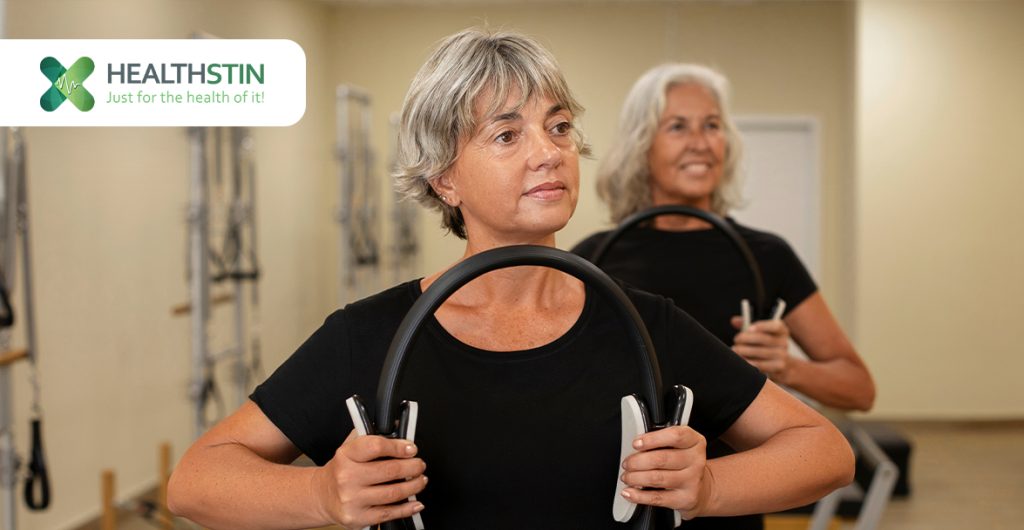
Physical exercises to reduce dementia risk
Incorporating regular physical activity into your routine can be a game-changer for brain health. Here are some effective physical exercises that may help your risk of developing dementia:
• Aerobic exercises – Activities like walking, running, swimming, and cycling improve cardiovascular health and increase blood flow to the brain. Aim for at least 150 minutes of moderate-intensity aerobic exercise per week.
On the other hand, even if you can’t meet the standard guidelines at the start, you’d be glad to know that a little activity is better than none. A JAMA report in 2021 stated that even a low amount of light-intensity activity such as walking may have an effect in reducing your risk for dementia.
• Strength training – Doing resistance training using body weight, free weights, machines, or resistance bands can help you build muscle mass and strength. Recent studies show that strength training can help improve cognitive function and reduce the risk of cognitive decline.
• Flexibility and balance exercises – Yoga and tai chi enhance flexibility, balance, and coordination. These exercises not only reduce the risk of falls but also have calming effects that can improve your mental wellbeing.
• Dancing – Dancing combines physical movement with mental challenge, making it an excellent exercise for brain health. Learning new dance moves and routines requires memory and coordination, stimulating various brain regions.
• High-Intensity Interval Training (HIIT) — HIIT involves short bursts of intense exercise followed by rest periods. This type of exercise has been shown to boost brain function and improve cardiovascular health in a shorter time compared to traditional aerobic workouts.
• Aquatic exercises – some studies suggest that aquatic or hydrotherapy may help improve motor skills and cognitive functions and be used as a therapy for age-related conditions and cognitive decline. Training in water can also help with developing balance and coordination while also helping slow the progression of some neurodegenerative disorders such as Alzheimer’s.
Our Team is ready to support your exercise goals for mental wellbeing
While the quest for preventing dementia continues, incorporating regular physical activity into daily life emerges as a powerful strategy. By engaging in aerobic exercises, strength training, flexibility exercises, dancing, hydrotherapy, and HIIT, individuals can significantly reduce their risk of cognitive decline.
It is essential to recognise that exercise is not a standalone solution but part of a comprehensive approach to dementia prevention. Combining physical activity with a healthy diet, mental stimulation, and social engagement offers the best chance of maintaining cognitive health well into advancing age.
If you or a loved one require guidance as to what exercise interventions are most appropriate for your health condition and goals, reach out to our Allied Health Team at Healthstin. Our Exercise Physiologists and Physiotherapists are all well-trained and experienced in helping support people with a wide range of health conditions in their quest for better health. Call us via 1300 090 931 or click this link to know more or to book an appointment today.