


For individuals with osteoporosis, one of the most common misconceptions about exercise is that it may lead to further fractures or bone damage. In reality, health professionals strongly recommend exercise for people with osteoporosis as it helps stimulate bone formation and maintain bone mass and density.
If you or a loved one is seeking exercises for osteoporosis or management, or are at high risk, it’s essential to consult with an Exercise Physiologist who can guide you on the best exercises to slow the loss of bone mass.
At Healthstin, we have Allied Health Professionals offering Exercise Physiology in all our clinics, delivering effective programmes to improve overall health and manage conditions like osteoporosis. But what exactly is osteoporosis, and how can exercise aid in its treatment?
Understanding Osteoporosis
Osteoporosis is a condition that affects the body’s bones, making the bones brittle and more prone to fractures. Osteoporosis occurs when the body can’t make enough minerals like calcium, which causes the bones to become less dense.
An estimated 940,000 Australians have osteoporosis., with men comprising one-third and women over 60 making up about half of this figure. Women are over twice as likely to have it than men because the hormonal changes that occur after menopause have a direct effect on bone density. The female hormone oestrogen is necessary for bone health. Oestrogen levels decline after menopause. This might result in a rapid loss of bone density.
While largely perceived as a “woman’s disease,” osteoporosis is also a cause of concern for men as a sizeable percentage of people who suffer from hip fractures is comprised of older men.
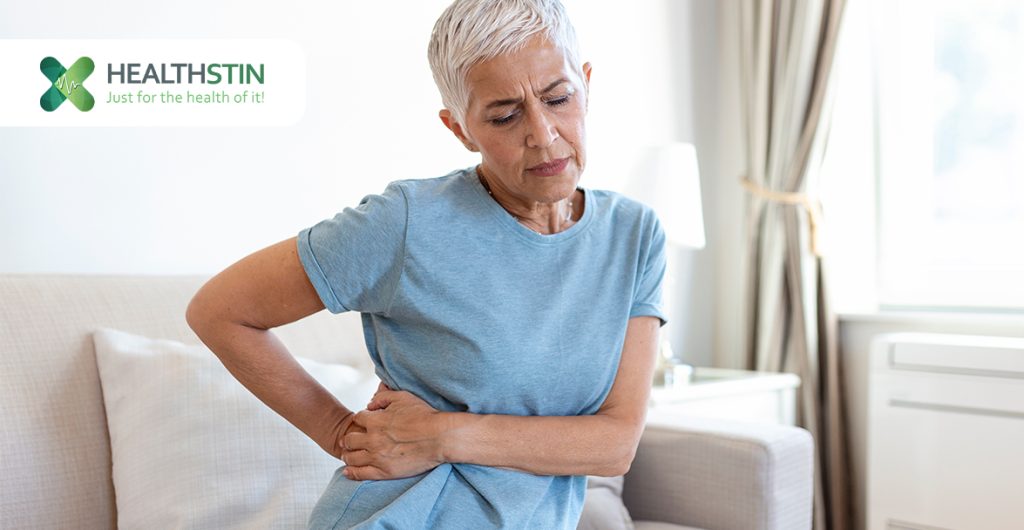
Understanding Osteoporosis
Osteoporosis is a condition that affects bone health, causing bones to become brittle and more prone to fractures. It occurs when the body can no longer produce enough essential minerals like calcium, resulting in decreased bone density.
An estimated 1.2 million Australians are living with osteoporosis whilst some 6.3 million have low bone density. Men make up one-third and women over 60 account for about half of the total number. Women are more than twice as likely to develop osteoporosis due to the hormonal changes post-menopause, which have a direct impact on bone density. The female hormone oestrogen, vital for bone health, significantly decreases after menopause, often leading to rapid bone density loss.
Whilst commonly regarded as a “women’s disease,” osteoporosis is also a concern for men, as a substantial proportion of hip fractures occur in older men.
What are the risk factors for Osteoporosis?
The following groups are at an increased risk of osteoporosis:
- Women aged 50+ of Caucasian or Asian descent
- Men with low testosterone levels, as this hormone is crucial for maintaining bone strength
- Smokers and those who consume alcohol heavily
- Individuals who have undergone bariatric surgery
- People weighing less than 56 kilograms, as a smaller frame and lower bone mass increase the risk of bone loss with age
- Individuals with a parent who suffered from hip fractures later in life
- Those with conditions like inflammatory bowel disease, kidney failure, rheumatoid arthritis, liver disease, or an eating disorder
- People regularly taking oral corticosteroids or high-risk medications
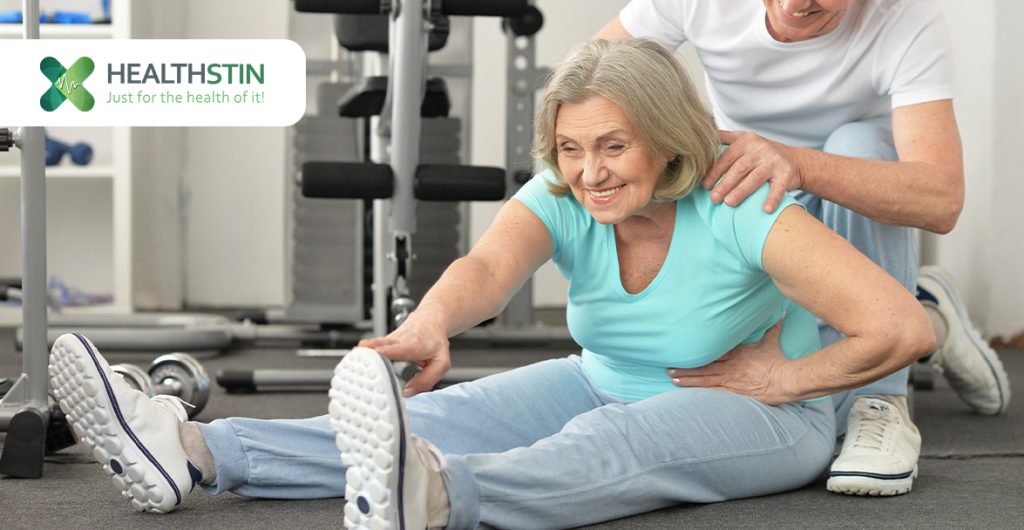
Best exercises for Osteoporosis prevention
Regular exercise, even without osteoporosis symptoms, helps maintain bone mass, builds muscle strength, and improves balance. Here are some exercises and physical activities that can help strengthen bones and prevent osteoporosis:
| Exercise/
Physical Activity |
Description & benefits |
| Balance
and proprioception exercises |
Exercises that improve balance are crucial for bone health. Working on balance increases stability and helps prevent falls, which can lead to fractures. Examples include standing on one leg, yoga, and tai chi. |
| Sports | Sports like tennis involve full-body movement, which promotes bone strength in both arms and legs. |
|
Lunges |
Lunges help improve bone density by engaging the skeletal system with new loading patterns. They increase the force on bones in a way that promotes positive bone stress. |
|
Weight training |
Gradual weight exercises help build muscle and bone strength. Strong muscles also support balance and coordination, reducing the risk of falls. |
However, it’s important to seek professional guidance, as each exercise may require specific precautions to avoid injury.
Osteoporosis physical exercises
Due to varying degrees of osteoporosis and the associated fracture risks, some may feel hesitant to exercise. This is where an Exercise Physiologist comes in, helping to tailor programmes based on individual abilities, goals, and confidence levels.
What exercises should be avoided with osteoporosis?
People with fragile bone density should avoid high-impact or extreme movements. Exercises that risk spinal fractures, like sit-ups, crunches, or bending to touch the toes, should also be avoided.
Flexibility, balance, aerobic, and strength training for Osteoporosis management
Some exercises that may be included in osteoporosis management include building strength as well as flexibility, balance, and cardiovascular fitness:
| Activity/Exercise | Description & benefits |
|
Strength training exercises |
These target all major muscle groups, especially the spinal muscles that are essential for posture. Resistance training can also help maintain bone density. It’s important to avoid twisting the spine awkwardly during these exercises. |
|
Weight-bearing aerobic activities |
Weight-bearing aerobic exercises involve standing and carrying your body weight, which helps stimulate bones in the legs, hips, and lower spine. Examples include walking, dancing, low-impact aerobics, elliptical machines, stair climbing, and gardening. |
|
Flexibility exercises |
Moving joints through their range of motion helps maintain muscle function. Stretching after a workout or during the warm-up session is ideal and should be done slowly and gently without bouncing. |
| Stability and balance exercises | These help muscles work together, reducing the risk of falls. |
|
Swimming and water exercises |
Water-based activities can improve muscular strength and cardiovascular health. Individuals with severe osteoporosis or kyphosis may prefer these exercises due to the reduced impact on the bones. |
Note: The information is general and does not take into account your personal situation. This information is intended to show you the correct exercise technique and should not be used to self-diagnose or self-treat any medical condition. If your pain persists or you have difficulty performing exercise, see your experienced Exercise Physiologist for proper guidance via 1300 090 931.
Our Exercise Physiologists can create personalised routines for osteoporosis patients, ensuring proper form and technique to minimise injury and maximise benefits.
A bone-healthy diet for Osteoporosis prevention
Exercise not only helps prevent osteoporosis but also plays a vital role in managing other health conditions and reducing injury risks. One of the best ways to prevent and treat osteoporosis is through regular balance and weight-bearing exercises, along with a healthy diet that includes:
- Calcium-rich foods as part of a balanced diet including fresh fruit, vegetables, and whole grains
- Sufficient vitamin D intake
- Avoiding smoking
- Limiting alcohol consumption
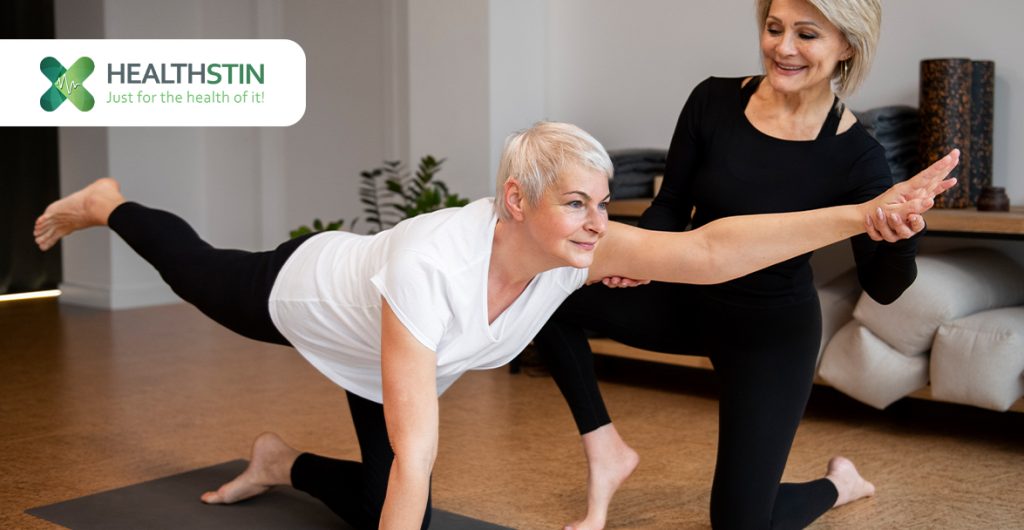
Let our Exercise Experts help with your Osteoporosis exercise plan
Exercise has many benefits for people of any age and functional capacity. Preventing and managing osteoporosis through physical activity interventions is one of them. Maintaining bone strength and density is vital for everyone, especially older adults who are most susceptible to developing osteoporosis. It’s never too late to start exercising as even people who already have the disease stand to benefit much from regular physical activity.
Accredited Exercise Physiologists (EPs) and Physiotherapists play an essential role in preventing and treating osteoporosis. At Healthstin, our EPs and Physiotherapist work with individuals with various health conditions, helping them start and maintain regular exercise routines. They tailor exercise plans to suit individual abilities and collaborate with healthcare teams for a comprehensive approach to treatment.
Call 1300 090 931 or click this link to get started on your journey toward healthy bones and wellness today.





