


After a significant number of years in the service, many Veterans with Disabilities often find themselves living with different forms of mental or physical challenges. These disabilities may cause hindrances in performing daily tasks and affect how veterans live.
Data from the National Health Survey (NHS) conducted in 2020-21 show that males aged 18 years and above who served in the Australian Defence Force (ADF) had a higher prevalence of long-term health conditions compared to the general population. These conditions include significantly higher rates of arthritis (33% compared with 12% of non-military personnel), back problems (31% vs. 19%), heart, stroke, and vascular disease (15% vs. 5.9%), diabetes (14% against 6.9%), cancer (6.7% vs. 2.6%), and chronic obstructive pulmonary disease or COPD (3.6% vs.1%).
Studies also suggest the increased prevalence of risk factors for mental health issues such as dementia, PTSD, and major depressive disorders among Australian military veterans. These include mental or behavioural conditions (27% vs.17% of non-military personnel), depression (12% vs. 9.4%), and anxiety-related disorders. (21% vs. 11%).
However, enjoying a happy and active lifestyle is not impossible. Exercise is necessary for veterans with a disability to improve physical and mental strength for a healthy life. Working with an Accredited Exercise Physiologist is a great start to making a change for your physical and mental health!
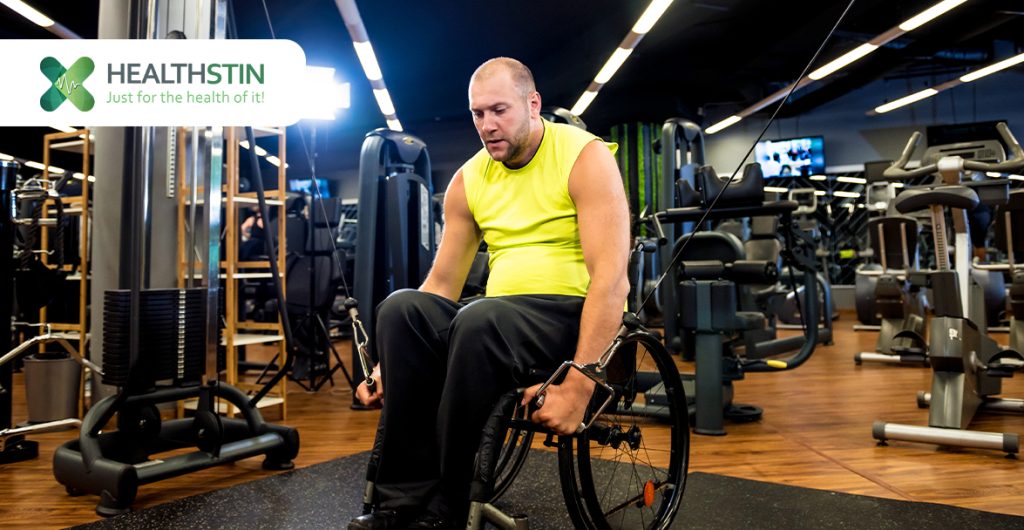
Exercise tips for veterans with a disability
To guarantee effective treatment, it is vital to first get advice from a medical practitioner or an accredited Exercise Physiologist. All veterans’ exercise and health and fitness programs require extensive planning and consideration of personal circumstances.
The following exercise tips are some of the most common physical activities and exercises to perform for veterans living with a disability. It is worth noting that you may need to discuss this with a Certified Health Professional or your doctor to see what would be best suited for you and your needs.
Start with warm-ups
Stretching and low-intensity warm-ups have been shown to help many veterans with problems such as PTSD, anxiety, depression, and chronic pain. Stretching can be done standing, sitting, or lying down.
Move on to stretching
Stretching for 45 to 60 seconds can have a muscular isometric effect, which improves the strength of your muscles. The muscle contracts after roughly a minute of stretching. You can keep stretching until you feel your muscles contract. Stretching as a warm-up can also help you avoid injuries and physical stress.
Upper-Body Exercises
Upper body movements use the muscles of your chest, triceps, biceps, and shoulders. Here are some exercises to target these areas:
Push-ups
A push-up does not always have to be a floor push-up! If you have an injury or wish to work up to a full push-up, you can do push-ups on a wall, from a bench, or using aids to better support your wrists.
Floor Bench Press or Alternative Bench Press
Floor and Alternative Bench Press is a great way to work the muscles of your shoulder, chest, and triceps. Start by lying on the floor or (what is an alternate bench position) using wrist weights or dumbbells. Try 8-10 reps with lightweights for 2-3 sets.
If you have an exercise band, you can also use this instead of weights. Wrap the band around your upper back, grab either end of the band, and push away from yourself in the same motion you would for a bench press or push-up. Try doing this for 10-15 reps for 2-3 sets in a sitting or lying position.
Triceps Workout
Chair dips are one of the most practical triceps workouts you can do at home. You can lift yourself up and down from your chair with 10-15 repetitions for 2-3 sets Make sure to keep your elbows pointing back for every rep!
Core Exercises
Core exercises deal with engaging your abs, lower back, and upper back muscles (not just your “6-pack”. Here are some of the recommended exercises:
Sit-ups or Crunches
You can work on different abdominal sections while lying on your back. You flex your abs and lift your shoulders off the floor and into a seated position.
You can also do a reverse crunch by lying on your back with your arms at your sides. Raise your knees so that the angle between your thighs and calves is 90ª and your calves are parallel to the floor. Next, lift your hips and pull your knees as close to your chest as you can. Hold, and then slowly return to your starting position.
Swimmers
This is a core-balancing activity that works the lower back and hamstring muscles. It can also be done while sitting down but requires stretching and flex repetitions. It involves bending forward in your chair, bringing your chest to your knees, and then sitting upright, utilising the muscles in your lower back.
Lower-Body Exercises
Lower body exercises require movements of the legs, thighs, and hips. Although these can be performed at home, it can be difficult, especially for veterans who have suffered from spinal injuries or have mobility issues. But by sitting down and working with an Exercise Physiologist, it is still possible to adapt the exercise specifically to you. Here are some of the exercises:
Squats
If your disability makes it hard for you to move your lower or upper body, contact your Exercise Physiologists to adapt the exercise to suit your needs.
Stand with your feet about shoulder-width. Make sure that your knees are over your ankles and your hips are over your knees. Straighten your back. Don’t slouch! Straighten your arms out in front of you with your palms facing down. Take a deep breath, then bend your knees slowly.
As you go lower, keep your butt out, your chest and shoulders straight, and your head facing forward. The best way to squat is to go as low as you can with your hips just below your knees.
Slowly rise, stop halfway up, and hold for 3 seconds. Do 2-3 sets of 8-12 repetitions.
Lunges
The lunge is a great way to build strength and stability in your legs. Take a large stride forward, lowering your back knee to the ground, while keeping your chest up and your stomach engaged. Rise back up and bring your feet together, then repeat on the other side. Try to avoid extending your knee past your foot, keeping your shins vertical.
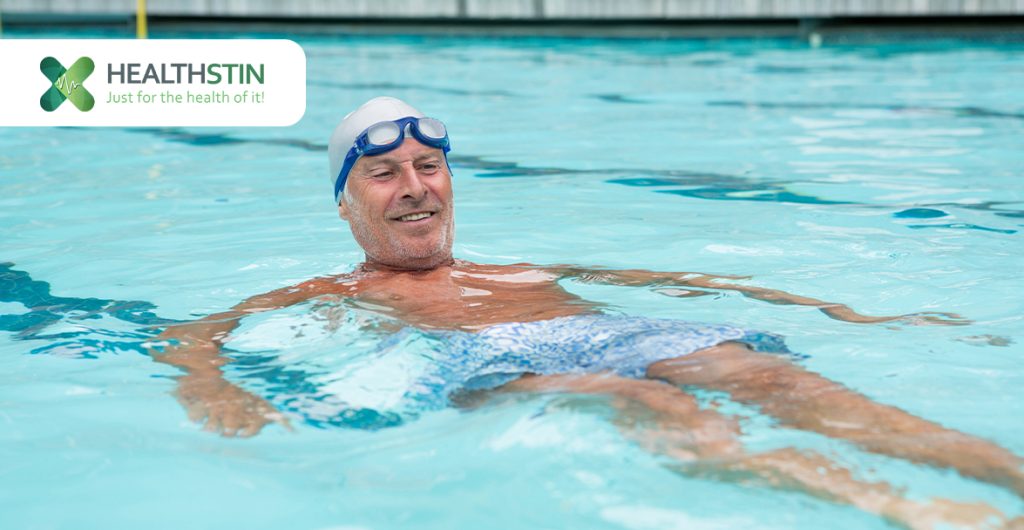
Hydrotherapy and water-based exercises
Aquatic therapy is also highly recommended for veterans living with a disability as it provides an array of wonderful benefits including weight loss, relief of chronic pain, and help with metabolic and neurological disorders.
Exercising in water lets you take advantage of buoyancy. The body feels lighter in a water environment, and it also enables you to move your muscles and joints in a fuller range of motion – ideal if you have mobility challenges such as arthritis.
Water-based therapy can also do wonders for your cognitive challenges. Moving through water has profound effects that refresh and revitalise both the body and the mind.
You can also explore other practices such as Yoga and Tai Chi that focus on gentle movements and promote flexibility and mobility as well as build strength.
Note: The information is general in nature and does not take into account your personal conditions into consideration. This information is intended to show you the correct exercise technique and should not be used to self-diagnose or self-treat any medical condition. If your pain persists or you have difficulty performing an exercise, get in touch with your experienced Exercise Physiologist for proper guidance via 1300 090 931 or click this link.
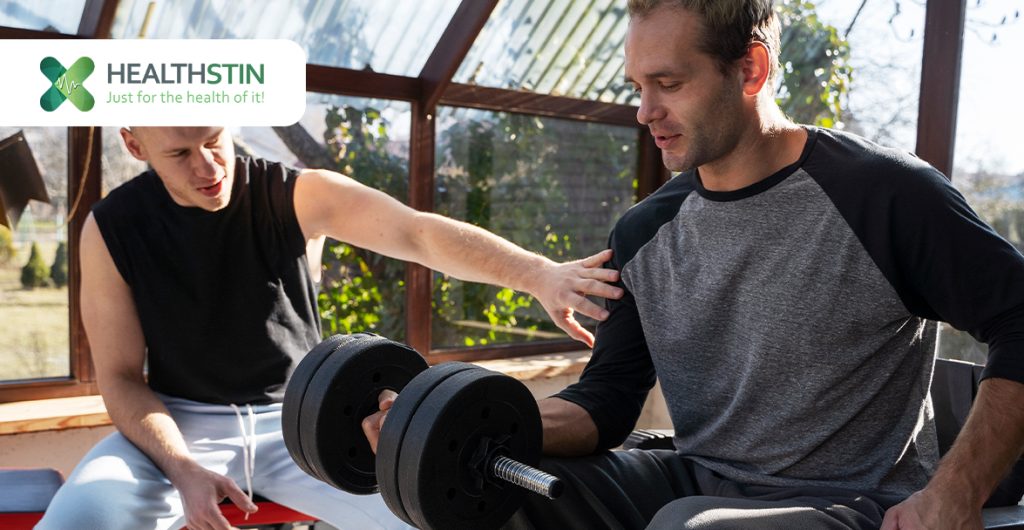
How exercise can help veterans with disabilities
Exercises for veterans with a disability not only help with the development of their physical well-being but also their mental well-being.
If you or someone you know is a veteran, then ensure that you have received the proper treatment. The Department of Veterans Affairs (DVA) can help you find out if you are eligible for medical care and other assistance for your health and well-being. Healthstin has DVA Allied Health Professionals who are well-experienced in delivering a wide variety of exercise programs. Our DVA Veterans Exercise Physiology team at Healthstinc Clinic in Sans Souci as well as our other five locations accept all referrals.
For veterans living with a disability, staying physically active is essential to having a more productive and higher quality of life. While functional capacity and health conditions may make exercise a challenge, it is possible to achieve better health and well-being with determination and support from your friendly Health Professional.





