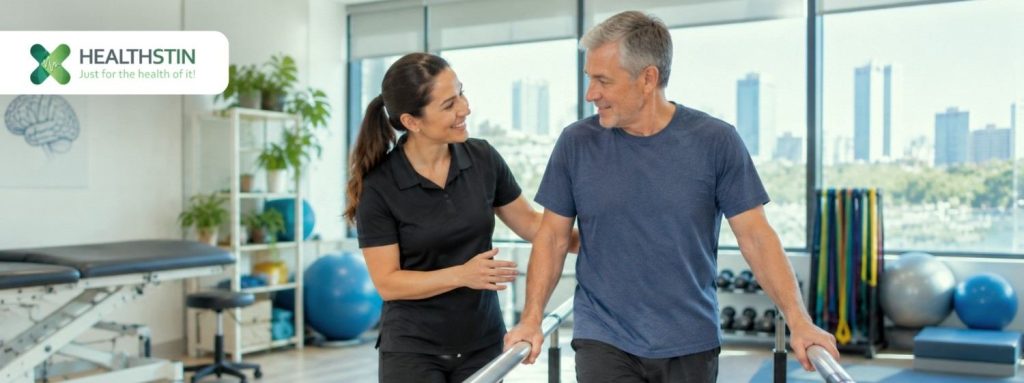
It has been reported that many people with disabilities, including those with visual impairments or who are legally blind, participate in little to no exercise.1 Visual impairment is most commonly known as people with partial or total loss of vision in both or one eye. It can be caused by either birth or an injury.
However, a visual disability does not prevent you from reaping the benefits of exercise. Exercise for the visually impaired can benefit both physical and mental health. An Exercise Physiologist can provide guidance and assistance on the most appropriate and safe forms of exercise.
Healthstin Clinic has a team of Allied Health Professionals including Accredited NDIS Exercise Physiologists. Visit our page to learn more.
To gather the best exercise tips for individuals with visual impairments let’s first understand what a visual disability is and what eyesight can be considered legally blind We will then go through some appropriate exercises for people with visual impairments.
What is a visual disability?

The term “visual impairment” refers to the loss of vision in one or both eyes. Chronic eye conditions differ in their presentation, treatment, and severity. Visual impairments can be caused by a variety of factors. Diabetes, circulatory issues, cataracts, macular degeneration, and an eye or head injury are all examples of systemic health problems. Vision problems are common as people age and can even be hereditary. The severity and type of vision loss have an impact on the subsequent visual impairment.
What eyesight is considered legally blind?
A “legally blind” person or someone who is living with a visual impairment is unable to see within six meters, whereas someone with normal vision can see at 60 meters. Their field of vision is only 20 degrees in diameter. A person is said to have “low vision” if they have a permanent vision loss that cannot be corrected with glasses and interferes with their daily functioning.
Appropriate Exercise for People with Visual impairments
Living with vision loss does not mean that one has to live a sedentary life. Visually impaired people can participate in a variety of activities. Most of these, however, may require complete assistance and guidance. Here are some activities and exercises that can be performed by a person with visual impairments.
Strength training is helpful to individuals who have low vision and blindness just as much as it is to everyone else and should be done at least twice a week. Beginning with machines and gradually incorporating more challenging free-weight exercises once the patient is proficient may be beneficial. Because visual cues are ineffective with this population, task-oriented cues and movements must be used.
Martial arts and Self-Defence can be introduced and learned with the assistance of a qualified instructor. A visually impaired person can work with an expert who can guide them through movements and provide repetition one-on-one. Consider trying a martial art that emphasises movement and body awareness. Target and object recognition martial arts may be more difficult for a beginner.
Yoga and Pilates offer excellent opportunities to enhance balance and proprioception through body weight or small amounts of external load. It will supplement a well-rounded strength and conditioning program if a person has previously engaged in very little physical activity.
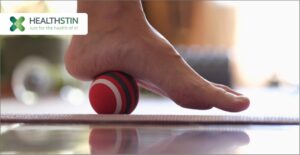
Barefoot exercises are an excellent way for any visually impaired individuals to improve their balance, especially those who rely on the receptors in their feet to detect uneven terrain. To do barefoot training, all you have to do is take off your shoes, sandals, or slippers whenever you can. This will allow you to become more conscious of your surroundings. Find a safe, peaceful area where you can move freely without being distracted. This exercise can improve your balance and obstacle navigation.
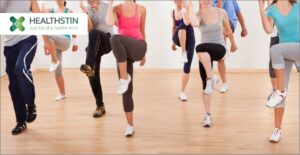
Aerobic activity is essential for cardiovascular health. Walking, running, and cycling are all common aerobic activities for people with visual impairments; however, some modifications may be required.
Physical fitness for visually impaired requires extreme guidance and precaution. Some may necessitate modifications or special equipment, whereas others can be accomplished with little or no assistance or adaptation.
The primary concern when working with people with visual impairments is safety. It is essential to understand that each individual has a different need despite having identical ailments and other health concerns or chronic diseases that may be present. If no other health concerns exist, exercise guidelines for otherwise healthy populations can be used; however, modifications are required to increase safety.
Before starting an exercise program, it is important to talk to a doctor, an ophthalmologist, and an exercise physiologist. We do not recommend engaging in strenuous activities if you have had eye surgery because some people who have had eye surgery may be at risk of intraocular bleeding.
At Healthstin Clinic, we have accredited allied health professionals whose goal is to help you get the most out of every day. So, if you need help with your exercise programme from an exercise physiologist, give us a call at 1300 090 931 or send us an email at [email protected]. Or visit our Exercise Physiology Page – https://www.healthstin.com.au/exercise-physiology/
Disclaimer: The information is general and does not take into account your personal situation. This information is intended to show you the correct exercise technique and should not be used to self-diagnose or self-treat any medical condition. If your pain persists or you have difficulty performing exercise, see your experienced Exercise Physiologist for proper guidance on 1300 090 931.
Reference:
- Richardson, M., Petrini, K., & Proulx, M. J. (2022). Access to exercise for people with visual impairments during the Coronavirus-19 pandemic. British Journal of Visual Impairment, 0(0). https://doi.org/10.1177/02646196211067356
Read article: Exercise and Cancer: Q&A With Carly