If you are studying Exercise Physiology, or thinking about it, salary is probably one of the first questions on your mind. It is also one of the hardest to answer. Course brochures talk about helping people move better and manage chronic conditions, and most job ads skip the number altogether.
That gap makes it difficult to weigh an exercise physiologist career against physiotherapy, nursing, or a job outside healthcare entirely. Without real figures, you are left guessing whether a graduate offer is reasonable, or whether staying in the profession for five, ten, or twenty years actually pays off.
This guide sets out current salary benchmarks by career stage, the factors that move your pay up or down, and the industries where Exercise Physiologists tend to earn the most. It also looks past the number on the payslip, at career progression, job security, and what the work actually involves day to day.
What Does an Exercise Physiologist Do?
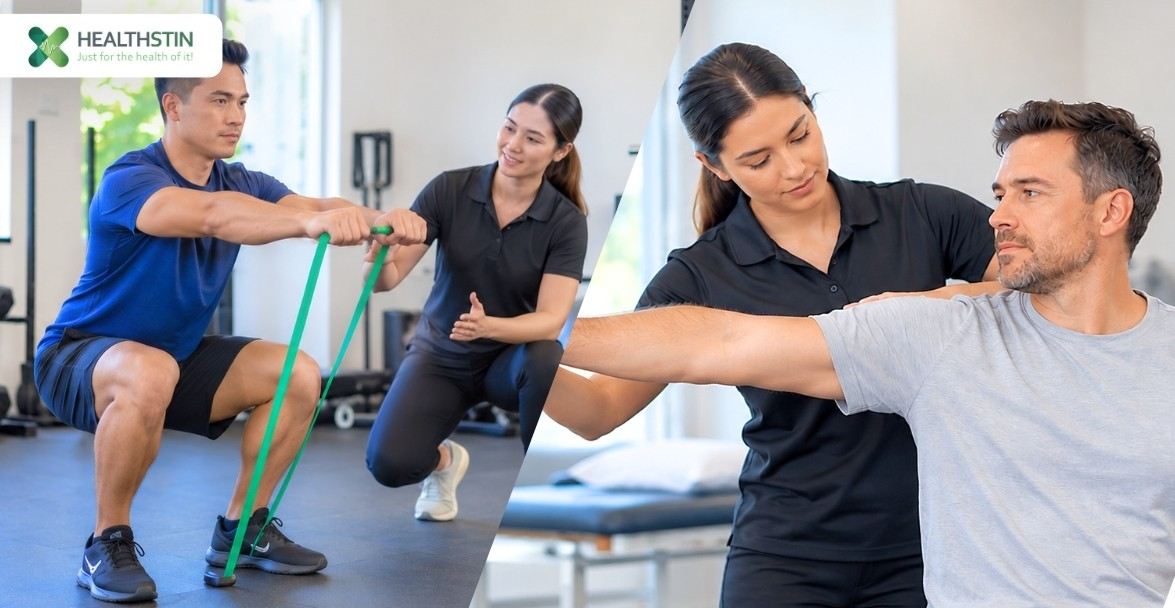
An Accredited Exercise Physiologist (AEP) is a university-qualified allied health professional who uses prescribed exercise and movement to prevent, manage, and treat chronic disease, injury, and disability.
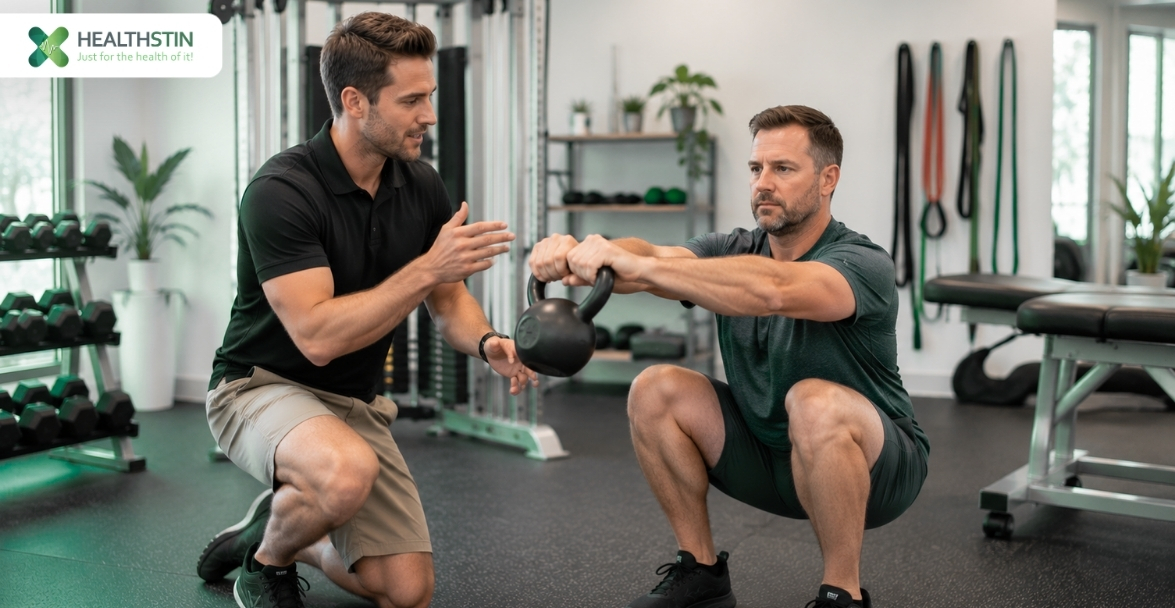
The role sits closer to clinical rehabilitation than to personal training. An AEP assesses how someone moves, works out what is holding them back, and builds a programme that is safe for their specific condition, whether that is type 2 diabetes, a spinal cord injury, or recovery after a stroke.
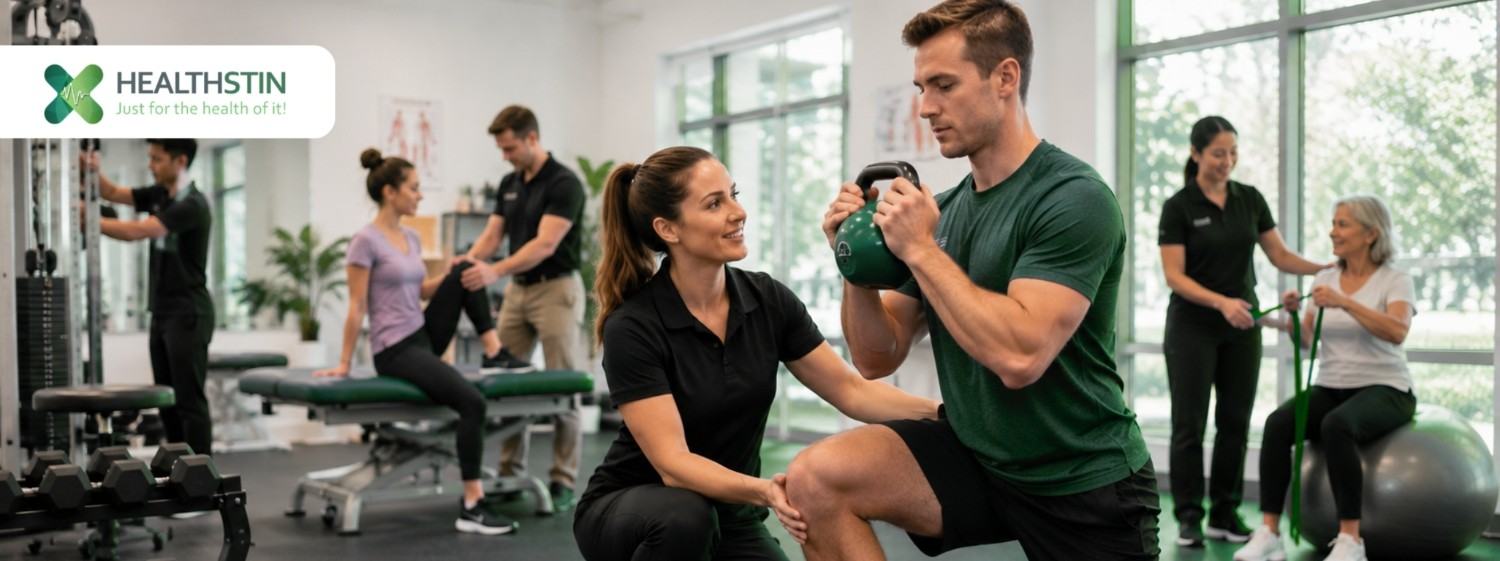
Exercise Physiologists work in many different places and are funded through various sources, such as NDIS, DVA, aged care, private insurance, and workers’ compensation. You can also find them in hospitals, community clinics, and private practices. Their job is to use science-backed exercise programs to help people manage and improve a wide range of health issues, including heart and lung problems, diabetes, neurological disorders, physical injuries, cancer, and mental health conditions.
How Much Do Exercise Physiologists Earn in Australia?
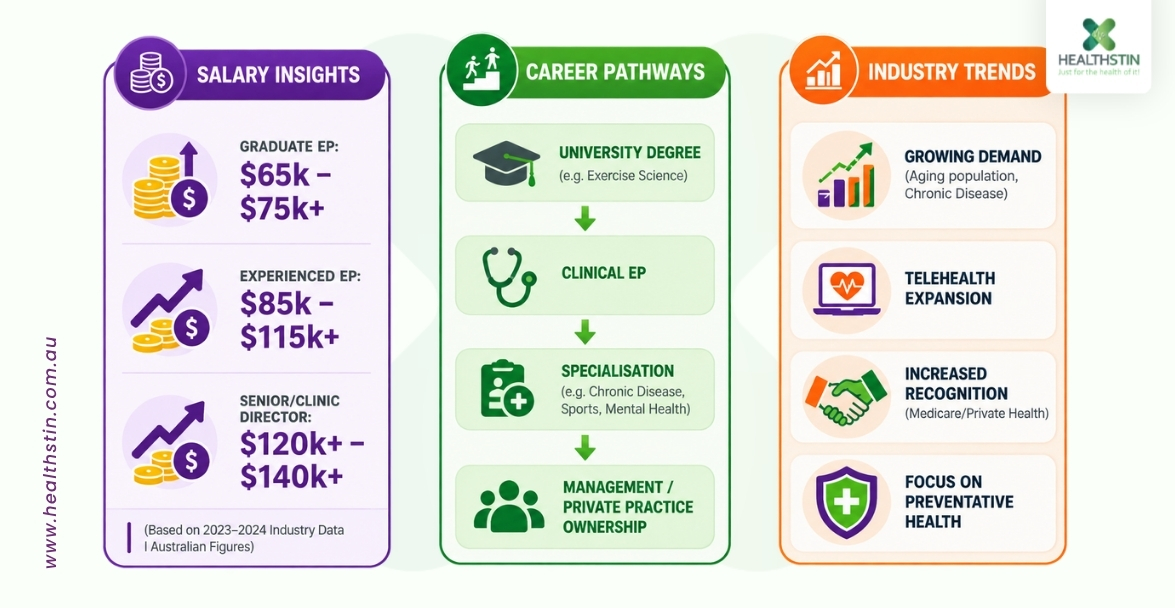
Exercise physiologist salary Australia figures generally sit between around $64,000 for new graduates and $120,000 or more for senior clinicians, clinical leads, and practice owners, depending on experience, location, and sector.
Unlike some other healthcare professions, exercise physiology doesn’t have one single, industry-wide pay scale, which is why salary estimates can vary quite a bit depending on where you look.
To give you a good idea, the table below shows typical full-time salary ranges based on job market data from SEEK, Indeed, Glassdoor, and ERI as of August 2026.
| Career Stage | Typical Salary Range (FTE, indicative) |
| Graduate AEP (0–1 year) | $64,000 – $70,000 |
| Early Career (1–3 years) | $68,000 – $80,000 |
| Mid-Level AEP (3–6 years) | $78,000 – $92,000 |
| Senior AEP (6+ years) | $90,000 – $105,000 |
| Clinical Lead / Management | $100,000 – $125,000+ |
Some broader labour-market sources, including the Australian Government’s Your Career site, put median full-time weekly earnings for the wider occupation group above $2,000 a week, equivalent to over $100,000 a year. That is noticeably higher than most job-ad-based estimates, which shows how much the number can move depending on where you look.
Factors That Influence Exercise Physiologist Salaries
A handful of factors consistently move pay up or down, on top of your years of experience.
Years of Experience
This is the biggest factor in your earning potential. Job market data consistently shows a $30,000 to $40,000 (or more) gap between what graduates make and what senior clinicians earn.
The best part? That pay bump isn’t just about how many years you’ve been on the job—it comes down to taking on more complex client cases and handling decisions independently.
Qualifications and Certifications
As an accredited exercise physiologist, having your Exercise & Sports Science Australia (ESSA) accreditation is just the starting point. If you want to push for higher pay—especially in senior or leadership roles—getting extra training or postgraduate qualifications in specialised areas like heart health, brain rehabilitation, cancer exercise, or diabetes education can really help your case.
Geographic Location
Salaries in Sydney and Melbourne usually sit a bit higher than the national average, mainly because living costs are higher in those cities. On the other hand, regional and rural areas often offer higher base pay or help with moving costs to attract staff, so big cities don’t always guarantee the biggest paycheck.
Public vs Private Sector Employment
Working in public hospitals or health services usually means you get steady, standardised pay rates, solid retirement benefits, and predictable work hours. On the flip side, private practices and community clinics often give you a wider variety of daily clients, and if you move into senior or business roles, there is potential to earn more—though pay structures tend to vary a lot more from one employer to the next.
Community vs Clinic-Based Roles
Working out of a fixed clinic usually means a predictable daily schedule with zero travel time between clients. On the flip side, community or home visit roles require you to travel and adapt to a wide range of home environments. Because of the extra driving and logistics, some employers offer a special travel allowance or bonus to make up for it.
Leadership Responsibilities
You can boost your pay even before stepping into full-time management by taking on extra responsibilities like mentoring newer staff, supervising students, or stepping up as a clinical lead. When you’re interviewing for a role, it’s always a good idea to ask upfront how those extra leadership duties translate to a higher paycheck.
Which Industries Pay Exercise Physiologists the Most?
Where your caseload is funded has a real effect on both pay and day-to-day variety.
NDIS Services
NDIS exercise physiology roles are among the most in demand, with active participant numbers nationally passing 770,000 in the NDIS Quarterly Report for the March 2026 quarter. Pay here reflects the reporting and documentation load alongside clinical work, and can sit above the general average once a full caseload is built.
Occupational Rehabilitation
Handling workers’ compensation and return-to-work cases often pays well because it requires detailed reporting and directly helps lower insurance costs by speeding up recovery. This area of work is a great fit for practitioners who enjoy communicating regularly with case managers, employers, and primary doctors.
Private Practice
Private practice exercise physiologists’ pay in private clinics can vary a lot. Clinic owners and experienced practitioners in established practices often earn significantly more than the average, while those just starting out in smaller clinics might make about the same as—or even less than—what they would in community health or disability support roles.
Community Healthcare
Working in community health—such as roles funded through state health services—usually means you get steady, standardised pay rates along with a great variety of clients dealing with chronic illnesses and rehabilitation.
Aged Care
Working in aged care—through programs like Support at Home—is all about helping older Australians stay independent and preventing falls. Pay generally sits right around the industry average, and as Australia’s population ages, demand for these roles is growing fast.
DVA and Veteran Services
Working with veterans funded by DVA involves helping individuals manage long-term injuries and health conditions, which usually means building ongoing relationships with clients over many years. While government guidelines determine how sessions are structured, the pay is generally similar to other publicly funded healthcare roles.
[MID-CTA]
Ready to Start Your Exercise Physiology Career?
Reading about salary ranges is one thing. Knowing what a role actually looks like day to day, and whether an employer will back your development, matters just as much.
At Healthstin, Exercise Physiologists support clients through government disability, veteran, aged care, and workers’ compensation programs, all while receiving hands-on mentoring and a clear path to career growth. Whether you are still studying, about to graduate, or already accredited and thinking about a career change, a quick chat is an easy, no-pressure way to explore what opportunities are currently open near you.
Explore Current Opportunities at Healthstin on our careers page, or get in touch to ask about roles near you.
Salary Progression: From Graduate to Senior Exercise Physiologist
Pay in this profession tends to move in stages rather than a straight line, tied to caseload complexity and responsibility rather than time served alone.
Graduate Exercise Physiologist
Your first year is typically about building a caseload safely, with closer supervision and a narrower scope of conditions. Graduate exercise physiologist salary figures reflect this reduced caseload and the training investment an employer is making in you.
Developing Clinical Skills
During their first few years on the job, most practitioners gradually handle more complex health cases, manage larger client lists, and work with greater independence. As they need less supervision and can see more clients, their pay typically increases.
Senior Clinician Roles
Senior roles usually involve a full caseload of complex clients, informal mentoring of newer staff, and sometimes a specific clinical focus area such as neurological or cardiac rehabilitation. This is where senior exercise physiologist pay starts to separate from the mid-career average.
Clinical Leadership Opportunities
If you love helping other clinicians grow just as much as treating patients directly, a clinical lead role might be a great fit. In addition to managing your regular clients, you’ll guide your team through case reviews, oversee operations, and maintain quality of care.
Management and Business Development Pathways
Some practitioners eventually move away from seeing clients all day to focus on running clinics, growing the business, or overseeing multiple locations. While you still need a strong healthcare background for these jobs, in these cases, success is measured by how the business grows and profits rather than the number of patient appointments.
Is Exercise Physiology a Growing Career in Australia?
Yes. Exercise Physiology is one of the more consistently in-demand allied health professions in Australia, driven by chronic disease, an ageing population, and the scale of the NDIS.
Health Care and Social Assistance is Australia’s fastest-growing employment sector, adding more than 100,000 jobs in the past year and projected to remain one of the three biggest sources of new jobs nationally through to 2034. Around three in five Australians now live with at least one chronic condition, and the proportion of Australians aged 65 and over has roughly doubled since the 1970s, both of which sit directly inside an Exercise Physiologist’s scope of practice.
As of March 2026, the NDIS supports over 770,000 participants, and therapy services like exercise physiology graduate jobs continue to be one of its most widely used areas of care. On top of that, a growing focus on preventative health and moving rehabilitation out of hospitals and into local communities is creating even more job opportunities for new graduates.
Beyond Salary: Other Benefits of an Exercise Physiology Career
Pay is one part of the picture. Most clinicians who stay in this profession long-term point to other factors as well.
Career Satisfaction
Clinicians in this profession often describe the reward of watching someone regain a skill they had lost, whether that is walking further, returning to work after an injury, or managing a long-term condition with more confidence, as different to what a payslip alone can offer. General observation about the profession, not a specific individual’s story. A real, consented case study would strengthen this section; see Self-Check.
Making a Meaningful Impact
Most days, it is deeply rewarding work to help someone stay independent in their own home for another year or show them how to manage a long-term health condition so it doesn’t take over their life—even if the paperwork and admin side of the job can be a drag.
Flexible Work Arrangements
Many roles offer a mix of clinic and telehealth delivery, and part-time or job-share arrangements are common enough to be worth asking about directly at interview.
Diverse Client Populations
Because we handle everything from NDIS and veteran care to aged care and workers’ compensation, our team gets to work with a great mix of different ages and health goals every day instead of seeing just one type of client.
Professional Development Opportunities
Ongoing CPD is a requirement of ESSA accreditation, so most employers factor some study leave or training budget into the role. How much varies significantly between employers, and it is a fair thing to ask about before accepting an offer.
Work-Life Balance
Full-time Exercise Physiologists work about 43 hours a week—pretty typical for healthcare roles—and about two out of three have full-time positions.
Common Career Pathways for Exercise Physiologists
Exercise Physiology does not lock you into one type of work for your whole career. Most clinicians move between these areas more than once.
Community Rehabilitation
Working with people recovering from injury, illness, or surgery in community and home settings, often a first destination for new graduates.
Disability Services (NDIS)
Supporting NDIS participants to build functional capacity toward goals in their plan, from mobility to community participation.
Neurological Rehabilitation
Working with clients recovering from stroke, or living with Parkinson’s disease, multiple sclerosis, or acquired brain injury, usually alongside additional CPD in this area.
Chronic Disease Management
Supporting clients managing type 2 diabetes, cardiovascular disease, or persistent pain with structured, longer-term exercise programmes.
Occupational Rehabilitation
Working within workers compensation and return-to-work schemes, with a strong focus on functional capacity and reporting.
Leadership and Clinical Education
Supervising students, training newer clinicians, or contributing to university placement programmes, often taken on alongside an ongoing clinical caseload.
What Employers Look for in Exercise Physiologists
Beyond accreditation, most employers are assessing the same handful of qualities, whatever the job ad says.
Clinical Skills
Sound assessment, safe exercise prescription, and the judgement to modify, progress, or refer a client on when something changes.
Communication Skills
Explaining a programme to a client in plain and simple terms, then writing it up clearly for a GP, support coordinator, and insurer.
Problem-Solving Ability
Adjusting a session on the spot when a client’s pain flares up, their equipment is not available, or their goals shift.
Participant-Centred Care
Customising a programme around what the person actually needs and he/she wants to achieve, instead of the usual prescription.
Multidisciplinary Collaboration
Working alongside physiotherapists, occupational therapists, and support coordinators, sharing updates so care stays joined up rather than siloed.
Why Healthstin Is a Great Place for Exercise Physiologists
At Healthstin, our Exercise Physiologists work with a wide variety of clients—from NDIS and veteran care to aged care and workers’ compensation—alongside a team of physiotherapy, hydrotherapy, and remedial massage therapists. If you’re a new graduate, you won’t be thrown into the deep end; we provide structured training and ongoing mentoring so you always have support as you grow.
What makes joining our team a great experience:
- You get a structured orientation with a lighter workload while you settle in.
- Ongoing clinical mentoring that goes on after your first few months.
- Diverse client cases across different funding types, keeping your days interesting.
- Defined steps to move from a graduate role to a senior position.
- Opportunities to step up by supervising students or taking on lead roles.
- National expansion that opens up new doors as our services reach more areas.
- Flexible service delivery, including clinic, home visit, and community-based models
We are upfront that community-based work involves travel, and that funding paperwork is part of the job in any NDIS, DVA, or aged care role. Knowing that going in is more useful than finding out three months into a new position.
Building a Rewarding Career in Exercise Physiology
Exercise Physiology continues to be one of Australia’s fastest-growing allied health professions. Salary is an important part of that story, and the numbers above give you a realistic starting point for comparing offers and planning ahead.
Pay alone does not capture the whole picture, though. Job stability, career progression, flexibility, and the chance to help people move, recover, and stay independent all factor into whether this profession is a good long-term fit. For most clinicians who stay in it, it is the combination of a decent income and meaningful work that makes the difference.
Frequently Asked Questions
How much does a graduate Exercise Physiologist earn in Australia?
Graduate exercise physiologist salary figures generally sit between $60,000 and $70,000 a year full-time, though this varies by state, employer, and whether the role is metro or regional.
Are Exercise Physiologists in demand?
Yes. Health Care and Social Assistance is Australia’s fastest-growing employment sector, and demand for Exercise Physiology specifically is supported by the scale of the NDIS, an ageing population, and rising chronic disease rates.
Can Exercise Physiologists earn six figures?
Some senior clinicians, clinical leads, and practice owners earn six figures in private practice and management roles. It is not the norm at graduate or early-career level, and reaching that point usually takes several years of clinical experience.
What industries employ Exercise Physiologists?
NDIS services, aged care, DVA and veteran services, workers’ compensation and occupational rehabilitation, private practice, hospitals, and community health services all employ Exercise Physiologists.
Is Exercise Physiology a good career?
For people who want hands-on clinical work with a genuine mix of clients, it can be a strong long-term career, offering job stability, flexibility, and clear progression from graduate to senior and leadership roles. Like any healthcare career, it also comes with administrative demands and, in community roles, travel time worth factoring in.
How do I become an Accredited Exercise Physiologist?
You need an ESSA-accredited university qualification, normally a four-year bachelor’s degree or a three-year degree plus an accredited postgraduate course, along with 500 hours of practicum and successful accreditation through Exercise & Sports Science Australia (ESSA).
Join a Team That Invests in Your Growth and Success
A good employer should give you three things: a realistic starting salary, a clear path to build on it, and enough caseload variety to keep developing your clinical judgement.
If that is what you are after, we would like to hear from you. Apply for an Exercise Physiology role with Healthstin today, and our team will talk you through current caseload, mentoring structure, and the regions where we have capacity right now.
Prefer to ask a few questions first? Call us on 1300 090 931 or book a time to talk.
Key Takeaways
- Salary varies by stage and sector. New graduates typically start out making between $60,000 and $70,000 a year. As you step up into senior or leadership positions, that can grow to around $100,000 or more, though exact pay depends on your location and the specific employer.
- Demand is strong. Health Care and Social Assistance is Australia’s fastest-growing employment sector, backed by NDIS activity, an ageing population, and rising chronic disease rates.
- Where you work changes your pay and your day. NDIS, DVA, aged care, workers compensation, and private practice all offer different pay structures and caseload mixes.
- Progression is achievable. Most clinicians step up from a graduate role to senior and leadership positions over the years, with help from mentors, ongoing professional training, and taking on more challenging client cases.
- Salary is not the whole story. Flexibility, career satisfaction, and diverse client populations matter to long-term job satisfaction as much as the number on the payslip.
DISCLAIMER
This article is meant to give you a general idea of what exercise physiologist salaries and career paths look like in Australia.
The salary numbers here are estimates from August 2026 job market data. They are not a guarantee of what any specific company (including Healthstin) will pay. Pay will still depend on your experience, qualifications, location, and the specifics of your job offer. Plus, government rules around funding like the NDIS can always shift over time.
If you want to double-check the latest pay rates, regulations, or funding guidelines, it’s always best to look directly at official sources like ESSA, Jobs and Skills Australia, and the NDIA.
Please keep in mind that this article is meant purely for information and doesn’t count as a job offer or a promise of a specific salary.