


Living with arthritis can have a significant impact on your quality of life, making simple tasks such as walking, climbing stairs, or even opening a bottle, painful. This can also make participating in work and family activities challenging and uncomfortable.(1)
It can be challenging to live life to the fullest due to the persistent pain and stiffness associated with arthritis. One of the treatment options for those with arthritis is hydrotherapy, also known as aquatic therapy. In this section, we’ll discuss the specific benefits of hydrotherapy for people with arthritis.
What is Hydrotherapy, and how does it work to help with arthritis?
Hydrotherapy treatment or aquatic therapy, refers to any type of therapy that uses water, including sitting in a hot whirlpool to warm up joints, supervised physical therapy in a pool, performing specific aquatic exercises for people with arthritis, or swimming to build strength.
This type of exercise is not limited to knee joint issues and can be beneficial regardless of how many joints are affected. It can also be helpful after joint replacement surgery or for those with back pain or other forms of arthritis.
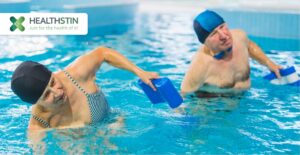
The Benefits of Hydrotherapy for People with Arthritis
Studies have shown that regular exercise can be beneficial for people with arthritis, improving joint function and reducing symptoms like fatigue, as well as reducing the risk of developing chronic diseases associated with inflammatory arthritis. However, performing land-based exercises can be challenging, particularly for those with arthritis affecting their joints and knees.
While land-based exercises can be beneficial,(1) many people with arthritis may find it difficult to continue due to the pain when performing this type of exercise. This is where hydrotherapy can be an effective rehabilitation option. Hydrotherapy exercises for arthritis benefits include the following:
Reduced Stress on joints
Physical activity in the water reduces the impact of stress from the ground reaction as it eliminates gravity while creating resistance to improve muscle strength. Water aerobics exercises have less impact compared to stepping on dry land.(2) Working out in the water creates the advantages of movement with minimal strain on the joints.(3)
Creates more resistance
Exercise in water creates more resistance than in air, helping to strengthen muscles and increase weight loss. Moving from one side of the pool to the other requires more effort than on land.
Boosting Cardiovascular Fitness
Hydrotherapy allows for full body movement in all directions, promoting smooth movements and allowing for a higher level of movement than on land. It helps improve mobility and strengthen cardiovascular endurance.

How can Hydrotherapy be customised to accommodate the specific needs and goals of individuals with various forms of arthritis?
Hydrotherapy can be adapted to meet the specific needs and goals of individuals with different types of arthritis, such as:
Osteoarthritis
Osteoarthritis, also known as degenerative joint condition, is one of the most common forms of arthritis, commonly affecting joints in the hips, hands, and knees, making physical activity on land difficult. Hydrotherapy, including knee therapy exercises, can make activities like stretching, aerobics, and Tai Chi less painful due to the buoyant force of water.
Rheumatoid Arthritis (RA)
RA is an autoimmune and inflammatory condition that affects healthy cells and causes painful swelling in affected areas. Hydrotherapy for people with rheumatoid arthritis can help alleviate discomfort, which is the main reason why people with RA stop exercising, leading to a more comfortable routine with fewer injuries.
Fibromyalgia
Fibromyalgia is a chronic pain disorder characterised by widespread muscle soreness and tenderness, as well as symptoms like exhaustion, sleep problems, headaches, and cognitive challenges. Hydrotherapy can provide a calming, therapeutic experience for those with fibromyalgia, through non-physical activities like relaxing in a hot water whirlpool.
Gout
Gout is a type of arthritis caused by the build-up of uric acid crystals in the joints, typically affecting the big toe, but it can also affect the ankle, knee, and wrist. Gout is characterised by severe pain, inflammation, and stiffness in affected joints, as well as redness, warmth, and swelling caused by an unhealthy diet.
Cold hydrotherapy, combined with a healthy diet, is a preferred method of treatment for gout.(4)
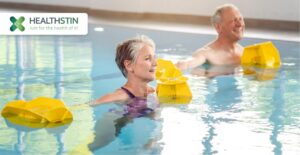
Ideas for incorporating hydrotherapy into your overall arthritis management plan
Hydrotherapy offers numerous benefits for people with arthritis. Whether you prefer individual sessions or group classes, Healthstin can help. Our goal is to provide the best exercise programs for people with disabilities so they can lead fulfilling lives. We employ top-notch exercise physiologists and offer NDIS-approved hydrotherapy treatments in Melton.
If you are looking for an Exercise Physiologist in Melton, you can reach us by calling 1300 090 931 or by sending an email to [email protected].
Reference:
1 McDonough CM, Jette AM. The contribution of osteoarthritis to functional limitations and disability. Clin Geriatr Med. 2010 Aug;26(3):387-99. doi: 10.1016/j.cger.2010.04.001. PMID: 20699161; PMCID: PMC3529154.
2 Silva LE, Valim V, Pessanha AP, Oliveira LM, Myamoto S, Jones A, Natour J. Hydrotherapy versus conventional land-based exercise for the management of patients with osteoarthritis of the knee: a randomized clinical trial. Phys Ther. 2008 Jan;88(1):12-21. doi: 10.2522/ptj.20060040. Epub 2007 Nov 6. PMID: 17986497. https://pubmed.ncbi.nlm.nih.gov/17986497
3 Torres-Ronda L, Del Alcázar XS. The Properties of Water and their Applications for Training. J Hum Kinet. 2014 Dec 30;44:237-48. doi: 10.2478/hukin-2014-0129. PMID: 25713684; PMCID: PMC4327375. https://www.ncbi.nlm.nih.gov/pmc/articles/PMC4327375/
4 Kurniasari, M. D. (2021, October 14). The Relationship Between Cold Water Immersion and the Progression in Gout Arthritis. CTG Labs – NCBI. Retrieved February 15, 2023, from https://beta.clinicaltrials.gov/study/NCT04587544
Read next article: Exercise and Stress Management





