


Applying for the NDIS (National Disability Insurance Scheme) is supposed to help Aussies living with long-term conditions gain the support they need. But for many people living with Complex PTSD (Post-Traumatic Stress Disorder) and chronic health issues, the process can feel discouraging. Even with daily struggles – from preparing meals and keeping up with housework to managing diabetes, fatigue, and mental health – applications are often rejected by the NDIS. If this has happened to you, you may feel frustrated, isolated, and even robbed of the help you deserve. The good news is you’re not alone – many people face challenges or repeated rejections with their NDIS applications. At Healthstin, we can support you by providing evidence-based reports that clearly demonstrate the need for essential allied health supports such as NDIS Exercise Physiology and Physiotherapy. Our reports provide the strong clinical evidence needed to support your case, helping you stand on firmer ground and access the care that can improve your quality of life right now.

Is Complex PTSD A Disability in Australia?
Yes, Complex Post-Traumatic Stress Disorder (C-PTSD) can be recognised as a disability in Australia if it leads to a psychosocial disability that meets the National Disability Insurance Scheme (NDIS) access criteria. To qualify, the condition must be permanent or likely to be lifelong, with significant impacts on daily functioning such as self-care, communication, learning, social interaction, or managing everyday activities. A formal diagnosis and strong supporting evidence from health professionals, including clinical reports and functional assessments (e.g., WHODAS, LSP-16, HoNOS), are required to demonstrate the ongoing functional impacts of C-PTSD. If eligible, the NDIS can provide supports such as psychosocial recovery coaching, assistance with daily living, social participation, and other disability-related supports, although it does not fund direct clinical treatment, such as psychotherapy, hospital care, or medication management.
Outside of the NDIS, people with C-PTSD may also access other forms of assistance. This can include the Disability Support Pension (DSP) if the condition severely limits work capacity and is expected to persist, Disability Employment Services (DES) for job-related support, or inclusive employment programs. Additionally, the Disability Discrimination Act (DDA) protects individuals with C-PTSD against discrimination and requires employers, schools, and service providers to make reasonable adjustments to support participation in work, education, and community life.
ALSO READ: NDIS for PTSD: Support Services and Care
3 Main Reasons Why NDIS Applications for Complex PTSD Are Often Rejected
NDIS rejections are common, and they don’t mean your struggles aren’t real. Here are the main reasons why applications for Complex PTSD are often turned down:
1. Lack of Functional Evidence
The NDIS bases its decisions not only on diagnosis but on how your condition affects daily function. If reports focus too much on symptoms and not enough on how PTSD impacts activities of daily living, such as cooking, cleaning, shopping, or self-care, the application may be rejected.
2. Insufficient Documentation
Supporting documents from GPs, psychologists, and Allied Health Professionals need to clearly demonstrate ongoing, significant impairment. Without this, your application can be considered “not substantial enough.”
3. Misunderstanding of Complex PTSD
PTSD combined with chronic health issues (like high blood pressure, diabetes, or obesity) requires a holistic approach. Unfortunately, these overlapping needs are sometimes misunderstood or under-reported in the NDIS application process.
Find out if you meet the NDIS eligibility criteria.
How Complex PTSD Impacts Daily Life
For many living with Complex PTSD, daily life can feel like an uphill battle. Common challenges include:
| Motivation | Finding it hard to start or maintain routines like cooking, cleaning, or exercising. |
| Energy | Exhaustion from medications or emotional stress often leads to poor self-care. |
| Physical Health | Increased risk of chronic conditions such as type 2 diabetes, high blood pressure, and high cholesterol. |
| Isolation | Avoiding social situations or losing confidence in public settings. |
| Emotional Overload | Difficulty prioritising or managing stress without becoming exhausted. |
This is why professional Allied Health support can make such a big difference – not only for improving health and independence, but also for strengthening your NDIS application.
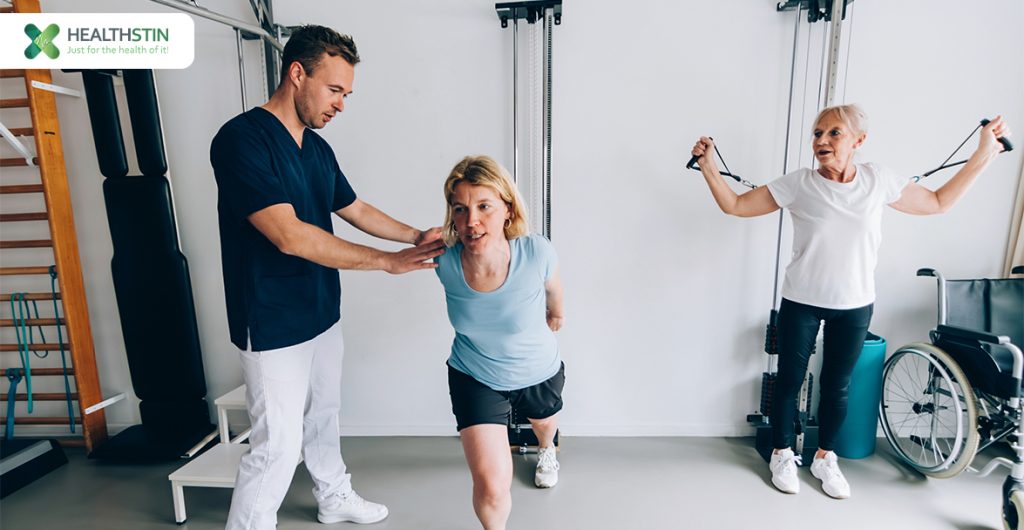
How Healthstin PTSD Support Services Can Help You with NDIS Applications and Complex PTSD
When you’re struggling with Complex PTSD and daily health challenges, it can feel overwhelming to even start the NDIS process, especially after a rejection. That’s where Healthstin steps in.
1. Initial Consultation: Understanding Your Unique Needs
Your first consultation at Healthstin PTSD support services is more than a meet-and-greet. It’s a comprehensive assessment where we:
- Explore your daily challenges: We look at aspects such as fatigue, mobility, self-care, meal preparation, and emotional regulation.
- Identify functional impacts: these are the exact areas the NDIS considers when assessing eligibility.
- Discuss your goals – These include regaining independence, managing diabetes, and improving routine.
By mapping out how your condition affects day-to-day activities, we can begin building a clear picture that aligns with what the NDIS requires: evidence of functional impairment, not just diagnosis.
2. Evidence-Based Assessments and Reports
One of the most common reasons NDIS applications are rejected is insufficient evidence. Healthstin helps close that gap with professional reports written by our allied health clinicians. Our reports are:
- Evidence-based: We use standardised assessment tools to measure strength, mobility, endurance, and functional capacity.
- Detailed and practical: Reports describe exactly how your condition affects daily living (e.g., difficulty standing to cook meals, exhaustion after basic household chores, and reliance on others for shopping).
- Aligned with NDIS criteria: We frame findings in terms of the NDIS Functional Capacity domains – communication, social interaction, mobility, self-care, and self-management.
- Progress-focused: Showing what can realistically improve with support, strengthening the case that allied health services are “reasonable and necessary.”
These reports are not only useful for applications but also for appeals if your initial request was rejected.
3. Support During the Appeal Process
At Healthstin, our role is to provide the clinical evidence you need throughout your NDIS journey:
- Professional reports: We prepare detailed documentation that can strengthen your application.
- Appeals: If you’ve already been rejected, our reports can be submitted as new evidence to support your review or tribunal case.
- Ongoing updates: Because your health journey changes over time, we provide regular reassessments and updated reports – included in your care, not at extra cost.
4. Why This Matters for Complex PTSD
For people with PTSD, it’s often hard to prove how much the condition impacts daily life – especially when mental health struggles combine with physical health issues like diabetes, fatigue, or high blood pressure. Healthstin’s reports bridge this gap by showing in objective, measurable terms:
- How PTSD and physical health interact to reduce independence.
- Why ongoing allied health support is reasonable and necessary.
- How specific interventions such as exercise, Hydrotherapy, and Physiotherapy can lead to improved outcomes in daily life.
This turns lived experiences of “struggling to cook a meal or get out of bed” into clinical evidence that NDIS assessors can understand and accept.
5. Faster Pathway to Results
Whilst applications and appeals take time, your health journey doesn’t have to wait. With Healthstin, you can:
- Start services in under 7 days, even whilst waiting for NDIS approval.
- See measurable improvements in 4-6 weeks – better energy, reduced stress, more confidence in daily routines.
- Use these results to further strengthen your NDIS appeal, as documented progress in Allied Health care demonstrates the real benefit of support.
Real Results in 4-6 Weeks
Our programmes are tailored to your needs, delivering real, measurable improvements without unnecessary delays or extra effort.
| Mobility | Move with more freedom and less stiffness. |
| Pain Reduction | Gentle, tailored exercise can ease body tension and improve circulation. |
| Confidence | Regain independence in daily routines. |
| Independence | Reduce reliance on others and feel more in control of your health. |
Most clients notice significant progress in 4-6 weeks – from increased levels of energy to improved strength and a more structured daily routine.
Where to Find Healthstin Allied Health Clinic Near You
We provide Allied Health and Hydrotherapy services at clinics across NSW, VIC, SA, and WA:
- Sans Souci, NSW – Supporting southern Sydney residents
- Hurstville, NSW – Conveniently located for St. George community
- Salisbury & Elizabeth, SA – Accessible for Adelaide’s northern suburbs
- Brimbank & Melton, VIC – Supporting communities in Melbourne’s west
- Belmont, WA – Expanding to meet growing local demand
FAQs About NDIS and Complex PTSD
Why was my NDIS application rejected?
Most rejections happen because the NDIS didn’t see enough evidence of how your condition affects your daily life. Healthstin can help by preparing more detailed and comprehensive Allied Health reports.
Does the NDIS cover PTSD?
Yes, but approval depends on showing functional impact (how PTSD limits your ability to carry out daily tasks), not just the diagnosis.
Can I appeal a rejected NDIS application?
Yes. You can request an internal review or take it to the Administrative Appeals Tribunal. Having professional Allied Health documentation can greatly improve your chances.
How can Exercise Physiology help with PTSD?
Exercise Physiology supports both physical and mental health; improving mood, reducing stress, managing chronic conditions, and helping re-establish routines.
How quickly can I get help from Healthstin?
We can get you started in under 7 days, with measurable results often seen in 4-6 weeks.
Still Struggling with NDIS Rejection and Complex PTSD?
Don’t Give Up! Strengthen Your Case with Evidence-Based Reports and Your Guide Toward Measurable Improvements in Just 4-6 weeks.
At Healthstin, Allied Health Experts can help you regain independence. With the right care and documentation, you can improve your daily life and strengthen your case. Our Allied Health professionals are here to help you every step of the way – from managing your health conditions to navigating the NDIS process. Call us today on 1300 090 931 or start with a 10-Minute Quiet Chat. Start your journey toward better health, greater independence, and the support you deserve.





