Starting an NDIS plan can feel confusing, especially when you are trying to figure out which supports are funded, like NDIS-covered physiotherapy, for your goals and daily functioning.
This guide explains how physiotherapy fits into your NDIS budget, including the funding category it’s usually used and what the NDIS means by “reasonable and necessary.” At the end of this blog, you’ll better understand your options and feel confident using physiotherapy to enhance your movement, independence, and quality of life.
Understanding Your NDIS Budgets: Where Does Physio Sit?
NDIS funding is divided into different budget categories, and knowing which one to use can make it much easier to access physiotherapy. It’s usually funded under Capacity Building, specifically under the Improved Daily Living (Improved Health and Wellbeing) category.
This budget helps you build physical skills, improve movement, and become more independent over time. It aims to do more than just provide daily support.
Here’s a simple overview of how physiotherapy fits into the NDIS.
Capacity Building: Improved Daily Living Skills (Improved Health and Wellbeing)
This is the main budget used for NDIS physiotherapy. Physiotherapy funded through Capacity Building can help with:
- Learning safer ways to move
- Strength, balance, and mobility
- Working towards NDIS goals relevant to physical function
- Improving independence with daily tasks
If physiotherapy helps you build skills, improve movement, and support your long-term health and wellbeing, it usually comes under Capacity Building: Improved Daily Living.
The “Reasonable and Necessary” Test
Before the NDIS approves funding for physiotherapy, it must meet the “reasonable and necessary” test. Whilst the words might sound complex, the idea is simple: Does this support really help the participant live a better daily life?
Here are the six main criteria that the NDIA uses to decide whether physiotherapy can be funded.
1. Is it relevant to your disability?
Physiotherapy must support needs that are directly related to your disability, not general exercise, wellness, or other unrelated health concerns.
2. Does it help you work towards your NDIS goals?
Your physio should support one or more goals in your plan, such as improving mobility, safety, or independence.
3. Does it improve function or participation?
The NDIA assesses whether physiotherapy helps with managing daily tasks, getting around safely, or taking part in the community.
4. Is ita reasonable use of funds?
The NDIS considers whether physiotherapy is a reasonable cost compared to other options that could meet the same needs.
5. Is it effective and evidence-based?
Physiotherapy is a well-established allied health support with strong evidence supporting its effectiveness in enhancing movement and function.
6. Is NDIS the right system to fund it?
The NDIS ensures that physiotherapy is not more appropriately funded by the health system or another service, such as Medicare.
Common Conditions NDIS Physiotherapy Supports
NDIS physiotherapy can support people with a wide range of physical and neurological conditions. If a condition affects how a person moves, stands, walks, or completes everyday activities, physiotherapy may be considered reasonable and necessary.
Some more common conditions covered under the NDIS plan include:
Neurological and developmental conditions
- Brain injury
- Parkinson’s disease
Physiotherapy can help improve movement, balance, and your ability to get around.
Physical disabilities and mobility limitations
- Muscle weakness or stiffness
- Joint restrictions
- Reduced walking ability
- High risk of falls
Physiotherapy can help you move more safely and be more independent each day.
Progressive and lifelong conditions
For conditions that require regular and consistent support, physiotherapy may focus on:
- Maintaining current abilities
- Supporting daily function
- Adapting movement strategies over time
For more detailed information, explore our “What Conditions Does NDIS Cover?” article.
How to Access Physiotherapy in Your Next Plan Review

Struggling to navigate your plan?
If physiotherapy, budget categories, or plan reviews feel confusing, Healthstin is here to help. We offer NDIS support services that make planning clearer and the next steps easier.
Getting physiotherapy through the NDIS begins with proper preparation. Plan reviews let you request new support or adjust your funding to match your changing needs.
Step #1: Check current NDIS goals
Review your latest NDIS goals to ensure they address physical function, mobility, or safety. If they do not, consider updating them before your plan to review.
Step #2: Collect supporting information
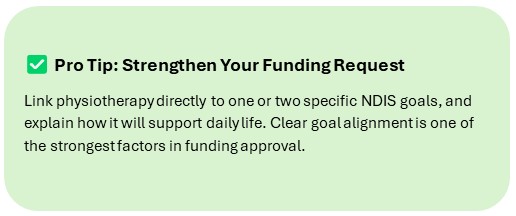
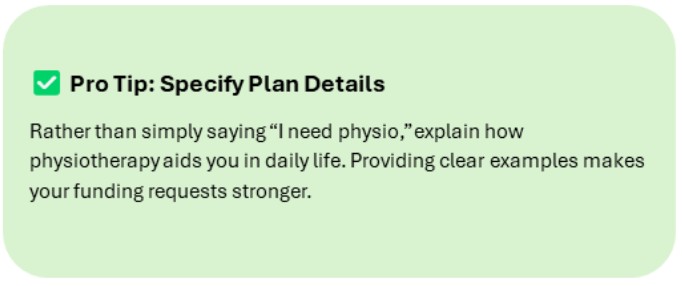
Reports from physiotherapists or allied health professionals are the most effective way to demonstrate the need for physiotherapy and its impact on your daily life. Giving clear, practical examples further strengthens your case.
Step #3: Discuss your needs with your Local Area Coordinator (LAC) or Planner
During your review, explain how physiotherapy helps you manage everyday movement. Focus on functions, such as walking safely, transferring, or reducing falls, rather than solely on the diagnosis.
Step #4: Ask about the right budget and coverage
Your planner can help determine whether physiotherapy is best placed under Capacity Building. You can also ask how often you can have physiotherapy sessions or if you need them for a long time.
Why Choose Healthstin for NDIS Physiotherapy?
NDIS physiotherapy works best when it’s clear, consistent, and focused on your goals. At Healthstin, we use a practical, evidence-based approach that aligns with NDIS planning and review processes, and with your individual needs.
We work with participants, families, and support coordinators to make therapy easier to access and fit into everyday life.
Flexible service delivery
Healthstin provides physiotherapy in settings that best suit your needs and abilities. We offer both clinic-based and mobile physiotherapy, so your sessions can take place at home, in the community, or at one of our clinics. This flexibility helps reduce barriers to accessing care.
Here is the list of our clinic locations across Australia:
- Sans Souci, NSW – Supporting people over southern Sydney
- Hurstville, NSW – Serving the St. George and surrounding areas
- Salisbury & Elizabeth, SA – Accessible for Adelaide’s northern suburbs
- Brimbank & Melton, VIC – Working with communities in Melbourne’s west suburbs
- Belmont, WA – Opening more local access as demand continues to grow
Aligned with NDIS funding requirements
Our physiotherapy services are made to meet the reasonable and necessary criteria of the NDIS, with clear links to your goals and a focus on what you can do.
Support outside your session
Our team provides clear paperwork, regular progress updates, and full reports to support plan reviews and help you keep your funding.

Frequently Asked Questions about NDIS Physiotherapy
Do I need a GP referral for NDIS Physiotherapy?
No, you don’t need a GP referral to access NDIS-funded physiotherapy. You can use your NDIS funding to see a registered physiotherapist directly if the support aligns with your plans and goals. However, supporting letters or reports can strengthen your funding requests when preparing plan reviews.
Can NDIS cover Hydrotherapy?
Yes, Hydrotherapy can be funded by the NDIS if a physiotherapist recommends it, and it supports your plan goals. It’s usually funded under Capacity Building. However, funding approval still depends on whether it meets the reasonable and necessary criteria.
Istravel included inNDIS physiotherapy funding?
If your physiotherapist needs to travel to your home or community, travel costs may be claimable under NDIS guidelines. This depends on your plan and how services are delivered.
How often can I use physiotherapy in my NDIS plan?
There’s actually no fixed number of sessions. The frequency of your physiotherapy depends on your goals, needs, and available funding in your plan.
Can I choose my ownNDIS physiotherapist?
Your ability to pick a physiotherapist depends on how your NDIS plan is managed. If you’re self-managed or plan-managed, you’re free to choose your own physiotherapist. However, if you’re an NDIA-managed plan, additional requirements may apply.
Ready to Talk Through Your NDIS Physiotherapy Options?
Whether you’re new to the NDIS or getting ready for a plan review, you don’t have to figure it out alone. The right information makes it easier to plan the next steps and gives you confidence about what’s possible.
Healthstin supports NDIS participants with physiotherapy that is goal-focused, practical, and aligned with their funding guidelines. Book a free 15-minute consultation to discuss your needs and explore how our physiotherapy services may fit within your plan.
Keen to kickstart your physiotherapy journey with us? Secure a session conveniently online now!
*Disclaimer: This article is intended for general educational purposes only and does not replace personalised advice. NDIS funding decisions depend on individual needs, goals, and plan details. For specific guidance on how your funding can be used, please speak with your NDIS planner, Local Area Coordinator, or support coordinator.