


If your child has an intellectual disability, you might be looking for ways to help them move more confidently and join in everyday activities. Many children in this group face challenges with balance and coordination, which makes regular tasks like running, jumping, or playing with friends harder.
With NDIS funding, physiotherapy can help children develop important skills in a supportive space. Proper guidance can help them grow stronger and feel more confident as they discover the world around them.
What is Intellectual Disability and How Does It Affect Movement?
Intellectual disability (ID) mostly affects how a child learns and processes information, but it can also impact their physical growth. Children with ID often experience difficulties with strength, coordination, and balance as their bodies grow.
Knowing these physical challenges can help you, as a parent, find the best support early, giving your child a better chance to stay active and independent.
Understanding Motor Delays
Motor delays occur when a child reaches movement milestones later than usual. For instance, your child may take more time to start crawling or walking compared to others their age.
These delays do not mean your child cannot make progress. It just means they need more time and guidance to develop the vital skills.
Low Muscle Tone and Coordination Challenges
Many children with intellectual disabilities have low muscle tone, making their muscles feel softer and movement more challenging. Coordination can be tricky, too, so their actions may seem a bit clumsy or less steady.
Balance and Postural Difficulties
Balance and posture are key to safe, steady movement in daily life. If these are affected, your child might have trouble keeping balance or may feel unsure when moving. This can cause them to avoid doing some tasks.
Impact on Daily Life and Participation
Movement challenges can affect many parts of your child’s day-to-day life. Simple things like getting dressed, playing on the playground, or joining in school programmes may become difficult for them.
The encouraging news is that early intervention, like therapy, can strengthen your child’s abilities and boost their confidence to take part in more activities.
How NDIS Physiotherapy Helps Your Child
Children with intellectual disabilities often need extra help to improve their physical skills. The goal of physiotherapy through the National Disability Insurance Scheme (NDIS) is to help children develop stronger movement skills so they can participate in the activities they enjoy with ease.
Each session is tailored to fit your child’s abilities and often includes fun, play-based activities that support their wellbeing over time.
1. Improving Gross Motor Skills
Gross motor skills are the big movements children use throughout the day. These include walking, running, jumping, and other actions that let them explore and have fun.
Some children with intellectual disabilities may need more time or support for gross motor development. Physiotherapy can help them slowly build their abilities to:
- Walk and run with more stability
- Practice jumping and landing safely
- Climb stairs with improved balance
- Join playground activities with greater confidence
As these skills get better, many children find it easier to participate in school activities and outdoor play with their peers.
2. Building Strength and Endurance
In addition to working on movement skills, many children with intellectual disability need help to build strength and stamina. Stronger muscles can help them move more easily and stay active for longer periods without becoming overly tired.
NDIS paediatric physiotherapy supports this development through simple programmes that focus on:
- Core strength, which helps support the body when sitting and moving
- Postural control, which helps children keep a steady and upright position
- Endurance, so children can stay active without getting tired too quickly
Improved muscle strength for children allows them to take part in daily routines more comfortably.
3. Enhancing Balance and Coordination
Many everyday activities rely on good balance and coordination. When these skills are affected, children might feel unsteady when moving, which can lead to more trips or falls.
Balance and coordination therapy helps children practice movements that improve:
- Falls prevention, by making muscles stronger and improving stability
- Spatial awareness, so they can move around obstacles and other people more easily
- Body control, which allows smoother and more controlled movements
With practice and support, a child with intellectual disability can gradually become more confident in how they move.
4. Supporting Functional Independence Skills
Many parents want their child to feel more confident doing everyday tasks. Physiotherapy supports this aim by teaching children how to use their movement skills in daily activities that encourage independence.
In therapy, children can work on essential skills such as:
- Getting dressed, including putting on clothes or shoes.
- Changing positions, like standing up from a chair or moving around.
- School participation helps children stay active and comfortable during class.
- Community mobility, so children can walk safely in public spaces or playgrounds.
These small improvements can help children feel more confident and capable as they grow.
Every child grows and learns differently. With the right support, the journey can be smoother. Physiotherapy provides children with a safe and positive space to practice movement skills, whilst also helping parents understand how to support their child’s progress at home.
Want to Support Your Child’s Physical Development?
You can book online an NDIS Physiotherapy Assessment with Heathstin. This is a chance to see how personalised physiotherapy can help a child with intellectual disability flourish and develop.
Why Early Intervention Matters
When children get the right support early on, they have a better chance of making positive progress. Their bodies and brains develop quickly in the first years, so this is the ideal time to help them build strong movement habits and physical skills.
Starting physiotherapy at an early age can help children learn movement skills whilst their bodies are still growing and changing. Even small gains in strength, balance, and coordination can give them a solid base for future activities.
With steady support and encouragement, children often become more confident and able to take part in their day-to-day environments.
What to Expect at Your Child’s First Physiotherapy Session
At the first physiotherapy session, the physiotherapist will spend time getting to know your child and finding out how therapy can best support them. Most sessions follow a simple, child-friendly process:
1. Parent Consultation
The physiotherapist will ask questions about your child’s development, daily routines, and any movement challenges you have seen.
2. Goal Discussion
Together, you’ll discuss goals for your child’s therapy, including the skills you want them to work on, like balance or strength.
3. Play-Based Assessment
Your child will play simple games and do activities so the physiotherapist can observe how they move and react during different tasks.
4. Customised Therapy Plan
Based on the assessment, the physiotherapist will make a tailored plan that fits your child’s needs and goals.
Sessions are meant to be supportive and fun, helping children learn and practise new skills with confidence.
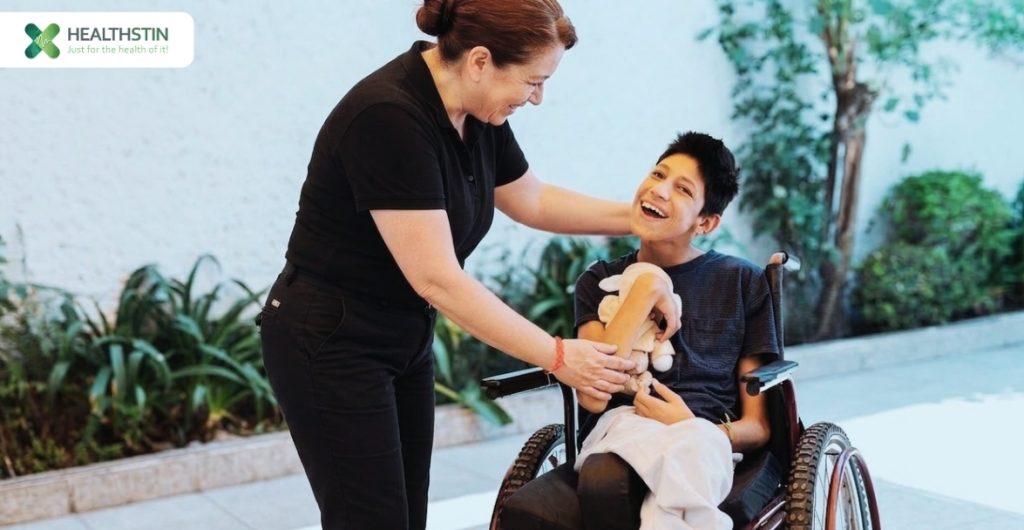
How Healthstin Adapts Therapy for Intellectual Disability
Children with intellectual disabilities usually do better with therapy that is personalised and flexible. At Healthstin, we carefully adjust sessions to each child’s comfort level and learning style.
Here are some ways our physiotherapy can support your child:
Behaviour-aware therapy
Our therapists know that every child is different, so they tailor each session to help your child feel comfortable and stay engaged.
Sensory-friendly physiotherapy environments
We deliver physiotherapy in a calm, supportive environment to help reduce stress and make it easier for children to focus.
Visual supports and clear guidance
We use simple language and visual cues so children can understand what to do and feel more confident during activities.
Collaboration with parents and teachers
We support parents with guidance, and our therapists work with teachers to help your child make progress in different settings.
Flexible therapy locations
We can hold sessions at home, in our clinic, or in community spaces to suit your child’s routine and comfort.
ALSO READ: Why Communication Matters in NDIS Exercise Therapy (And How We Get It Right)
How NDIS Funding Covers Physiotherapy
If you’re new to the NDIS funding, you might be curious about how physiotherapy can be included in your child’s plan. It’s always easier than you might think.
Physiotherapy is often part of NDIS Capacity Building supports. These are designed to help your child build skills for more independence and day-to-day activities.
Here are some common questions parents ask:
Is physiotherapy covered by NDIS?
Yes, if it helps your child work towards their goals and is considered reasonable and necessary.
How often should my child attend physiotherapy?
This depends on what your child’s needs and wants to achieve. Your physiotherapist will suggest a schedule that supports your child’s continued progress.
Can therapy happen at home?
Yes, many providers offer home visits, but clinic and community options are also available.
To support ongoing funding, therapists write goal-aligned reports that demonstrate how your child is progressing toward their goals. These reports are useful for future plan reviews.
Real-Life Example (Mini Case Study)
Looking at real-life examples of physiotherapy works can make its benefits clearer to understand.
A young child with an intellectual disability started physiotherapy sessions at Healthstin to help with balance and coordination. The child often felt unsteady whilst walking and stayed away from playground activities because of a fear of falling.
The child followed a personalised therapy plan that used simple, play-based exercises to build balance, strength, and coordination. As these skills improved, the child became more confident moving around.
After some time, the child joined playground games and even tried a beginner sports activity at school. They also became more independent with daily movements at home.
Why Families Choose Healthstin
Picking the right provider for your child matters. Many families trust Healthstin because we offer support and focus on real results that make a significant difference in daily life.
We tailor our therapy to each child, helping them feel at ease whilst building skills they can use every day.
Families often choose Healthstin for:
- Strong experience in helping children with intellectual disabilities
- Fun and engaging therapy sessions
- Goal-based reporting for NDIS plan reviews
- Flexible therapy options, including home and clinic sessions
- A combined approach using physiotherapy and exercise physiology
Above all, we believe that every child should have the opportunity to grow in confidence, stay active, and take part in the world around them.
FAQs About NDIS Physiotherapy for a Child with Intellectual Disability
Can physiotherapy help a child with intellectual disability?
Yes, physiotherapy can help children build movement skills that make daily activities easier and increase their independence.
At what age can my child start?
Children can begin physiotherapy at a young age. Getting support early helps your child build important skills as they grow.
Is early intervention important?
Yes. Early intervention is helpful because children are still learning and adapting, so it is much easier for them to pick up new skills.
How long does therapy last?
The length of therapy depends on your child’s needs. Your physiotherapist will guide you on what is best for your child based on their progress and goals.
Does NDIS fund home visits?
Yes. Many NDIS plans can cover therapy at home if that suits your child and family best.
Schedule A Consultation With Healthstin Allied Health Today
Starting therapy might seem like a big decision, but it can also be the first step toward helping your child feel more confident in how they move and how they go about their day.
You don’t have to figure everything out on your own. With the right team by your side, the journey becomes clearer and less overwhelming, giving your child the opportunity to grow and thrive.
Let’s Support Your Child’s Growth and Independence
Speak to our NDIS physiotherapy team today to find out how we can support your child with a personalised, goal-focused plan.
*Disclaimer: This article is intended for general educational purposes only and does not replace personalised advice. NDIS funding decisions depend on individual needs, goals, and plan details. For specific guidance on how your funding can be used, please speak with your NDIS planner, Local Area Coordinator, or support coordinator.





