Differentiating Traumatic Brain Injury (TBI) from Acquired Brain Injury (ABI)
Traumatic Brain Injury (TBI) and Acquired Brain Injury (ABI) are two different types of brain injury, each requiring a tailored approach to exercise therapy. A TBI happens when an outside force, like a blow to the head or a sudden jolt, damages the brain. An ABI happens when something inside the body changes, like a stroke or an infection.
TBI often causes more physical symptoms due to the direct damage to the brain tissue and surrounding structures. At the same time, ABI may cause fewer physical issues but greater cognitive and behavioural deficits.(1) Therefore, brain injury exercises for each type should be tailored to suit the individual’s needs, taking into account all aspects of their injury, two distinct types of brain including any physical, cognitive, and emotional aspects.
Exercise therapy for TBI requires a comprehensive assessment of the individual’s strength, coordination, and ability to follow instructions and retain information. This helps therapists formulate an appropriate exercise plan that will allow the individual to progress in their rehabilitation goals while minimising the risk of further injury.(2)
For those with ABI, exercise therapy may concentrate on enhancing cognitive abilities, physical strength, and coordination. Acquired brain injury training, such as memory and problem-solving games, can help to improve brain plasticity, while physical activities can aim to restore lost range of motion and strength.(2) As with TBI, therapists may consider any physical, cognitive, and emotional issues when developing an exercise plan for the individual.

How exercise can help people with TBI?
Exercise therapy could benefit both TBI and ABI patients, as it helps improve physical strength, coordination, and cognitive abilities. In detail, these are the key benefits of brain injury rehabilitation exercises:
- Increased physical strength, endurance, and coordination. This may help to improve balance, posture, and gait patterns.
- Improved respiratory function, helping to reduce the risk of further injury.
- Improved cognitive abilities such as memory and concentration. Regular exercise stimulates the brain to produce new neural pathways, which may help individuals with TBI or ABI think more clearly.
- Enhanced self-esteem and mood. Exercise releases endorphins in the brain, which could positively impact an individual’s sense of wellbeing.
It is highly encouraged to individualise exercise therapy programs to suit each individual’s needs. This could involve low-impact aerobic exercise, strength training, and stretching. It is better to start with a basic program that gradually increases in complexity as the individual becomes more confident, and independent.
It is also important to encourage social interaction during exercise therapy sessions to help build relationships, confidence and motivation. If a person finds exercise or physical activity challenging, they can try to focus on the fun and social aspects of the session.

Regaining control with the assistance of an Accredited Exercise Physiologist (AEP)
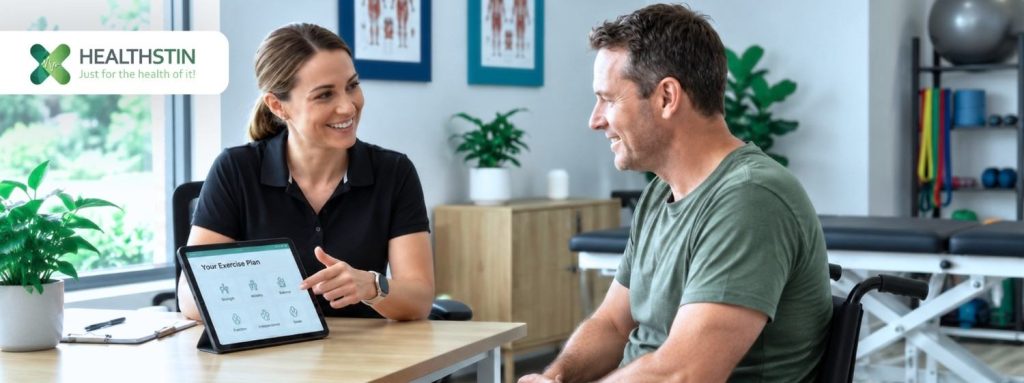
Recovering from a traumatic or acquired brain injury could be a long and challenging journey for individuals.(3) Exercise therapy is often recommended as part of the rehabilitation process. However, this might be challenging to manage. By engaging the services of an Accredited Exercise Physiologist, individuals may gain access to tailored exercise programs like acquired brain injury programs that will help them to improve their physical health, fitness, and mobility.
An AEP is a qualified allied health professional with specialised knowledge in exercise therapy for individuals with chronic conditions such as traumatic or acquired brain injury. They understand the importance of ensuring that each session is tailored to the individual’s needs and abilities. They could implement a program to improve balance, strength and coordination, and other physical health outcomes by providing an individual assessment.
During an exercise therapy session, an AEP will offer encouragement and support to ensure that patients are making progress towards their goals. In addition, ongoing guidance and advice on managing symptoms such as fatigue help individuals stay motivated and focused on their recovery.
Engaging the services of an AEP could provide individuals with confidence that they are doing the correct type of exercise, like strength training for a traumatic brain injury, to achieve their goals. In addition, the professional guidance and support of an AEP could help individuals regain control over their lives, improve physical health outcomes and, more importantly, get back on track.
Conclusion
By taking the right approach to exercise and physical activity, people with brain injury could make great strides in their recovery and return to a more active and productive life by engaging in an exercise program.
Exercise therapy programs, supervised by physiotherapists, occupational therapists, and exercise physiologists, could significantly benefit individuals with TBI/ABI. For more information on whether this type of therapy is right for you or someone you know, you may contact Healthstin Hurstville, by calling 1300 090 931.
So, why wait? Get moving today!
Disclaimer: The information is general and does not take into account your personal situation. This information is intended to show you the correct exercise technique and should not be used to self-diagnose or self-treat any medical condition. If your pain persists or you have difficulty performing exercise, see your experienced Exercise Physiologist for proper guidance on 1300 090 931.
Reference:
1 Grace JJ, Kinsella EL, Muldoon OT, Fortune DG. Post-traumatic growth following acquired brain injury: a systematic review and meta-analysis. Front Psychol. 2015 Aug 14;6:1162. doi: 10.3389/fpsyg.2015.01162. PMID: 26321983; PMCID: PMC4536376. https://www.ncbi.nlm.nih.gov/pmc/articles/PMC4536376/
2 Barman A, Chatterjee A, Bhide R. Cognitive Impairment and Rehabilitation Strategies After Traumatic Brain Injury. Indian J Psychol Med. 2016 May-Jun;38(3):172-81. doi: 10.4103/0253-7176.183086. PMID: 27335510; PMCID: PMC4904751. https://www.ncbi.nlm.nih.gov/pmc/articles/PMC4904751/
3 Zhang Y, Huang Z, Xia H, Xiong J, Ma X, Liu C. The benefits of exercise for outcome improvement following traumatic brain injury: Evidence, pitfalls and future perspectives. Exp Neurol. 2022 Mar;349:113958. doi: 10.1016/j.expneurol.2021.113958. Epub 2021 Dec 21. PMID: 34951984. https://pubmed.ncbi.nlm.nih.gov/34951984/