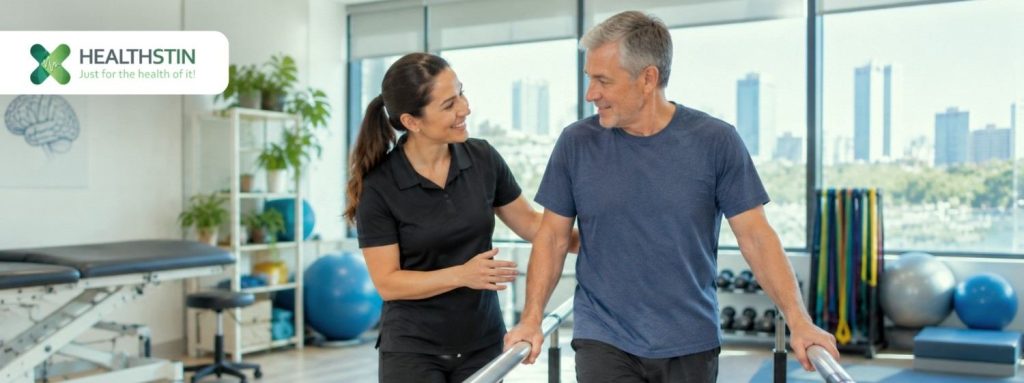
Staying active on a regular basis is an important part of being healthy. You’d see people lifting weights and building muscle strength in the gym, boosting their cardiovascular fitness on the treadmill, or swimming laps in the pool. However, one often forgotten, or should we say, neglected, component of the health equation is stretching.
The Australian physical activity and exercise guidelines for adults aged 18 to 64 years old call for 2.5 to 5 hours of moderate-intensity physical activity every week, 1.25 to 2.5 hours of vigorous-intensity activity weekly, or a combination of both to build strength and cardiovascular endurance. While there are no set guidelines on stretching to enhance flexibility, it is a recommended part of training for functional mobility and overall fitness.
Studies show that 55% of Australian adults do not meet the minimum guidelines for physical activity so it’s clear that time is at a premium. When time is restricted, exercisers may choose to forego stretching – a serious mistake that may undermine your overall health and well-being.
What are the benefits of stretching?
At its most basic, stretching can help improve your range of motion and may decrease your chances of injuries. Furthermore, it also offers a host of other benefits which include:
- Injury Prevention: Regular stretching may reduce the risk of injuries by preparing muscles for physical activity.
- Improved Physical Performance: Stretching can enhance performance invarious physical activities by increasing muscle efficiency.
- Enhanced Circulation: Stretching promotes better blood circulation throughout the body, aiding in nutrient delivery and waste removal.
- Better Posture: Stretching helps in maintaining and improving posture by alleviating muscle tension and imbalance.
- Stress Relief: Engaging in stretching exercises can alleviate stress and promote relaxation through muscle relaxation.
- Back Pain Prevention and Relief: Stretching routines can contribute to the prevention and alleviation of back pain by promoting flexibility and relieving muscle tension.
What is stretch therapy?
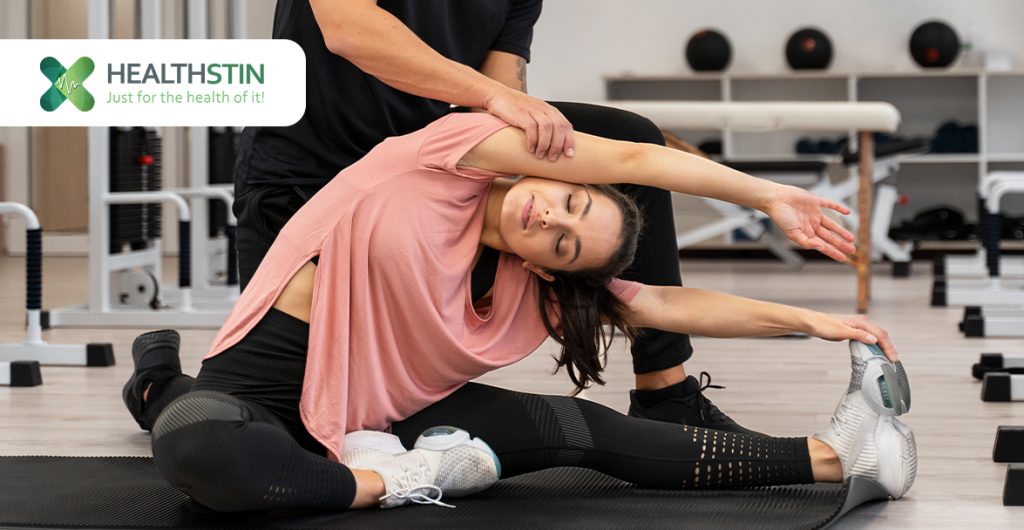
Stretch therapy can be defined as bodywork or the practice of assisted stretching and coaching, using targeted techniques and guidance from an accredited Health Professional. It is also known as facilitated stretching. The objective is to enhance your mobility, flexibility, and total well-being.
One very important and vital benefit of stretch therapy is increased body awareness, an improved connection to your body that allows you to better understand your body’s limitations so you can learn proper and more efficient movement.
How does stretch therapy work?
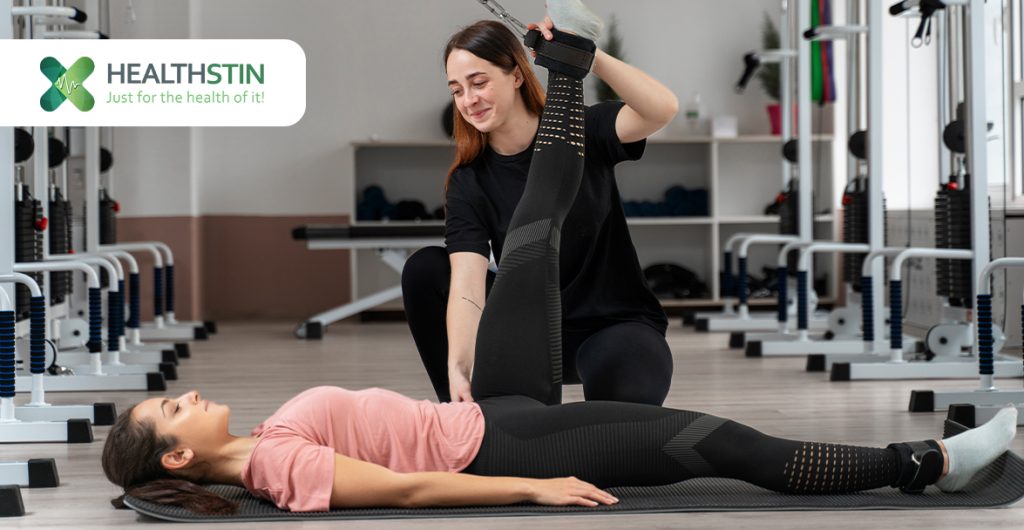
Stretch therapy usually involves a series of controlled movements and stretches performed by an accredited therapist or health practitioner. The practitioner may use a mix of various techniques such as passive stretching where you remain relaxed while your therapist applies the stretch, or active stretching where you actively participate in the activity.
Range of motion is one of the factors that affect movement patterns. Improving your range of motion at the joints generally translates to better overall movement. Increasing the flexibility, not just of your muscles but also the tissues around a joint – the tendon and fascia – can also help improve your range of motion.
Stretch therapy may help improve short and long-term flexibility. The key to long-term flexibility is consistency – performing stretch therapy two to three times a week may help make the connective tissues and muscles adapt to the stretches, and the improved range of motion may become permanent.
The practitioner may target specific muscle groups or areas of your body based on your goals and needs using balls, foam rollers, or straps to facilitate the stretches and ensure proper alignment.
Different individuals will have different responses to stretching. Your athletic and medical history will also affect the benefits of stretching. Clearly, there is a need for a customised stretching program tailored to your needs, conditions, and goals.
Additionally, your practitioner may also give you stretches that you can perform at home to complement your in-clinic sessions and help continue your progress in between clinic appointments.
What are the benefits of stretching therapy?
Stretching therapy can provide you with a range of benefits that include the following:
• Improved flexibility and enhanced range of motion – by targeting specific muscle groups and progressively elongating them over time, stretch therapy may help you be more flexible and experience less muscle stiffness.
• Boost in performance – Stretch therapy can help improve your performance in the sports and physical activities that you engage in as enhanced flexibility can aid in boosting speed, agility, and athletic ability.
• May help prevent injuries – Stretch therapy can assist in maintaining the elasticity of your muscles as well as the mobility of your joints. This can alleviate muscle stiffness that may predispose you to injuries.
• May help relieve pain – Stretching can improve circulation, alleviate muscle tension, and reduce aches and pain associated with poor posture or tight muscles.
• May contribute to stress reduction – Stretching can help release muscle tension, promote relaxation, and reduce your levels of stress.
• May help address muscle imbalances – Stretch therapy can aid in addressing muscle imbalances that result from repetitive movements that affect muscle length and the joints’ range of motion
What are the risks of stretching?
While stretching can be very beneficial, it has its risks, especially if you’re not guided by a trained and experienced Health Professional. These are some of its potential risks:
• Overstretching – Pushing your muscles beyond their limits may cause soft tissue injuries or muscle strains.
• Joint strains and injuries – Using improper alignment or excessive force during stretching can result in joint strains and injuries.
• May aggravate existing injuries – Aggressive stretching may exacerbate existing conditions or injuries.
• The use of improper technique – Using incorrect technique may not only diminish the effectiveness of stretch therapy but may also increase your risk of injury.
The importance of consulting a Health Professional such as an Exercise Physiologist cannot be emphasised enough, especially if you have an injury or pre-existing condition.
Stretch Therapy from our Health Professionals
Stretch therapy can be an effective way to enhance your mobility, flexibility, and overall physical function when performed correctly and ideally, under the guidance of an accredited and knowledgeable practitioner. You must assess the benefits and risks before starting a stretching program and consult a Health Professional before beginning, especially if you have a medical condition or existing injuries.
Our Exercise Physiologists at Healthstin are experienced and well-trained to offer you guidance on how stretch therapy can benefit you as well as tell you how to avoid injuries and how you can gain optimal results from a stretching regimen. Just call 1300 090 931 or click this link now.