


Over the last decade, over a million workers made a workers’ compensation claim that required more than a week’s worth of lost working time – that’s around one in every 12 workers.
Statistics from SafeWork also reveal that body stresses, falls, slips, and tripping are the cause of most work-related injuries reported in Australia. Work-related mental health conditions are on the rise, with time off in cases over four times longer than other injuries.
While studies suggest that most injured workers take little or no time off work after sustaining a work-related injury, up to 80% of those who do so recover and return to work within 13 weeks. This is according to the State Insurance Regulatory Authority (SIRA), the body that regulates Workers Compensation in NSW. The statistics offer an encouraging note to injured workers who may be apprehensive about taking time off to recover or unsure of their chances of getting back to work.

What is Workers Compensation?
The Australian Law Reform Commission defines Workers’ Compensation as compensation for a worker who has incurred an injury or disease from or during employment. Workers’ Compensation aims to provide a safety net if you become ill or injured while performing your job.
At present, 11 main Workers’ Compensation schemes in Australia link the injured worker to services and support from the employer’s workers’ compensation insurer. Each state and territory have a scheme while there are three Commonwealth schemes. Each one is governed by different laws and operates slightly differently.
Workers’ Compensation offers economic and non-economic benefits to the injured worker. Economic benefits include covering medical expenses and
rehabilitation costs, plus, a portion of wages lost during the recovery period.
It is important to get in touch with the bodies or organisation that implement workers’ compensation schemes in your location. Here’s a breakdown to help guide
| Commonwealth of Australia | Comcare manages the workers’ compensation scheme for workers in the Australian Government and industries such as aviation, maritime, and interstate rail transport. |
| New South Wales (NSW) | SafeWork NSW |
| Victoria (VIC) | WorkSafe Victoria |
| Queensland (QLD) | WorkCover Queensland |
| Western Australia (WA) | WorkCover WA |
| South Australia (SA) | ReturnToWorkSA |
| Tasmania (TAS) | WorkSafe Tasmania |
| Northern Territory (NT) | NT WorkSafe |
| Australian Capital Territory (ACT) | WorkSafe ACT |

Workers Compensation Benefit Guide
Workers’ Compensation provides financial support to let you concentrate on getting better without worrying about treatment costs. It also offers rehabilitation services to enable you to return to work safely and in a timely manner.
Workers’ Compensation may provide the following benefits depending on the nature of your illness or injury:
• Coverage for some of your wages while you’re recovering away from work
• Coverage for medical and hospital costs as well as rehabilitation treatments
• Lump sum payment for permanent impairment
• Payment for funeral expenses, periodic payments for dependents, and compensation in a lump sum for family members in case of a fatal accident
One key benefit of Workers’ Compensation for the employer is its ability to maintain a positive environment in the workplace through a structured system for handling injuries and illnesses. Another one is the reduced risk of legal disputes which can be costly.
Workers’ Compensation typically covers full-time, part-time, and casual workers. In some cases, it may also include contractors, depending on legislation in a specific state or territory. The employee must demonstrate that their injury or illness occurred out of or during their employment.
In general, employees are mandated to notify their employer of their injury or illness as soon as possible and seek medical attention if needed. The employer will be responsible for initiating the claims process with their Workers’ Compensation insurer which may entail the completion and submission of required documents including details of the illness or injury and supporting medical documentation.
The insurer will assess the employee’s eligibility for compensation once the claim is lodged. The employee will receive compensation for rehabilitation costs, medical expenses, and a portion of lost wages once the claim is approved.
Exercise Physiology and Workers Compensation
Exercise Physiologists (EPs) are accredited health professionals tasked with prescribing functional exercise to enable workers to increase their capacity for employment, facilitate recovery, and guide them toward transitioning to a self-managed exercise program.
Your EP will put together a customised exercise program according to your particular needs and condition and offer counselling on the benefits of exercise intervention for your rehabilitation. This comprehensive support extends through the entirety of your recovery – monitoring your progress, adjusting your program as necessary, and providing strategies and education about injury prevention.
Workers’ Compensation and Physiotherapy
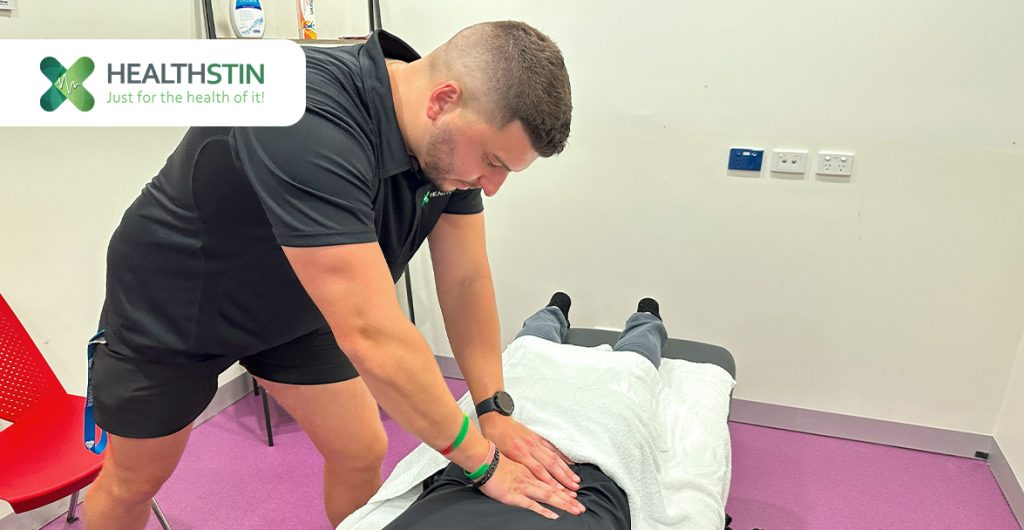
Another health professional involved in helping workers get back to work after an injury is the Physiotherapist. A Physiotherapist participates in the care of workers with illness, injury, or disability and uses a variety of approaches such as functional exercise, movement, and manual therapy to reduce pain and improve function.
Your Physio will take a holistic approach that may employ different modalities such as Remedial Massage, Hydrotherapy, and land and water-based training to help you recover. Physiotherapy has a two-fold objective: to help restore movement and function in the present and help reduce your risk of illness or injury in the future.
Both Exercise Physiologists and Physiotherapists provide rehabilitation services for injured workers. They may also collaborate and partner with other Allied Health experts to treat workers recovering from conditions ranging from depression to chronic pain.
Why it’s important for injured workers to get customised treatment programs?
While exercise in itself can be beneficial to recovery, a personalised and tailored exercise intervention program may help ensure the most optimal outcomes for workers wanting to recover from illness or injury incurred in the workplace. This is why it’s vital to enlist the help of an Exercise Physiologist to help create a specific program to address the health conditions you have. Our exercise professionals will play a crucial role in helping you build strength, improve mobility, enhance function, and boost overall well-being to allow you to recover and promptly get back to work.
At Healthstin, our Team of Accredited Health Professionals is always ready to support the rehabilitation of workers who have sustained an injury or illness at the workplace. Our Exercise Physiologists and Physiotherapists are known for thorough assessments, accurate reporting, and customised treatment programs. Got questions? Call us on 1300 090 931 or click this link to book an appointment now.





