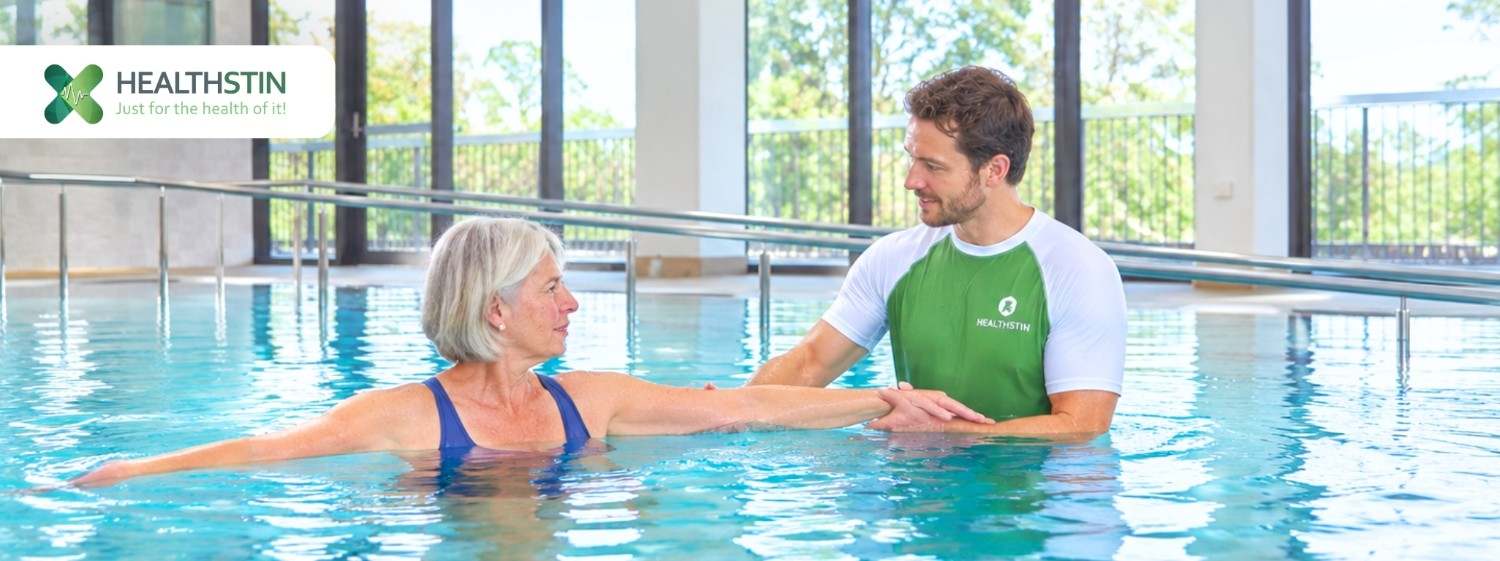
Most people don’t go looking for hydrotherapy on their own. It tends to come up at an appointment. A physio notices you guarding your lower back every time you bend, or your GP mentions that exercise in warm water might be easier on a shoulder that won’t lift past chest height. Then you get home, look at the claim paperwork on the kitchen bench, and wonder who is actually paying for it.
There isn’t one national answer. Workers compensation in Australia is run state by state, so a warehouse worker in Hurstville and an aged care worker in Salisbury are dealing with different insurers, different forms and different rules about approval. In NSW, a provider isn’t allowed to charge you a gap for treatment the scheme covers. Victoria is different: if a provider’s fee is higher than what WorkSafe pays, you can be asked to pay the difference.
This guide explains how hydrotherapy workers compensation cover works in each of the four states, based on current SIRA, icare, WorkSafe Victoria, ReturnToWorkSA and WorkCover WA documents. It also covers how to get started and where Healthstin runs hydrotherapy.
[MAIN BODY]
What Is Hydrotherapy & Why It Helps Injured Workers
What Is Hydrotherapy?
Hydrotherapy is exercise-based treatment in a heated pool, guided by a physiotherapist or an Accredited Exercise Physiologist. You’ll also see it called aquatic physiotherapy or aquatic therapy. WorkSafe Victoria’s physiotherapy services policy now uses “aquatic physiotherapy”, noting it was previously referred to as hydrotherapy, which is why both terms turn up in aquatic therapy workers compensation paperwork.
It isn’t a swimming lesson. Sessions are usually done standing, walking or holding the edge of the pool, and you don’t need to be able to swim. The water is also warmer than a public lap pool. In the research trials pooled by a Cochrane review of aquatic exercise for knee and hip osteoarthritis, the water was typically between 32 and 36°C.
How Hydrotherapy Helps Injury Recovery
Picture someone three weeks after straining their lower back lifting boxes at work. Getting out of a chair is slow. Walking to the letterbox is fine, but bending down for the mail isn’t. On land, many of the movements their clinician wants them to practise are uncomfortable enough that they tense up and stop halfway. Standing in chest-deep water changes that, because the water supports part of their body weight and they can practise walking and turning with less load to manage.
Water resists fast movement more than slow movement. Clinicians can change how hard an exercise is just by changing speed, with no weights needed. This provides a safe starting point for someone with a shoulder injury from repetitive overhead reaching.
What does the research say? Most of it looks at conditions that often overlap with work injuries rather than at injured workers as a group. A 2022 systematic review in BMC Musculoskeletal Disorders pooled 13 trials covering 597 people with chronic low back pain and found aquatic therapy was linked with lower pain scores than no aquatic therapy. The authors rated that evidence as low certainty, because many of the trials had a high or unclear risk of bias. The Cochrane review mentioned above (13 trials, 1,190 people with knee or hip osteoarthritis) found small improvements in pain and disability straight after a course of up to 12 weeks, based on moderate-quality evidence.
So hydrotherapy may help some people manage pain and get moving again, and results vary from person to person. A good clinician should be able to tell you why they think the pool suits your injury, and when they expect to move you on to land-based exercise.
Why Workers Comp Can Cover It
Workers compensation schemes pay for treatment that is linked to your work injury and judged reasonable and necessary. icare NSW puts it this way: it covers treatment that is “reasonably necessary and required as a result of” your injury, and the insurer decides whether a service meets that test.
Pool-based treatment already has a place in the fee rules of all four state schemes covered here, which is the starting point for cover. The details are where they split apart, and the next section goes through those one state at a time.
One expectation shows up everywhere, though. Insurers want pool sessions to lead somewhere, usually back towards your normal duties or towards exercising on your own. ReturnToWorkSA’s 1 July 2026 physiotherapy fee schedule says aquatic sessions should help the worker move toward independent or self-managed exercise, and that sessions aimed at general health, fitness or wellbeing aren’t payable. Expect your goals to be written around your job.
Hydrotherapy Coverage: WA vs. NSW vs. SA vs. VIC (State Guide)
If you’ve typed “is hydrotherapy covered by workers comp” into a search bar, the honest answer is that it can be, once your claim is accepted and your insurer agrees the treatment is reasonable for your injury. Before that point, there’s no guarantee the insurer will pay, so you might have to pay out of pocket.
NSW (icare)
In NSW, the State Insurance Regulatory Authority (SIRA) sets the fees and practice rules, while icare or your employer’s insurer manages your claim. The rules below come from SIRA’s physiotherapy and exercise physiology fees and practice requirements, both effective 1 February 2026.
The part most people want to know is whether they can start straight away. If your injury hasn’t been treated by a physiotherapist, chiropractor, osteopath or Accredited Exercise Physiologist before, and treatment starts within three months of the injury, up to eight consultations can go ahead without the insurer’s pre-approval. Start more than three months after the injury and that drops to three. Beyond those, your practitioner sends the insurer an Allied Health Treatment Request (AHTR) asking for approval.
For hydrotherapy workers comp NSW claims, a few other details matter:
- Group pool classes can have up to six people.
- Practitioners must not charge you a gap fee for services covered by the scheme.
- Pool entry fees are only paid in exceptional cases, where the insurer approves treatment at an outside facility. They aren’t payable when the practitioner runs the pool or contracts their services to it.
There’s also a time limit on treatment expenses, linked to your level of permanent impairment. icare sets out the bands: two years after weekly payments stop for impairment of 10% or less, five years for 11 to 20%, and for life above 20%.
Victoria (WorkSafe)
Victoria’s scheme is run by WorkSafe Victoria through its claims agents. Once your claim is accepted, you can see a physiotherapist without a referral from a doctor, and WorkSafe doesn’t need to approve the first sessions in advance. Your physiotherapist does need to send in an Allied Health Recovery Management Plan within your first five consultations.
Exercise physiology works differently. WorkSafe’s exercise physiology services policy says the service “must be referred by a medical practitioner”, so if your hydrotherapy is run by an Accredited Exercise Physiologist, you’ll need that referral first.
Pool sessions themselves have set minimums. A standard one-to-one aquatic session runs at least 20 minutes and a long session at least 40, while group sessions take one to six WorkSafe participants for at least 30 minutes. WorkSafe won’t pay pool entry fees at a provider’s own pool. At an outside pool, your casual entry may be reimbursed under its gym and swimming memberships fee schedule.
Then there’s the gap. If a provider charges more than WorkSafe pays, the policy says workers must pay the difference, and WorkSafe recommends providers tell you about any gap before treatment starts. Ask that question at your first contact.
Western Australia (WorkCover)
In WA, WorkCover WA is the regulator and your employer’s insurer handles the claim. The current law is the Workers Compensation and Injury Management Act 2023, which started on 1 July 2024. Under the Workers Compensation (Health Services) Fees Order 2025, which applies to services from 1 November 2025, WorkCover hydrotherapy treatment doesn’t have its own item. One-on-one hydrotherapy is included in the standard physiotherapy consultation items, and there’s a group consultation item that also covers hydrotherapy.
Exercise programs, including those run by exercise physiologists, can be land or pool based. If the program needs a pool or gym membership, that cost needs the insurer’s approval before you start.
WA also has an overall limit on medical and health expenses for each claim, set as a percentage of an amount that is indexed every year, with extra amounts possible if certain criteria are met (WorkCover WA Information Sheet 14). The documents we checked don’t spell out whether a provider can charge you a gap or whether you need a referral, so confirm both with your insurer.
South Australia (Workers Comp)
Plenty of South Australians still call it WorkCover, but the scheme has been run by ReturnToWorkSA since 2015, alongside self-insured employers. Its 1 July 2026 physiotherapy fee schedule is the most specific of the four states on pool work. It lists individual aquatic sessions and group aquatic sessions of up to six workers as separate items, and the physiotherapist must supervise throughout. The schedule also caps the number of one-on-one aquatic sessions.
Pool entry fees can be reimbursed at a reasonable cost, though not when the physiotherapist is employed by the facility. Only one treatment or session per day is payable, and land-based consultations running at the same time as pool sessions are expected for a limited period only. If you’re searching for WorkCover hydrotherapy treatment in Adelaide, these are the rules your provider is billing under.
Quick Comparison Table
| Who manages it | SIRA sets the rules; icare or your employer’s insurer manages the claim | WorkSafe Victoria and its claims agents | ReturnToWorkSA or a self-insured employer | WorkCover WA regulates; your employer’s insurer manages the claim |
| Starting without approval | Up to 8 consultations for a new injury treated within 3 months | Physio can start once the claim is accepted; plan due within 5 consultations | Not stated for aquatic items; ask your case manager | Not stated in the Fees Order; ask your insurer |
| Referral needed? | Not listed as a condition in SIRA’s 2026 requirements | Physio: no. Exercise physiology: yes, from a medical practitioner | Not stated in the fee schedule | Not stated in the Fees Order |
| Group pool classes | Up to 6 people | 1 to 6 WorkSafe participants | Up to 6 workers | Group item covers hydrotherapy |
| Pool entry fees | Exceptional, insurer-approved cases at outside pools only | Not paid at a provider’s own pool; outside pool entry may be reimbursed | Reimbursed at reasonable cost (not if the physio is employed by the pool) | Pool or gym costs in exercise programs need prior approval |
| Can you be charged a gap? | No | Yes, if the provider’s fee is above WorkSafe’s rate | Gazetted fees are the maximum; confirm with your provider | Not addressed in the Fees Order; confirm first |
Sources: SIRA fees and practice requirements (1 February 2026); icare; WorkSafe Victoria physiotherapy and exercise physiology policies; ReturnToWorkSA physiotherapy fee schedule (1 July 2026); WorkCover WA Health Services Fees Order 2025. Fees are reviewed every year.
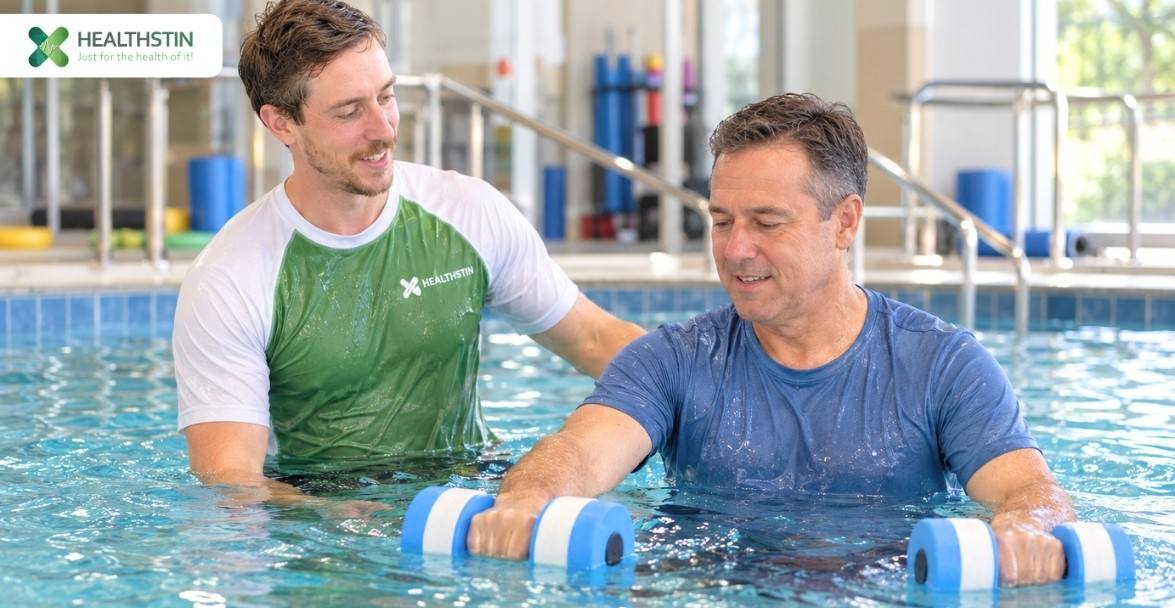
Still Sore After a Work Injury and Unsure What Your Claim Covers?
If your back, shoulder or knee is still giving you trouble weeks after a work injury and someone has mentioned the pool, it’s fair to want the money side sorted before you start. Healthstin’s physiotherapists and Accredited Exercise Physiologists see workers compensation clients in NSW, Victoria, South Australia and WA, and can talk you through what your insurer is likely to ask for.
A free 10-minute phone consultation is a short call to match you with a service, clinic and funding type. It isn’t a treatment session.
Rather put your questions in writing? Use our contact page, or call 1300 090 931.
How to Access Hydrotherapy Under Workers Comp
Step-by-Step Access Process
Most claims follow roughly this order, though your insurer may ask for things differently.
- Report the injury and lodge your claim. Tell your employer as soon as you can. Your treating doctor will usually complete a certificate that goes in with the claim.
- Talk to your doctor or physio about the pool. Ask whether water-based work suits your injury at this stage.
- Get any referral your scheme needs. In Victoria, exercise physiology needs a referral from a medical practitioner.
- Check approval with your claims manager. Have your claim number handy. In NSW, early consultations may not need pre-approval, but in SA and WA it’s worth asking before you book.
- Book an initial assessment. Healthstin’s hydrotherapy booking form asks for your claim number, date of injury and any approval letter.
- Start sessions, with regular reviews. Your clinician sends progress reports and plans to the insurer, and requests more sessions only when there’s a reason to.
Do You Need a Referral?
Whether you need a doctor’s referral depends on your state and the type of health professional treating you. In Victoria, you can see a physiotherapist without a referral as soon as your claim is approved, but you will need one to see an exercise physiologist. In New South Wales, South Australia, and Western Australia, official rules and fee guides generally do not require a referral to begin treatment.
Even so, a referral letter from your GP rarely hurts. It tells the insurer that your treating doctor supports the plan, which can make approval conversations easier. Healthstin’s workers compensation page also notes that you usually need a referral from your doctor to start treatment under workers’ compensation.
Cost & Payment
When treatment is approved, the insurer generally pays the provider directly, so you aren’t handing over money at reception. Whether anything reaches you depends on your state. NSW is firm on this point: practitioners can’t charge you a gap for covered services. In Victoria you might pay the difference if your provider charges above WorkSafe’s rate, and in SA you’re responsible for the cost if your claim isn’t accepted.
Pool entry and travel are the two small costs people forget. WorkSafe Victoria’s aquatic rates already include travel to the pool. In NSW, travel can’t be claimed for regular services at a hydrotherapy pool, and entry fees are only paid in exceptional, approved cases.
Fee schedules change every year, so we haven’t listed dollar amounts. Ask your provider to confirm in writing what, if anything, will be billed to you.
Find Hydrotherapy Near You (Clinic Locator)
Healthstin runs hydrotherapy at seven locations: two in Sydney’s St George area, two in Melbourne’s west, two in Adelaide’s north and one in Perth. If you’re searching for hydrotherapy workers comp Sydney options, Sans Souci and Hurstville are the closest. The full list with links is in the booking section below.
So, Will Workers Comp Pay for Your Hydrotherapy?
In many cases it can, but hydrotherapy workers compensation cover comes with conditions in every state. Your claim has to be accepted, and the insurer has to agree the treatment is reasonable for your injury. Depending on where you live, you may also need a referral, pre-approval for the first sessions, or a conversation about whether any gap applies.
The most useful thing you can do is ask before the first pool session, not after the first invoice. A good provider will be glad you did.
Key takeaways
- All four state schemes have a place for pool-based treatment in their fee rules, but none of them pays automatically.
- New South Wales (NSW): If your injury happened within the last three months, you can get up to eight treatments without needing prior approval. Plus, clinics aren’t allowed to charge you any out-of-pocket extra costs (“gap fees”).
- Victoria: Ask your clinic beforehand if they charge higher rates than what WorkSafe pays, as you might have to pay the difference.
- South Australia & Western Australia: Contact your insurer before booking to confirm approval and find out if pool entry fees are covered.
- Hydrotherapy is meant to be one stage of your rehab, with a plan to move towards land-based or independent exercise.
Frequently Asked Questions About Hydrotherapy & Workers Comp
Will hydrotherapy hurt?
You will feel your muscles working, but the exercises shouldn’t hurt. Like any new workout, it’s normal to feel tired afterwards, though most people find the warm water very relaxing.
If you feel pain at any point, let your clinician know right away so they can adjust the movement or stop. Also, be sure to mention any open cuts, skin issues, recent surgeries, or heart and breathing conditions before you begin, as these may mean pool therapy isn’t the right fit for you just yet.
How many sessions will I need?
There’s no set number. It depends on your injury, your job, how you respond and what your insurer approves. Some schemes build limits into their rules. ReturnToWorkSA, for example, caps one-on-one aquatic sessions and expects pool work to overlap with land-based treatment for a limited time only. Your clinician will usually plan a block of sessions, review how it’s going, and report to your insurer before asking for more.
How long until I see results?
We can’t give you a timeframe. Recovery depends on the injury, your general health, what your job asks of your body, and plenty that happens outside the pool. What you can expect is regular review. Your clinician should track things that matter for your work, such as how long you can stand or how far you can reach overhead, and tell you plainly whether the plan needs to change.
Is hydrotherapy free under workers comp?
Not always, and “free” isn’t quite right, because your insurer is paying. In NSW, practitioners can’t charge you a gap for treatment the scheme covers. In Victoria, you may pay the difference if a provider charges more than WorkSafe’s rate. In SA, you’re responsible for the cost if your claim isn’t accepted. Before your first session, ask exactly what will be billed to your insurer and whether anything will be billed to you.
Can I access telehealth hydrotherapy?
Not really. Hydrotherapy needs a pool and a clinician supervising you in or beside the water, so it can’t happen over a video call. Telehealth can still be useful around your pool sessions, for a check-in with your physiotherapist or exercise physiologist or a review of your home programme. Whether your insurer pays for telehealth depends on your scheme. Our telehealth page explains how those appointments work.
What if my claim hasn’t been accepted yet?
Then your insurer may not pay for treatment yet, and in SA the fee schedule says the worker is responsible for payment. Speak to your claims manager before booking pool sessions, and tell your provider your claim status the first time you get in touch.
Do I need to be able to swim?
No. You’ll usually be standing, walking or holding the side of the pool, and you won’t be asked to swim laps. Public hospital services say the same thing; Barwon Health’s aquatic physiotherapy service, for example, notes that you don’t need to be able to swim to take part. If you’re nervous around water, mention it when you book so your clinician can plan for it.
Who runs the sessions, a physiotherapist or an exercise physiologist?
It can be either, and Healthstin has both. Under workers comp it matters, because each profession bills under its own rules. In Victoria, exercise physiology must be referred by a medical practitioner, while physiotherapy can start without a referral once your claim is accepted. We’ll work out which clinician suits your scheme and your injury when you book.
Can I keep seeing my regular physio as well?
Yes, you can usually do both, but insurance companies keep a close eye on overlapping treatments. For example, South Australia’s ReturnToWorkSA allows land and pool sessions to run together for only a short time, and they will only pay for one appointment per day. Rules vary in other states.
If you’re already seeing a physio on land, make sure both providers know about each other. This keeps your care consistent and ensures all progress reports sent to your insurer match up.
What happens if my insurer says no?
Ask for the decision and the reasons in writing. Sometimes “no” means “not yet”, and a clearer treatment plan, a GP referral or a report from your clinician is what the insurer needs. In NSW, icare says a decision on a treatment request must be made within 21 days of receiving it. Every state has a way to review insurer decisions, and your claims manager or the state regulator can explain how it works where you live.
Can I go to a public pool on my own instead?
Sometimes, usually later in your recovery and with your insurer’s agreement first. Exercising in a pool on your own isn’t the same as supervised hydrotherapy, but the schemes do treat it as a sensible next step. WorkSafe Victoria may reimburse casual pool entry under its gym and swimming memberships fee schedule. In WA, a pool or gym membership in an exercise program needs insurer approval first, and in NSW entry fees are only paid in exceptional, approved cases. Check with your clinician and claims manager before paying for entry yourself.
Are there hydrotherapy clinics near me?
Healthstin offers hydrotherapy at Sans Souci and Hurstville in Sydney, Brimbank and Melton in Melbourne, Elizabeth and Salisbury in Adelaide, and Belmont in Perth. If none of them is close by, call us anyway. We can talk through other options, including home visits for land-based sessions in some areas.
Find Hydrotherapy Near You + Book Your Session
7 Healthstin Clinic Locations
Whether you need hydrotherapy workers comp Melbourne, Adelaide or Perth options, these are the seven Healthstin locations that run hydrotherapy.
| Sans Souci | NSW | Sydney, St George area | Sans Souci hydrotherapy |
| Hurstville | NSW | Sydney, St George area | Hurstville hydrotherapy |
| Brimbank | VIC | Melbourne’s west | Brimbank hydrotherapy |
| Melton | VIC | Melbourne’s west | Melton hydrotherapy |
| Elizabeth | SA | Adelaide’s north | Elizabeth hydrotherapy |
| Salisbury | SA | Adelaide’s north | Salisbury hydrotherapy |
| Belmont | WA | Perth; pool sessions at Belmont Oasis Leisure Centre | Belmont hydrotherapy |
Book Your Assessment
Your first appointment is an assessment, not straight into the pool. You’ll come away with a written plan built around the tasks your job needs from you, and your insurer will be able to review that plan. If pool work isn’t the right fit yet, your clinician will tell you.
When you’re ready, book an assessment online and have your claim number and any approval letter handy. If your insurer still needs to approve treatment, let us know when you book so the first pool session isn’t scheduled before that’s in place. Case managers and doctors can send a referral straight through our referral form.
More on how we work with injured workers is on our workers compensation page.
What to Expect in Your First Session
Bring your claim number, date of injury and any approval letter or referral you’ve received. Your clinician will ask about the injury, what your job involves, and which tasks you most need to get back to. They’ll usually look at how you move on land before deciding what to do in the water. If you’re going in the pool that day, pack swimmers, a towel and something warm for afterwards.
Questions about cost, approval or reports are a normal part of the first visit.
DISCLAIMER
This article is general information only and isn’t personal medical, legal or financial advice. Workers compensation rules, fees and approval processes change, usually every year. Check your own entitlements with your insurer, claims manager or state regulator before starting treatment. Information current as at October 2026.