


Exercise Therapy for Individuals with Intellectual Disabilities
Enhancing Mobility, Independence, and Wellbeing
At Healthstin, we are dedicated to supporting individuals with intellectual disabilities through specialised movement-based therapies. Our intellectual disability specialists design personalised programmes that focus on improving motor skills, coordination, and overall physical health.
Whether in a structured clinic setting or within the community, we offer compassionate and inclusive intellectual disability support to help individuals build confidence, develop independence, and lead active lives.
Health conditions we support include:
How can we help you?
At Healthstin, we believe in empowering individuals with intellectual disabilities through movement and physical activity. Our expert intellectual disability specialists provide compassionate intellectual disability support, ensuring that every individual has access to evidence-based intellectual disability therapies that can enhance their quality of life.
Health conditions and symptoms improved by exercise therapy include the following:

Challenges with coordination and balance
Many individuals with intellectual disabilities experience difficulties with movement control. Our structured exercise programmes help enhance balance, strength, and motor function.
Low muscle tone and limited physical activity
A sedentary lifestyle can lead to muscle weakness and other health concerns. Our active movement sessions help promote strength, flexibility, and cardiovascular health.
Difficulty engaging in social activities
Group-based exercise therapy provides a fun and supportive way to interact with peers, improving communication and social skills.
Behavioural and emotional regulation needs
Physical activity has been shown to reduce stress, anxiety, and behavioural challenges, contributing to overall emotional wellbeing.
Everyday functional limitations
Exercise therapy supports the development of essential motor skills that improve daily activities such as walking, lifting, and performing household tasks independently.
Types of exercise therapy for intellectual disabilities:
Strength and conditioning
Tailored exercises to improve posture, coordination, and muscle tone
Sensory integration activities
Movement-based therapy designed to support sensory processing and cognitive function
Adaptive sports and recreational activities
Fun and engaging sports programmes that encourage teamwork and participation
Hydrotherapy and aquatic exercises
Water-based therapy to enhance muscle strength and relaxation
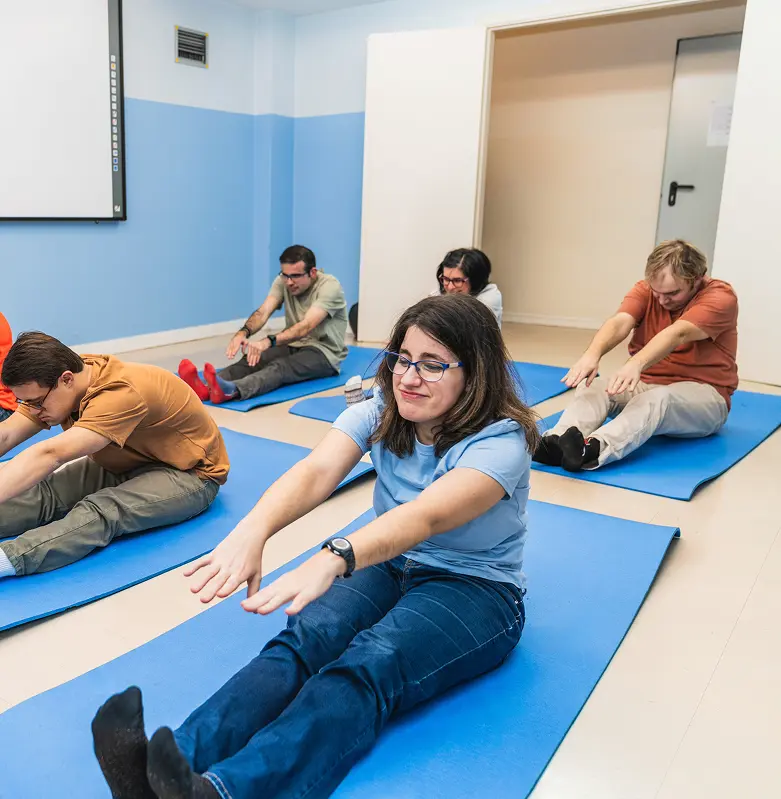
Group and social exercise classes
Encouraging communication, teamwork, and active participation in a structured setting

Frequently Asked Questions
1. How can Exercise Physiology help someone with an intellectual disability?
Beyond physical health, structured exercise is an effective tool for cognitive and emotional wellbeing. Our Exercise Physiologists design programmes that help improve motor coordination, sensory processing, and focus. Regular physical activity can also help manage anxiety and support sleep patterns, leading to better emotional regulation in daily life.
2. Are the programmes tailored to the individual’s learning style?
We prioritise a person-centred approach. Our clinicians take the time to understand how each participant communicates and learns. Whether it involves using visual aids, simplified instructions, or repetitive routines, we adapt our teaching methods to support participant confidence in their movements.
3. Can I use NDIS funding for these services?
Most participants access our services through their NDIS plan, typically under Capacity Building – Improved Health and Wellbeing or Improved Daily Living. We focus on building the physical independence required to achieve the goals outlined in your plan.
4. Is the gym environment suitable for someone with sensory sensitivities?
Traditional gyms can be overwhelming. Healthstin clinics offer a controlled, professional environment. For those with significant sensory sensitivities, we can schedule sessions during quieter times, utilise our Hydrotherapy pools for a calming sensory experience, or provide support via Telehealth or Home Visits.
5. Do you offer group sessions to help with social skills?
While we often start with one-on-one sessions to build foundational skills and rapport, we also offer small group classes. These sessions are an effective way for participants to work on social interaction, turn-taking, and community participation in a safe, supervised, and inclusive setting.
6. How do you track and measure progress for non-verbal participants?
Progress is measured by functional ability. We use objective clinical measures, such as improvements in balance, grip strength, heart rate recovery, and the successful completion of daily tasks. We provide regular progress reports to families and plan managers to show how the therapy is supporting functional goals.
7. Where is the best place to have these sessions?
We generally recommend an initial assessment at one of our clinics to utilise our clinical diagnostic and exercise equipment. However, we are flexible. If a participant feels more secure at home or wants to practice skills at a local park, we can provide Home Visits or Community Visits to support their learning and comfort.
