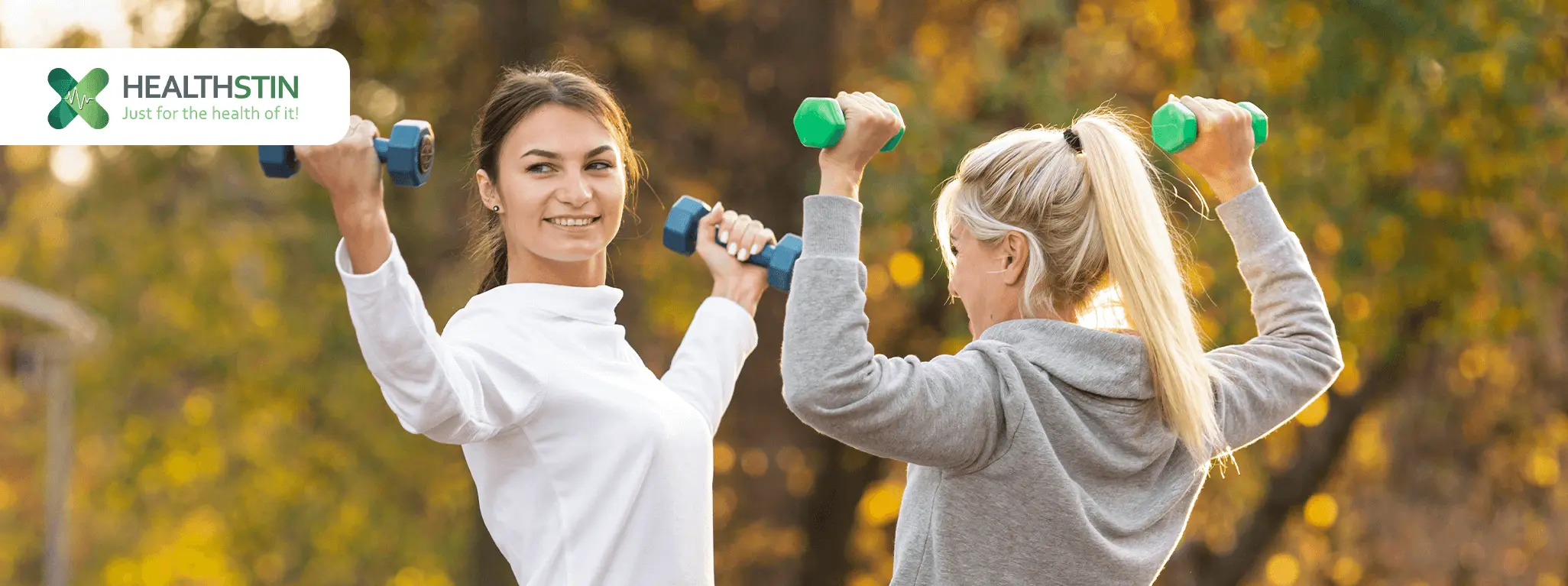
There are some things in life that we do without giving it a second thought. Functional fitness is one of these that we may take for granted. You take a shower and dress up. You ride a car and then walk to the office. After work, you engage in recreational activities that require you to run, jump, or swing a racquet. These are activities for daily living that require functional fitness so that they can be performed safely and without assistance.
What is functional training?
To put it simply, functional training is a type of exercise that focuses on training your body for the activities you perform in daily life. Functional training mimics the activities you do every day – pushing, pulling, bending, and twisting. While traditional strength training usually trains the muscle groups individually, functional training strives to train your muscle groups simultaneously through different planes of motion.
Functional training aims to improve your overall functional fitness – strength, balance, coordination, flexibility, and endurance. Squats, deadlifts, push-ups, planks, rows, and core exercises are some examples of functional exercises.
This type of training may also help in overcoming limitations in activities of daily living which the Australian Bureau of Statistics identified as self-care, mobility, communication, cognitive or emotional tasks, health care, reading or writing tasks, transport, household chores, property maintenance, and meal preparation.
What are the benefits of functional training?
As the term implies, functional training can help you function better when performing your daily tasks. However, it also offers other benefits:
May contribute to healthy movement
Functional training can help avoid creating muscle imbalances that can lead to poor movement, pain, or tightness and allow you to move better.
May improve athletic performance
Doing exercises that mimic the movements involved in your favorite sport can help improve the way you perform the activity. An example would be rowers doing bodyweight squats to strengthen the leg muscles they use to make an initial push before rowing to propel themselves forward.
May help prevent injuries
Performing exercises that are similar to real-life tasks can help you prevent injuries. For example: doing deadlifts can help you ward off back pain when lifting objects off the floor.
May enhance flexibility and mobility
Often involving a wide range of motion, functional exercises may help improve your joints’ mobility and overall flexibility.
Achieve better balance and coordination
Functional exercises can help your different body parts move together more smoothly as well as aiding in preserving your sense of balance.
May improve core strength
Engaging the core muscles is important in maintaining stability as well as aid in transferring force between your upper and lower body when performing everyday movements such as twisting or bending.
Time-efficient way to train
Training different muscle groups simultaneously instead of concentrating on individual body parts means shorter, more efficient routines.
Requires little to no equipment
You can often do functional training using body weight or you can use common household objects such as soup cans as resistance
What are examples of functional training exercises?
Here are some functional training exercises you can do at home or the gym. Important note: If you’ve been sedentary or have not exercised in a long time, it is best to consult an Accredited Exercise Physiologist who can assess your health condition first and create a customised training program suitable to your condition and goals.
UPPER BODY
• Pushups
Help develop upper body strength, aid in movements that require pushing
How to do pushups?
Start with your body in a plank position, hands a bit wider than shoulder-width.
Gazing ahead, your body should form a straight line from head to toe, your shoulders rolled down and back.
Bend your elbows at a 45ª angle lowering your upper body until your chest touches the floor.
Push back up to the starting position.
Repeat for 10-15 repetitions.
• Deadlifts
Works the core and the posterior chain plus the glutes, quads, and hamstrings.
How to do deadlifts?
Start with your feet shoulder-width apart, standing in front of a barbell or dumbbell on the ground.
Bend at the waist with knees slightly bent and keeping the back straight, hold the free weight.
Straighten your legs as you roll your shoulders down and back and pull the free weight up and off the floor.
Bend your knees and sink back into your hips.
Go back to the starting position by returning the free weight to the floor.
Repeat for 10-15 repetitions.
• Rows
Works the back muscles – rhomboids, lats, and trapezius
Stand with your feet hip-width apart. Hold a free weight (ex. Dumbbell or barbell plate) in front of you
Bend your knees, hinge at the hips moving your back close to parallel to the ground while keeping your abs engaged.
Bend your elbows and pull the weight towards your body. Keep your elbows close to your body as you keep your gaze on the floor.
Squeeze your shoulder blades at the top of the movement.
Return to the starting position. Do 10-12 repetitions per side.
LOWER BODY
• Squats
Help build lower body strength and assist in sitting in and rising from a chair, running, walking, and jumping.
How to do squats?
Stand with feet shoulder-width apart, then bend your knees and squat down as if sitting on a chair, using your hips to push back, with your arms raised in front of you.
With your thighs parallel to the floor, pause, then push using your heels. Extend your legs to return to the starting position.
Do 15 repetitions.
• Walking Lunges
Help build strength and flexibility in the quads, hamstrings, and abdominals
Start by assuming a split stance, your legs forming a triangle.
Lunge forward using your left leg until it forms a 90º angle to the floor.
Rise back up to the starting position. Repeat for 10-15 sets.
Do the same using your right leg as the leading leg.
• Step Ups
Help strengthen the muscles used to climb stairs
How to do step-ups?
Stand with a bench or step platform in front of you
Use your right foot to step up onto the bench or platform and use your left foot to tap the surface. Keep your weight on your right foot.
Return to the starting position and then repeat for 10-15 repetitions.
Do the same using your left leg.
CORE:
• Side Planks
Help build core strength and support movements that require bending from the waist or twisting to the side.
How to do side planks?
Arms bent at a 90ª angle, legs on top of each other, start on your side with the weight on your forearms.
Extend your other arm toward the ceiling, your gaze following your arm.
Engage your obliques. Then pull your midsection toward the ceiling and hold for 15-30 seconds.
Return to the starting position. Do the same for the other side.
BALANCE:
• Single leg lifts
Help improve your sense of balance to avoid falls
How to do leg lifts?
Start by standing with your feet together, hands on your hips
Putting your weight in your left leg, rise forward at the hips, lifting your right leg straight at the back until it forms a 45º angle
Rise up and return to the starting position. Repeat for 15 repetitions.
Do the same for the right leg.
How often should you do functional training?
As with strength training, experts recommend doing functional training at least twice a week, with a rest day or two in between training sessions for recovery.
Doing functional training can do wonders in how you do tasks of daily living as well as enhance your quality of life, help you avoid overuse and strains, and prevent falls and injuries. It requires minimal space, a minimum of equipment, and so little time, you ought to be incorporating it into your fitness regimen.
If you’re eager to explore this kind of training but need help in knowing where to start and how to begin, you’d be glad to know that our Exercise Physiologists at Healthstin are just a phone call or click away. Reach out to our Team of Exercise Experts by calling 1300 090 931 or click this link now.
Disclaimer: The information presented above is general in nature and does not take your personal condition or situation into consideration. It is intended to show the correct exercise technique and should not be used to self-diagnose or self-treat any medical condition. If your pain persists or you experience difficulty performing an exercise, see your experienced Exercise Physiologist for guidance.