For most people living with cerebral palsy (CP), movement feels like a counterweight against their own bodies. Gravity, it would seem, exerts an extra pull. When a person feels joint pain, muscle stiffness, and the constant fear of falling, their experience with a physiotherapy session becomes an exhausting and sometimes discouraging ordeal.
When every step requires immense concentration and physical effort, the joy of movement often takes a back seat to the struggle for stability.
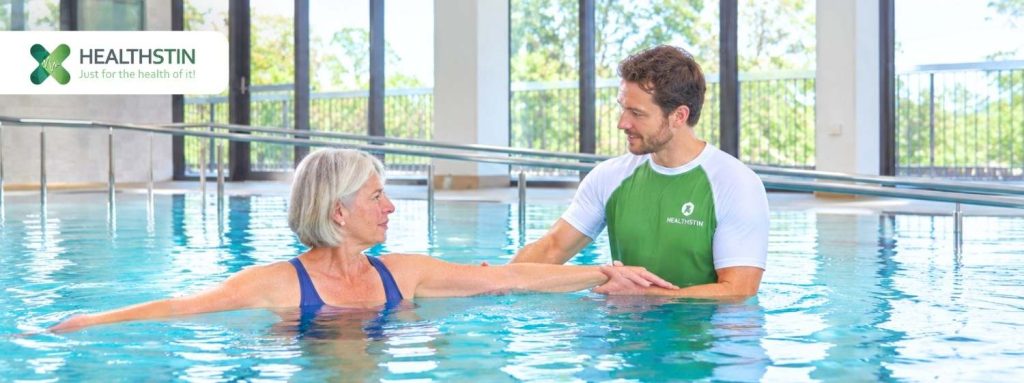
In a hydrotherapy pool, the water supports your weight, so you feel light and free. Think of the water as a giant, soft cushion that holds you up. This takes the pressure off your joints and eases tired muscles, making it possible to move, stretch, and exercise without the pain or struggle you might feel on solid ground.
This isn’t just a casual swim; it’s a professional, medical approach to recovery and strength that is helping people all over Australia regain their independence and improve their lives.
Main Content Body
What Is Hydrotherapy?
Hydrotherapy is a form of therapeutic exercise performed in a purpose-built, heated pool. Unlike a standard recreational pool, a hydrotherapy environment is strictly controlled in terms of temperature—usually maintained between 32°C and 35°C. This specific warmth is a key component in inducing physiological changes in the body, particularly for those with neurological conditions such as cerebral palsy.
When utilising hydrotherapy for cerebral palsy, sessions are guided by qualified physiotherapists or exercise physiologists with significant clinical experience.
Why Water Changes the Clinical Framework for Cerebral Palsy
Water possesses unique physical properties that land-based environments cannot replicate. For someone with CP, these properties act as a “mechanical assist” for the entire body, allowing for a different type of physical engagement.
1. Buoyancy
Water pressure keeps the body lighter. When a person submerges to the chest level, they weigh only 10% of their actual body weight due to an upward force.
The benefit of reduced weight is that it reduces stress to the joints, making exercises easier to perform
2. Hydrostatic Pressure
Water pressure tends to increase circulation and helps the brain get clearer feedback on the positions of limbs in space. This is critical for people with CP who struggle with body awareness. The gentle pressure exerted by water provides the nervous system with additional information about the body’s position.
3. Thermal Effects
The warm water acts like a giant heating pad, relaxing tight muscles by boosting blood flow. This “softens” the body, making it less painful to stretch. It creates a perfect window of time for therapy when the body is loose and ready to move.
4. Viscosity and Resistance
Moving through water is much harder than moving through air, but water has a unique “smart” resistance: it only pushes back as hard as you push against it.
If you move slowly and gently, the water feels soft. If you push hard and fast, the resistance increases instantly. This way, you can control the intensity of your workout in real time by adjusting your effort level.
7 Key Benefits of Hydrotherapy for Cerebral Palsy
1. Support for Muscle Spasticity Management
One of the primary challenges of CP is spasticity—increased muscle tone that leads to stiffness and involuntary contractions. Muscle spasticity management is supported by immersion in warm water. The heat helps to inhibit overactive neural pathways, allowing tight muscles to relax. This temporary reduction in tone provides a window of opportunity for therapists to improve joint range of motion in restricted joints.
2. Easier Movement and Functional Mobility
On land, simple movements like lifting a leg or keeping your body steady can feel like an exhausting uphill battle for someone with cerebral palsy.
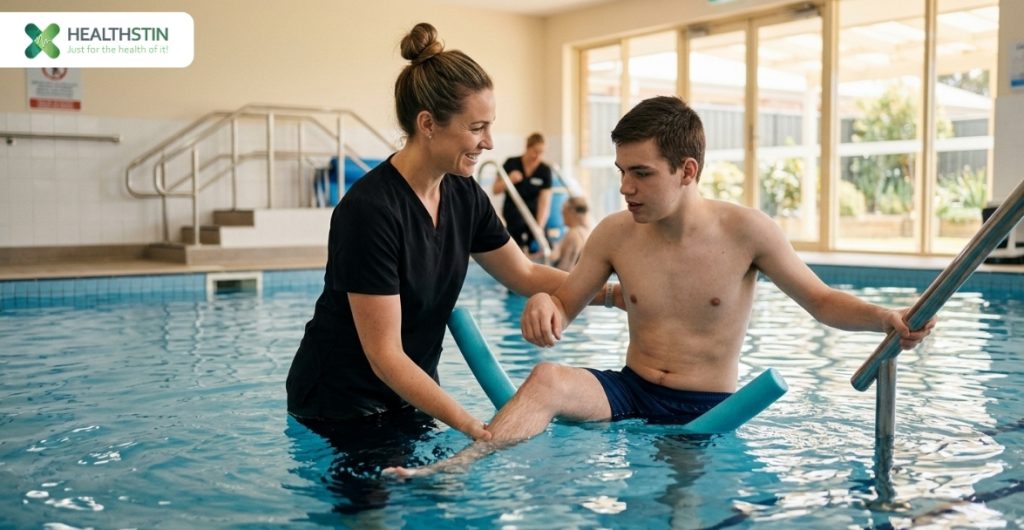
In the pool, the water acts like an invisible cushion, carrying most of the body’s weight. The pool gives people the confidence to move more freely and build the skills they need for everyday life.
3. Improved Strength Without Joint Strain
To build muscle on land, you usually have to lift weights, which can be hard on your joints. Hydrotherapy offers a “low-impact” shortcut.
By moving through water, your muscles get a great workout from the water’s natural resistance, but your bones and joints stay protected, without the usual wear and tear on your body.
Experience Movement Without Pain or Restriction
Stop letting gravity hold you back. At Healthstin, we focus on integrating clinical support with the freedom of the water.
Book Your NDIS Hydrotherapy Assessment Today
4. Balance and Coordination Training
For someone with CP, the fear of falling can make moving feel scary. The water removes that fear by acting like a safety net. If you lose your balance, the water catches you and gives you time to safely steady yourself.
5. Dedicated Pain Management
Cerebral Palsy often causes muscles to feel tight and joints to ache. Floating in warm water helps your body release its own natural painkillers while quieting down “pain alarms” in your nerves.
6. Increased Confidence and Community Participation
The mental boost from hydrotherapy is just as powerful as the physical one. For a child who usually relies on a wheelchair, the water provides a rare and incredible chance to stand or “walk” on their own. Feeling free and successful in the water gives a child’s confidence a huge boost.
7. Alignment with Functional NDIS Goals
Every hydrotherapy session is designed to help with the goals in a participant’s NDIS plan. The real aim isn’t just to be better at moving in the pool—it’s to make life easier on land. By practising in the water, people build the strength they need to get out of a chair more easily, stand longer to get chores done, or walk with more confidence.
How Hydrotherapy Supports Different Types of Cerebral Palsy
Cerebral palsy is a broad diagnosis, and the way water interacts with the body depends on the specific type of CP a participant has.
Spastic Cerebral Palsy: The warm water is a vital tool for relaxing high muscle tone. It allows for gentle, passive stretching that might be too painful on land.
Ataxic Cerebral Palsy: For people who struggle with balance or knowing exactly where their body is in space, water acts like a supportive, all-over hug. This gentle pressure from the water sends constant signals to the brain, helping it “see” where every limb is positioned. This extra feedback makes it much easier to stay balanced and move with more control.
Dyskinetic/Athetoid Cerebral Palsy: The viscosity of the water acts as a natural dampener for involuntary movements. The resistance helps the participant move with more control and intention.
Hydrotherapy vs Traditional Land-Based Physiotherapy
It is important to understand that hydrotherapy for cerebral palsy is not meant to replace land-based physiotherapy. Instead, it serves as a powerful catalyst. At Healthstin, we see the best results when both environments are utilised to verify that the body is gaining both fluidity and functional strength.
By combining the two, participants receive a comprehensive approach: the freedom to master movement patterns in the water and the clinical support to apply them to their daily lives.
How the NDIS Supports Hydrotherapy Programmes
Hydrotherapy is a recognised intervention under the National Disability Insurance Scheme (NDIS). Typically, it falls under the Capacity Building budget, specifically under “Improved Daily Living.”
Because hydrotherapy is an evidence-based practice led by qualified allied health professionals, it aligns with goal-based NDIS plans. When the goal is to increase independence, support community participation, or enhance physical wellbeing, hydrotherapy is an appropriate and effective use of funding.
Our team provides the necessary clinical reporting to verify that participants are making progress toward their stated NDIS goals.
Healthstin’s Clinical Approach to Hydrotherapy
At Healthstin, we do not believe in “one size fits all” routines. Our approach to hydrotherapy for cerebral palsy is deeply personal and evidence-led.
Comprehensive Assessment: We begin with a land-based assessment to understand your unique physical profile, your history, and your daily aspirations.
Integrated Planning: We integrate physiotherapy and exercise physiology to create a holistic plan. We don’t just look at the legs or arms; we look at the whole person.
Active Support: Our therapists are in the water with you. We provide hands-on manual guidance and support to verify that every movement is safe and effective.
Progress Tracking: We meticulously track every milestone. This data is used to support your NDIS plan reviews and to verify that your time in the water is directly contributing to your independence.
What to Expect in Your Initial Session
Walking into a new therapy environment can be a big step, but we prioritise your comfort and safety from the moment you arrive.
Arrival and Access: We utilise accessible facilities with ramps, hoists, and aquatic wheelchairs to verify that getting in and out of the water is a dignified and safe experience.
Acclimatisation: We ensure you feel comfortable with the water temperature and buoyancy sensation before starting any exercises.
Tailored Movement: Your therapist will lead you through a series of movements—stretching, strengthening, or gait practice—standardised to your current energy levels.
Post-Pool Support: We provide a gentle transition period to allow the muscles to settle before you exit the pool and return to your daily routine.
Frequently Asked Questions
Is hydrotherapy safe for all types of cerebral palsy?
Yes. When guided by a qualified clinical professional, it is a very safe form of therapy. We monitor fatigue levels and verify that all entries and exits from the pool are managed with appropriate equipment, such as hoists or ramps.
How do I get hydrotherapy included in my NDIS plan?
If your NDIS goals relate to improving physical function, independence, or community access, hydrotherapy can be funded. We can provide a clinical recommendation letter to support your request during your next plan meeting or review.
How many sessions are usually required?
This depends on your specific goals. Some participants find that once-a-week sessions provide excellent maintenance and pain management. In contrast, others prefer more intensive blocks to work toward a specific goal, such as improving their walking gait.
Can children with CP participate?
Absolutely. Hydrotherapy is often a highlight of a child’s week. Because it feels more like play than work, it promotes high levels of engagement and joy, which are vital for long-term clinical outcomes.
Do I need to be able to swim?
No. You do not need any swimming skills to benefit from hydrotherapy. Your therapist is with you at all times, and the focus is on therapeutic movement, not swimming laps. We use flotation aids and the shallow areas of the pool to verify that you always feel secure.
Discover a New Way to Move with Confidence
Cerebral palsy might define how your body moves, but it shouldn’t define your limits. Hydrotherapy offers a path to freedom that land-based therapy can support in different ways. It is a space where pain is managed by support, and where the body is given the freedom to discover what it can achieve.
At Healthstin, we are ready to support you in navigating a more mobile, confident future. Let’s work together to turn the water’s weightlessness into the strength of your daily life. Contact Healthstin today to book your NDIS hydrotherapy assessment and experience the clinical power of the water.
Healthstin provides hydrotherapy programmes across multiple states in Australia.
- Sans Souci, NSW – Supporting southern Sydney residents
- Hurstville, New South Wales (NSW) – Conveniently located for serving the St George community
- Salisbury & Elizabeth, South Australia (SA) – Accessible for Adelaide’s northern suburbs
- Brimbank & Melton, Victoria (VIC) – Supporting communities in Melbourne’s west
- Belmont, Western Australia (WA) – Expanding to meet growing local demand
Our team can deliver therapy in our clinics or within the community.
Reclaim Your Independence with Healthstin
For individuals living with cerebral palsy, independence is a significant milestone. Whether you are looking to utilise NDIS capacity building support or are seeking a structured programme for functional mobility improvement, Healthstin provides the clinical support you deserve.
Our integrated healthcare model is designed to support your unique physical goals. By bringing together multidisciplinary teams of Physiotherapists and Exercise Physiologists, we work to verify your rehabilitation journey remains collaborative, safe, and—most importantly—focused on the functional outcomes that matter most to your daily life.
No obligation. Just clarity.
We’ll review your situation and tell you which service makes sense—and why.
ALSO READ: Swimming Pool Workouts: 10 Exercises for Older Adults