Almost half a million Australians experience workplace injuries or illness yearly. Of this number, more than half had time off from work. Though the statistic has been on a downward trend over the past few years due to improvements in occupational safety and health practices, workplace injuries are still a major concern with the cost implications to the local economy pegged at a staggering $28.6 billion annually.
The figure is also telling: 185,500 additional full-time equivalent jobs could have been created and workers across all skill levels and occupations would have benefited from an average yearly rise in wages of 1.3 percent.
There are also indirect costs of workplace injuries that go beyond the financial – lost productivity, damage sustained by equipment and property, penalties, fines, and damage to the company’s reputation. It is with the understanding of the magnitude of indirect costs that we can become more fully aware of the importance of health and safety awareness.
While accidents do happen in every workplace, the severity and extent of risk vary across jobs, sectors, locations, and workers. A lot of accidents are also preventable through proper awareness and taking action.

Most Common Workplace Injuries
The most common workplace injuries include sprains, strains, or dislocations; chronic muscle or joint conditions, and cuts or open wounds. As a lot of jobs involve manual tasks like pushing, pulling, lifting, or carrying, injuries may be incurred by the bones, muscles, joints, and connective tissues – also termed musculoskeletal disorders (MSD). MSD includes sprains and strains, back injuries, nerve compression or injuries, muscular and vascular disorders, joint and bone injuries, chronic or acute pain, and injuries of the soft tissues. It can happen suddenly caused by abrupt and strenuous movement or slowly due to repetitive, continuous movement.
Stressful manual tasks that can lead to MSD include lifting, carrying, pushing, pulling, moving, or holding movements repetitively, with sustained force; with sudden, abrupt force; with exposure to vibration such as handling a drill or a similar tool, or when assuming an awkward posture.
Other Common Workplace Injuries
Here is a list of other common workplace injuries
- Slips, Trips, and Falls
- Musculoskeletal Injuries
- Cuts and Lacerations
- Burns
- Electrical Injuries
- Struck-by Objects
- Caught in or Between Objects
- Chemical Exposures
- Noise-Induced Hearing Loss
- Vehicle-Related Incidents
- Workplace Violence
- Repetitive Strain Injuries (RSI)
Risk assessment should be done for manual tasks deemed hazardous. A step-by-step process involves firstly, identifying the hazards and what could cause them; secondly, assessing the risks and harm that can be caused by these hazards; thirdly, controlling the risks, and finally, reviewing control measures. Control measures for manual handling include reducing the load by employing lighter weights or using more stable containers, reorganising the work environment, using mechanical lifting equipment, utilising job breaks to avoid overexertion, and providing personal protective equipment.
What are the most common mechanical equipment injuries?
Mechanical equipment injuries can vary, but some of the most common types of injuries involve the following:
- Hands and Fingers: Injuries to hands and fingers are common when working with machinery. This can include crushing, cuts, or getting caught in moving parts.
- Eyes: Eye injuries can occur due to flying debris, sparks, or exposure to hazardous materials. Wearing appropriate eye protection is crucial in preventing such injuries.
- Head and Skull: Injuries to the head and skull can happen if a person is struck by a moving object or a fall. Wearing hard hats is essential in certain work environments.
- Feet and Legs: Crushing injuries, cuts, or fractures can occur if feet and legs come into contact with heavy equipment or moving parts.
- Back and Spine: Improper lifting techniques or accidents involving heavy equipment can result in back and spine injuries.
- Ears: Prolonged exposure to loud machinery without proper hearing protection can lead to hearing loss or damage.

How to Prevent Workplace Injuries?
Exercising at the workplace and providing an active break before, during, and after working hours can help prevent repetitive strain injuries (RSI) and work-related injuries.
However, there are some best practices all businesses can implement to reduce the number of workplace accidents.
- Risk Assessments.
- Regular Inspections.
- Ongoing and Effective Training.
- Personal Protective Equipment (PPE)
- Clear Signage
- Accident Reporting
- Physical Assessments
- Encourage Communication
Exercise to help Prevent Workplace injuries
While the jury is still out about using exercise to prevent injuries in the workplace, there is evidence that suggests that it may help reduce recovery time in case of injury. The most prescribed exercises for helping in injury prevention include:
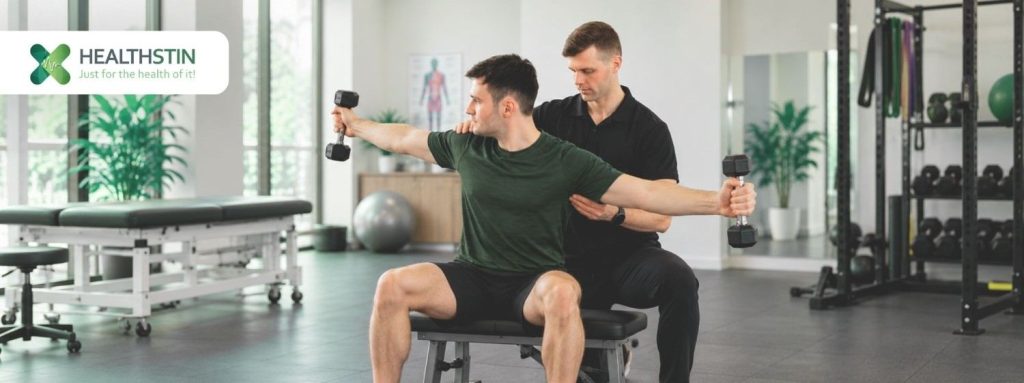
- Strength training: helps build muscle mass, endurance, power, and strength for jobs that require heavy lifting. It may also improve posture and promote stronger bones so you can avoid awkward postures when executing lifting movements. You can train for strength using a variety of equipment such as free weights, machines, or resistance bands, or use bodyweight for squats, pushups, and pullups, among many other exercises.
- Flexibility exercises: aid in lengthening and stretching your muscles to help improve posture, and prevent back strain, and other injuries. Some examples are head rolls, neck stretches, upper body stretches, seated spinal twists, seated hip flexor stretches, and calf stretches.
- Stretching: allows the synovial fluid to circulate and lubricate your joints so you can move better, with more range of motion and less stiffness.
Note: This information is general in nature and is provided for demonstration purposes only with regard to precise exercise techniques. It should not be used for self-management or self-diagnosis of any medical condition. If you experience persistent discomfort or challenges when trying an exercise, please consult a qualified Exercise Physiologist for guidance. You can reach out to us and our team of Allied Health Professionals at 1300 090 931.
How does Work Injury Compensation assist Workplace Injuries?
Workers compensation is a type of insurance scheme that provides workers like you with compensation for rehabilitation and medical expenses in case you become injured or ill at work. It also includes payments to cover your wages while you’re not yet fit for work.
Also, there are different types of compensation available – from medical, hospitalisation, and rehabilitation expenses to new employment assistance for those who can’t return to their old employer. Please check with your local governmental body for more details.
Rehabilitation for Workplace Injuries
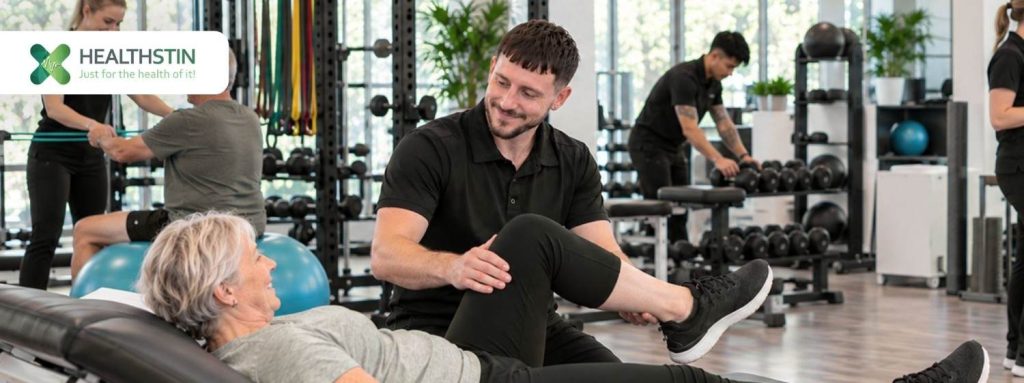
At Healthstin, we take pride in our track record of working with a wide array of patients including workers who need rehabilitation to be able to return to work. Our Allied Health Experts are well-trained and very experienced in working with people with chronic and complex health conditions. Our Physiotherapists and Exercise Physiologists know that a treatment program customised to the needs and conditions of every patient is the best way to ensure optimal outcomes.
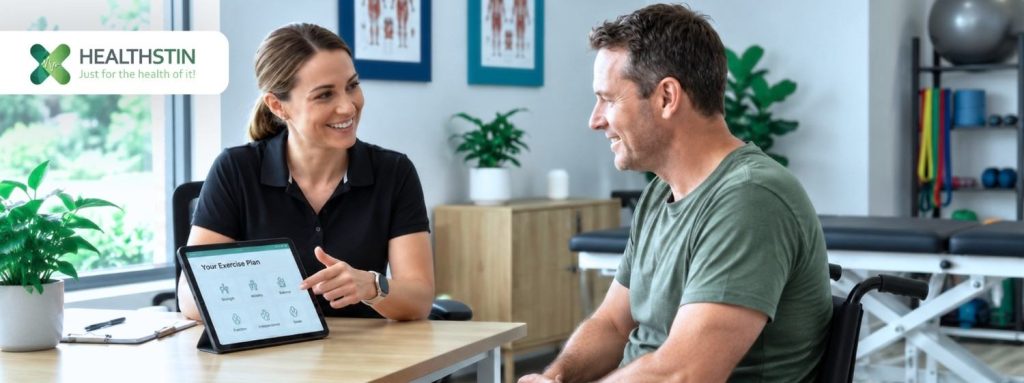
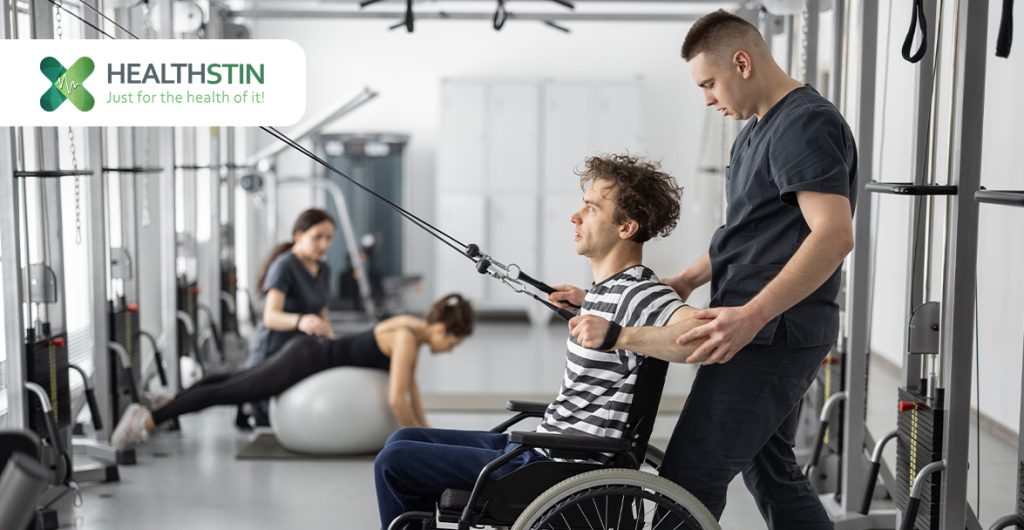
Our facilities are also well-equipped and adaptive to accommodate people with varying training requirements, whether it be ample space for a wheelchair or weight machines adapted to a person with an injury. Like all our other clinic locations, our Allied Health Clinic in Melton is furnished with a Hydrotherapy pool and gym space for a more holistic approach to training.
The pool is excellent for aquatic-based training such as swimming and water aerobics, letting you benefit from the body’s buoyancy in the water environment. That means less strain on your joints and enhanced flexibility, balance, and range of motion. For land-based training, our gym is fully equipped to allow you to exercise safely and effectively. To book an appointment or know more about how we can help you get back to work, just call 1300 090 931.
Mishaps and accidents in the workplace are not necessarily part and parcel of working. A lot of work-related injuries are preventable. Risk management is one way to minimise workplace injuries. Another way is to use exercise to help mitigate the occurrence of work-related injuries. In cases when mishaps and injuries do happen, an effective rehabilitation program can be instrumental in getting you back to work quickly.
If you liked this post, please follow our blog or subscribe to our social media accounts on Facebook or Instagram and get our regular health update.