Motor Neurone Disease (MND) is a progressive neurological condition that affects the nerve cells controlling voluntary muscles. Over time, it leads to muscle weakness, mobility challenges, and difficulties with speech, swallowing, and breathing. Whilst there is currently no cure, Physiotherapy, Exercise Physiology (EP), and Hydrotherapy can play a crucial role in MND rehabilitation, helping individuals maintain independence and improve their overall quality of life.
In Australia, MND affects more than 2,000 people at any given time with approximately two people diagnosed with MND every day. These statistics highlight the urgent need for effective management strategies, including Physiotherapy and multidisciplinary support, to enhance the quality of life for those affected.
What is Motor Neuron Disease?
Motor Neurone Disease is a group of neurodegenerative disorders that impact motor neurons, nerve cells responsible for sending signals from the brain and spinal cord to the muscles. As these neurons degenerate, they lose their ability to transmit signals effectively, leading to muscle atrophy and progressive disability. The most common type of MND is Amyotrophic Lateral Sclerosis (ALS), also known as Lou Gehrig’s disease.
What causes Motor Neuron Disease?
The exact cause of MND remains unknown, but researchers believe a combination of genetic and environmental factors contribute to its development.
Motor Neurone Disease (MND) predominantly affects adults, with the average age of onset around 58 to 59 years. Whilst it can occur in younger individuals, its prevalence increases with age. Approximately 10% of MND cases are familial, resulting from inherited genetic mutations, with the remaining 90% deemed as sporadic with no clear cause. Studies suggest that a combination of genetic, environmental, and lifestyle factors may contribute to the development of sporadic MND.
Potential risk factors include:
- Genetic mutations
- Exposure to toxins
- Viral infections
- Autoimmune responses
- Oxidative stress
Common disabilities associated with MND include the following:
| Muscle weakness
& atrophy |
As motor neurons deteriorate, muscles weaken and waste away, leading to difficulties in performing daily activities. |
|
Speech & swallowing difficulties |
Damage to neurons controlling the mouth and throat muscles can result in dysarthria (slurred speech) and dysphagia (difficulty swallowing), increasing the risk of choking and aspiration. |
|
Respiratory challenges |
Weakness in respiratory muscles may cause breathing difficulties, especially during physical exertion or when lying down, potentially leading to respiratory failure. |
|
Emotional and cognitive changes |
Some individuals experience emotional disturbances, such as pseudobulbar affect, and cognitive or behavioural changes, including issues with decision-making and memory. |
| Increased risk
of falls |
Muscle weakness, spasticity, and impaired coordination significantly elevate the risk of falls in individuals with MND. |
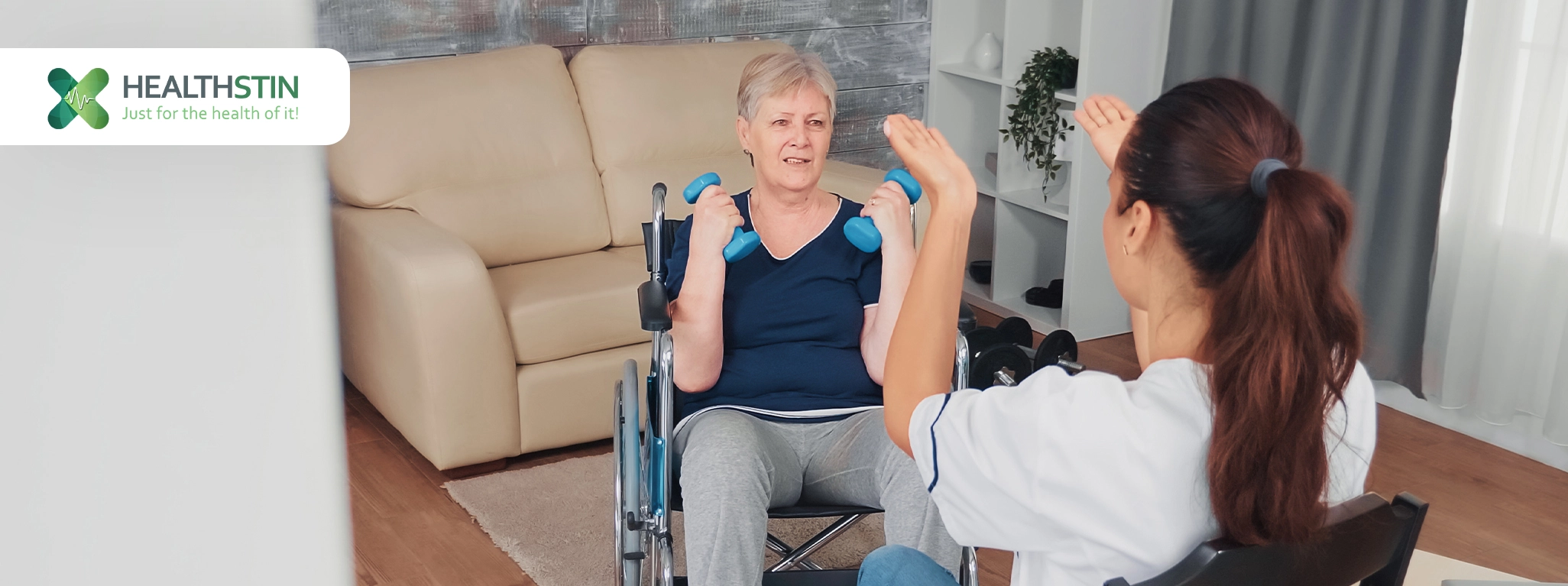
Motor Neurone Disease and Physio
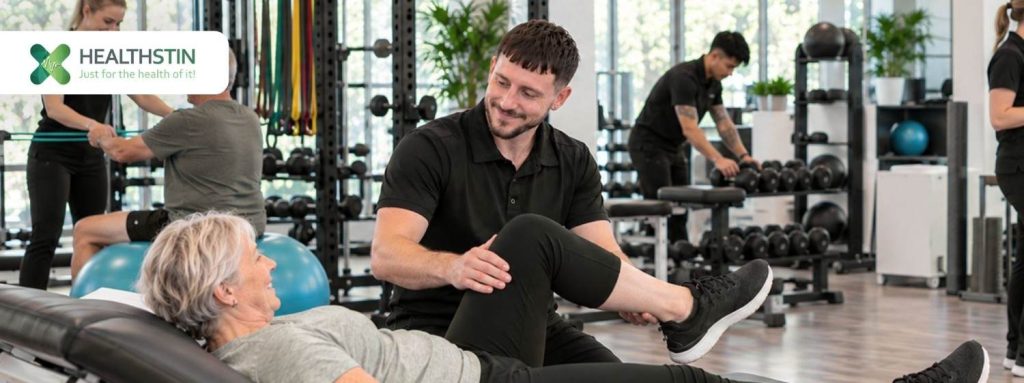
Physiotherapy is essential in managing MND, as it helps slow the functional decline and supports mobility for as long as possible. A Physiotherapist can develop tailored exercise programmes that focus on:
| Maintaining
muscle strength |
Gentle resistance exercises can help slow muscle wasting. |
| Reducing joint
stiffness and pain |
Range-of-motion exercises keep joints mobile. |
| Improving balance
and coordination |
Falls prevention strategies enhance safety. |
| Enhancing
respiratory function |
Breathing exercises can support lung capacity and function. |
| Assisting with
posture and seating |
Ergonomic adjustments can prevent pressure sores and discomfort. |
MND rehab: A multidisciplinary approach
MND rehabilitation involves a team of health professionals, including Physiotherapists, Exercise Physiologists, Occupational Therapists, and Speech Therapists.
This team works collaboratively to address the challenges faced by individuals with MND, aiming to:
- Maintain mobility for as long as possible
- Manage symptoms effectively
- Support independence in daily activities
- Enhance mental well-being and reduce fatigue
MND training: Strengthening the body and mind
Although individuals with MND experience progressive muscle weakness, targeted exercise programmes can help manage symptoms and optimise function.
MND training should be tailored to each person’s needs, focusing on:
| Low impact
aerobic activities |
Examples: walking or cycling on a stationary bike to maintain cardiovascular health. |
| Stretching and flexibility exercises | Prevent contractures and maintain joint range of motion. |
| Hydrotherapy exercises | Warm water therapy supports movement and reduces strain on weakened muscles. |
| Breathing
exercises |
Assist in maintaining respiratory function. |
Hydrotherapy for MND:
The benefits of water-based therapy
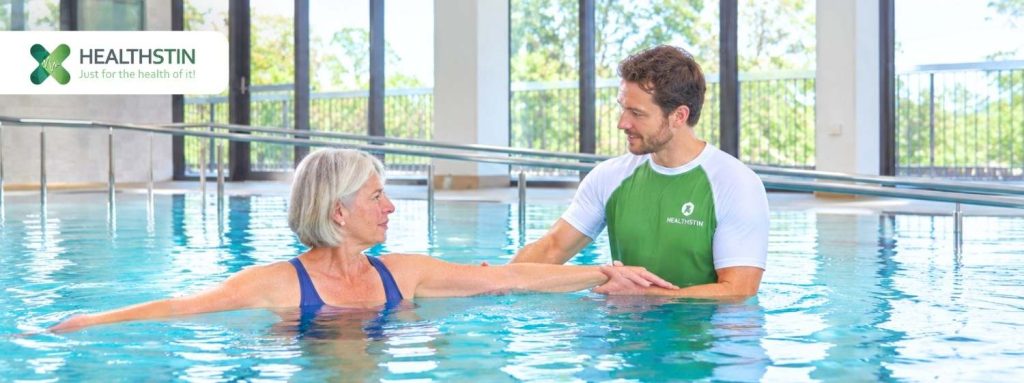
Hydrotherapy is particularly beneficial for individuals with MND, as the buoyancy of water reduces stress on muscles and joints while allowing for more fluid movements.
Some of the key advantages include:
- Pain relief and muscle relaxation
- Improved flexibility and mobility
- Reduced muscle fatigue
- Enhanced circulation and respiratory function
- Safe environment for balance and gait training
At Healthstin, our Hydrotherapy sessions are designed to cater to different stages of MND, ensuring that individuals feel supported and confident in the water.
How our Allied Health Team supports individuals with MND
At our clinics, we provide comprehensive MND rehabilitation services tailored to each individual’s condition and goals.
Our approach includes:
| Physiotherapy | For mobility, pain management, and posture correction |
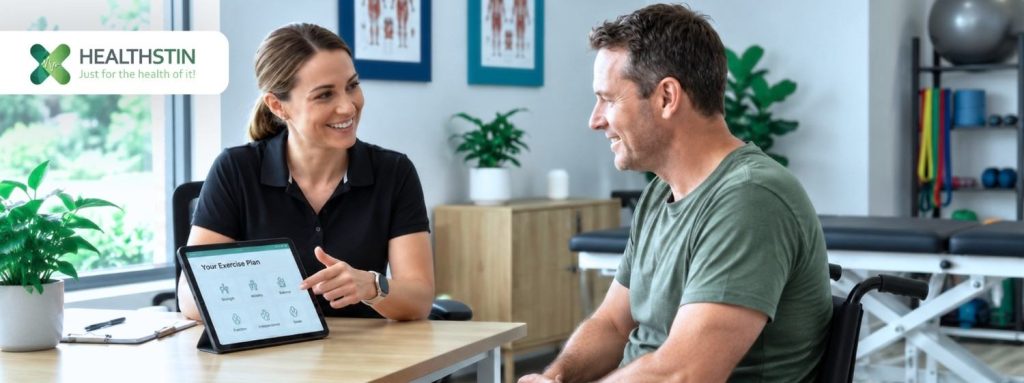
| Exercise Physiology | For personalised exercise programs that maintain strength and endurance |
| Hydrotherapy | For gentle, supportive movement therapy |
| Interdisciplinary collaboration | Working with other healthcare professionals to ensure holistic care |
We understand that MND is a challenging condition, but with the right support, individuals can maximise their independence and quality of life.
Empowering individuals with MND
Motor Neurone Disease is a progressive condition, but Physiotherapy, Exercise Physiology, and Hydrotherapy can significantly enhance mobility, reduce discomfort, and improve daily function.
Healthstin is an accredited Allied Health Provider for the National Disability Insurance Scheme (NDIS), Commonwealth Home Support Programme (CHSP), Home Care Package (HCP), and Workers’ Compensation. If you or a loved one is living with MND, reach out to our Allied Health Team to explore how we can support you through tailored rehabilitation programmes.
Call 1300 090 931 or click this link to learn more or to book a session today.
| Supported by the Australian Government Department of Health and Aged Care | Although funding for this set of Allied Health Services for CHSP has been provided by the Australian Government, the material contained herein does not necessarily represent the views or policies of the Australian Government. |