Skip to content

We are looking for a Physiotherapist to join our team. Click here to apply

Free 10-Min Phone Consultation
[email protected]
1300 090 931
HealthStin logo with tagline.
a green rectangle with white text
a purple sign with white text
  • About Us
    • Why Choose Us
    • Our Team
    • Blog
    • News
    • Contact Us
    • FAQs
  • Services
    • Exercise Physiology
    • Hydrotherapy
    • Group Classes
    • Heal Program
    • Physiotherapy
    • Remedial Massage Therapy
    • Acupuncture
    • Insurances
    • NDIS
    • Home Care Packages
    • Commonwealth Home Support Program
    • Support at Home
    • Workers Compensation
    • Department of Veterans’ Affairs
    • Delivery Methods
    • In Clinic
    • Hydrotherapy Pool
    • Gym
    • Mobile
    • In-home Visits
    • Local Community Visits
    • Telehealth
  • Our Clinics
    • Sans Souci, NSW
      • Exercise Physiology at Healthstin Sans Souci
      • Hydrotherapy at Healthstin Sans Souci
      • Physiotherapy at Healthstin Sans Souci
    • Hurstville, NSW
      • Exercise Physiology at Healthstin Hurstville
      • Hydrotherapy at Healthstin Hurstville
      • Physiotherapy at Healthstin Hurstville
    • Brimbank, VIC
      • Exercise Physiology at Healthstin Brimbank
      • Hydrotherapy at Healthstin Brimbank
      • Physiotherapy at Healthstin Brimbank
    • Melton, VIC
      • Exercise Physiology at Healthstin Melton
      • Hydrotherapy at Healthstin Melton
      • Physiotherapy at Healthstin Melton
    • Elizabeth, SA
      • Exercise Physiology in Elizabeth
      • Hydrotherapy in Elizabeth
      • Physiotherapy in Elizabeth, SA
    • Salisbury, SA
      • Exercise Physiology in Salisbury
      • Hydrotherapy in Salisbury
      • Physiotherapy in Salisbury
    • Belmont, WA
      • Exercise Physiology in Belmont, WA
      • Hydrotherapy in Belmont
      • Physiotherapy in Belmont
  • Our Expertise
    • Health conditions we support include:
    • Stroke Rehab
    • Intellectual Disabilities
    • Autism Spectrum Disorder
    • Cerebral Palsy
    • Multiple Sclerosis
    • Anxiety & Depression
    • Obesity
    • Spinal Cord Injury
    • Down Syndrome
    • Arthritis
  • Careers
    • Explore Job Opportunities
    • Exercise Physiologists Careers
    • Physiotherapists Careers
    • New Graduate
    • Recruitment FAQs
  • Resources
    • Free e-book
    • Free NDIS Consultation
    • Free Aged Care Consultation
    • New Patient Form
    • Referral Form
    • HealthLink Referral
  • Free 10-Min Phone Consultation

a green rectangle with white text
a purple sign with white text

Popular Keywords

Categories

No Record Found

View More
HealthStin logo with tagline.
We are looking for a Physiotherapist to join our team. Click here to apply
[email protected]
1300 090 931
  • About Us
    • Why Choose Us
    • Our Team
    • Blog
    • News
    • Contact Us
    • FAQs
  • Services
    • Exercise Physiology
    • Hydrotherapy
    • Group Classes
    • Heal Program
    • Physiotherapy
    • Remedial Massage Therapy
    • Acupuncture
    • Insurances
    • NDIS
    • Home Care Packages
    • Commonwealth Home Support Program
    • Support at Home
    • Workers Compensation
    • Department of Veterans’ Affairs
    • Delivery Methods
    • In Clinic
    • Hydrotherapy Pool
    • Gym
    • Mobile
    • In-home Visits
    • Local Community Visits
    • Telehealth
  • Our Clinics
    • Sans Souci, NSW
      • Exercise Physiology at Healthstin Sans Souci
      • Hydrotherapy at Healthstin Sans Souci
      • Physiotherapy at Healthstin Sans Souci
    • Hurstville, NSW
      • Exercise Physiology at Healthstin Hurstville
      • Hydrotherapy at Healthstin Hurstville
      • Physiotherapy at Healthstin Hurstville
    • Brimbank, VIC
      • Exercise Physiology at Healthstin Brimbank
      • Hydrotherapy at Healthstin Brimbank
      • Physiotherapy at Healthstin Brimbank
    • Melton, VIC
      • Exercise Physiology at Healthstin Melton
      • Hydrotherapy at Healthstin Melton
      • Physiotherapy at Healthstin Melton
    • Elizabeth, SA
      • Exercise Physiology in Elizabeth
      • Hydrotherapy in Elizabeth
      • Physiotherapy in Elizabeth, SA
    • Salisbury, SA
      • Exercise Physiology in Salisbury
      • Hydrotherapy in Salisbury
      • Physiotherapy in Salisbury
    • Belmont, WA
      • Exercise Physiology in Belmont, WA
      • Hydrotherapy in Belmont
      • Physiotherapy in Belmont
  • Our Expertise
    • Health conditions we support include:
    • Stroke Rehab
    • Intellectual Disabilities
    • Autism Spectrum Disorder
    • Cerebral Palsy
    • Multiple Sclerosis
    • Anxiety & Depression
    • Obesity
    • Spinal Cord Injury
    • Down Syndrome
    • Arthritis
  • Careers
    • Explore Job Opportunities
    • Exercise Physiologists Careers
    • Physiotherapists Careers
    • New Graduate
    • Recruitment FAQs
  • Resources
    • Free e-book
    • Free NDIS Consultation
    • Free Aged Care Consultation
    • New Patient Form
    • Referral Form
    • HealthLink Referral
  • Free 10-Min Phone Consultation

a green rectangle with white text
a purple sign with white text
Popular Keywords
Categories

No Record Found

View More

Pool Exercises for Spinal Cord Injury: Why Hydrotherapy is a Safe Path to Recovery and Independence

  • Published Date: Tuesday 30, December 2025
Last Update: Thursday 11, June 2026
Written by: Rachelle Sultana (PhD, Accredited Exercise Physiologist)
Author Profile Image

Rachelle Sultana (PhD, Accredited Exercise Physiologist)

Allied Health Coordinator

Dr. Rachelle leads the Allied Health Team at Healthstin Pty Ltd as Senior Exercise Physiologist and Allied Health Coordinator. She…

View Profile
  • Linkedin circle Logo
  • Email circle Logo
  • Call circle Logo
  • Link circle Logo

Summary

People living with spinal cord injury often face challenges with strength, balance, and mobility, particularly when pain, spasticity, or reduced weight-bearing capacity limits land-based exercise. These barriers can make it difficult to practise functional movement safely and consistently. 

Pool exercises for spinal cord injury use aquatic therapy to support movement through buoyancy, resistance, hydrostatic pressure, and warm water. When supervised by qualified health professionals, Hydrotherapy can complement land-based rehabilitation by enabling controlled strength, balance, and functional training in a supportive environment. In Australia, aquatic therapy may be delivered as part of NDIS-funded, goal-oriented rehabilitation programmes. 

Topics covered in this article:

Contents
1. The SCI Challenge: Balancing Immediate Relief with Long-Term Function
2. The Science of Healing: 4 Reasons Why Water Is Ideal for SCI
2.1. Buoyancy: Defying Gravity for Effortless Movement
2.2. Resistance: Building Strength Without Weights
2.3. Hydrostatic Pressure: Supporting Circulation and Stability
2.4. Warmth: Easing Spasticity and Pain Relief
2.5. How These Properties Work Together
3. Essential Pool Exercises for Spinal Cord Injury (By Goal)
3.1. Goal 1: Range of Motion and Flexibility
3.2. Goal 2: Building Core Stability & Balance
3.3. Goal 3: Functional Upper Body Strengthening
3.4. Goal 4: Lower Body and Gait Training (If Applicable)
3.5. Learn more about how NDIS funding can support aquatic therapy and exercise physiology services for spinal cord injury.
4. Safety First: What to Know Before You Enter the Pool
5. The Importance of a Qualified Professional (AEP/Physiotherapist)
5.1. Important Health Considerations Before Starting Hydrotherapy
5.2. Taking the Next Step to Independence
5.3. What to Expect When You Start Aquatic Therapy
6. FAQs About Pool Exercises for Spinal Cord Injury
6.1. Are pool exercises safe for people with spinal cord injury?
6.2. How does aquatic therapy help after a spinal cord injury?
6.3. Can hydrotherapy help reduce spasticity in water?
6.4. What types of pool exercises are used for paraplegia?
6.5. How soon can someone start Hydrotherapy after a spinal cord injury?
6.6. Is aquatic therapy covered by the NDIS?
7. Book Your FREE NDIS-Approved Aquatic Therapy Consultation with Healthstin
7.1. Call 1300 090 931 or book your FREE aquatic therapy consultation today to discuss NDIS-funded options, safety considerations, and how pool-based rehabilitation may fit into your care plan.

Not sure what the right next step is for your situation?

We’ll help you understand which type of support fits your goals, needs, and circumstances.

University-trained Hydrotherapy & Aquatic Spinal Cord Rehabilitation

Rebuilding motor patterns and managing spasticity requires highly secure, clinical guidance. Healthstin delivers clinical Hydrotherapy programs supervised by experienced exercise physiotherapists, utilising the buoyancy of warm water to reduce joint impact and safely improve trunk stability and functional mobility.

See What Support Fits

Clear advice. Zero commitment.

We’ll review your situation and tell you which service makes sense—and why.
Loading
Healthsin Physio assisting pool exercises for spinal cord injury patients' treatment

Imagine moving confidently, regaining your strength, and practising exercises to rebuild your independence without the constant worry of strain, pain, or falling. Envision a therapy environment that supports your body, allowing you to achieve what might seem impossible on solid ground.  

Pool exercises for spinal cord injury make this a reality. Aquatic therapy leverages water’s natural properties to reduce load, alleviate spasticity, and facilitate safe, effective strengthening, guiding you toward real-world functionality. In this guide, we’ll explore how Hydrotherapy for SCI can help you regain control, enhance mobility, and make significant strides toward independence—all in a safe, supervised, NDIS-approved environment. 

The SCI Challenge: Balancing Immediate Relief with Long-Term Function

Reclaiming strength after a spinal cord injury often begins with the basics: managing pain, loosening stiff muscles, and preventing complications. These early interventions are critical as they lay the groundwork. But let’s be real: simply easing symptoms doesn’t guarantee you’re regaining independence. There’s a significant difference between ‘feeling better’ and truly being able to navigate daily life on your own terms. 

Many people with spinal cord injuries encounter physical challenges that make it hard to engage in land-based exercises. The effects of gravity can increase stress on joints, create higher balance demand, and instill a fear of falling, which can hinder both effort and confidence. Consequently, therapy often shifts toward passive methods or short-term comfort rather than focusing on active movement and strength-building. 

This is where aquatic therapy for SCI plays a unique role. It helps counteract gravity and provides support during movement. The buoyancy of water offers a unique environment for those living with spinal cord injuries to build physical capacity. It isn’t just about the relief of being weightless; it’s about using that support to safely challenge your movement. Hydrotherapy is a practical middle ground, allowing you to develop motor control and strength in a low-impact setting—skills that support your goals on dry land. 

The Science of Healing: 4 Reasons Why Water Is Ideal for SCI

Aquatic therapy is not your casual “exercise in a pool.” It is a structured clinical approach that utilises the unique properties of water, such as buoyancy and resistance, to support safe, progressive movement for individuals living with spinal cord injury. When prescribed and supervised by a qualified professional, Hydrotherapy can complement land-based rehabilitation by enabling movements that may otherwise be limited. 

Here are four evidence-based reasons why pool exercises are commonly used in spinal cord injury rehabilitation. 

Buoyancy: Defying Gravity for Effortless Movement 

Buoyancy reduced the body’s exposure to gravity. In chest-deep water, a significant proportion of body weight is offloaded, making it easier to initiate and control movement. 

For individuals with SCI, this can support: 

  • Reduced joint loading during exercise 
  • Increased confidence with upright positions 
  • Earlier practice of functional movements (e.g. standing, stepping, reaching) 
  • Safer movement exploration with lower perceived effort 

By reducing the physical demands of gravity, aquatic therapy allows people to focus on the quality of movement and control rather than simply managing body weight. 

Resistance: Building Strength Without Weights

Water provides consistent, adjustable resistance in all directions. The faster the movement, the greater the resistance, making it easy to individualise exercise intensity without external equipment. 

This makes Hydrotherapy exercises for paraplegia and other SCI presentations particularly useful for: 

  • Upper limb and shoulder strengthening 
  • Core activation and postural control 
  • Controlled strengthening through large ranges of motion 
  • Gradual progression without excessive joint stress 

Because resistance is smooth and evenly distributed, muscles can be strengthened in a way that supports function whilst reducing the risk of overload. 

Hydrostatic Pressure: Supporting Circulation and Stability

Hydrostatic pressure is the uniform pressure exerted by water on the body. This property can assist with: 

  • Circulatory support and venous return 
  • Management of peripheral swelling 
  • Improved postural awareness and body positioning 
  • Enhanced sense of stability during movement 

For some people with SCI, this supportive pressure can make them feel more controlled and comfortable, enabling longer or more productive therapy sessions. 

Warmth: Easing Spasticity and Pain Relief

Therapeutic pools are often heated, setting an environment that boosts muscle relaxation and comfort. 

Warm water may help to: 

  • Reduce spasticity in water 
  • Assist in managing muscle tension and stiffness 
  • Support smoother, more controlled movement 
  • Improve comfort during active exercise 

Whilst responses vary between individuals, many people find that warm water therapy creates a more relaxed setting for movement practice, particularly when spasticity or pain limits land-based exercise. 

How These Properties Work Together

Water Property 

Functional Benefit for SCI Rehabilitation 

Buoyancy 

Reduces body weight, enabling safer movement 

Resistance 

Builds strength without external weights 

Hydrostatic Pressure 

Supports circulation and postural control 

Warmth 

Promotes relaxation and comfort during exercise 

Together, these properties create an environment where aquatic therapy for SCI can support active participation, skill development, and functional rehabilitation under appropriate professional guidance. 

Essential Pool Exercises for Spinal Cord Injury (By Goal)

Every spinal cord injury is unique, and so is each person’s rehabilitation journey. Pool exercises should be tailored to their level of injury, functional capacity, health status, and personal goals. For this reason, pool-based exercises should always be selected and adapted to the individual, rather than applied as a one-size-fits-all approach. 

Below are some examples of how aquatic therapy for SCI can be organised based on common rehabilitation objectives. 

Goal 1: Range of Motion and Flexibility

Maintaining joint mobility and muscle length is essential following spinal cord injury, particularly where reduced movement or spasticity is present. 

In water, buoyancy and warmth can support gentle, controlled movement within the available range without excessive strain.  

Common Hydrotherapy approaches may include: 

  • Assisted shoulder, hip, and trunk movements 
  • Gentle leg and arm swings supported by flotation 
  • Slow rotational movements to encourage trunk mobility  
  • Guided stretching using pool walls or rails for support  

These exercises aim to promote comfortable movement and reduce stiffness, enabling individuals to stay active and prepared for everyday functional tasks. 

Goal 2: Building Core Stability & Balance

A strong core and postural control play a significant role in functional independence, including transfers, sitting balance, and upper limb use. 

Aquatic therapy introduces gentle instability to wake up those muscles and get them working together, without the harsh impact on land. 

Exercises may focus on: 

  • Reaching tasks using water resistance  
  • Weight-shifting exercises in multiple directions  
  • Supported sitting or standing balance activities 
  • Trunk activation with flotation aids or therapist support 

The water setting also enables balance challenges to be introduced gradually, reducing the risk of falls. 

Goal 3: Functional Upper Body Strengthening

Upper limb strength is vital for people with SCI, especially for mobility, transfers, and daily activities. 

Hydrotherapy exercises for paraplegia often prioritise shoulder health, endurance, and controlled strength development. 

Examples may include: 

  • Pushing and pulling movements against water resistance 
  • Shoulder and arm exercises using paddles or resistance gloves 
  • Assisted or independent propulsion-style movements 
  • Functional reaching and lifting patterns in water 

Water resistance allows strengthening without heavy loading, supporting joint protection and movement quality. 

Goal 4: Lower Body and Gait Training (If Applicable)

For individuals with partial movement or specific rehabilitation goals, aquatic therapy may support early lower-limb activation and gait practice. 

In-water exercises may include: 

  • Assisted stepping or marching movements 
  • Weight-bearing practice in shallow water 
  • Supported walking with therapist guidance 
  • Balance and coordination drills using pool depth variations 

By reducing body weight through buoyancy, the pool environment can make lower-body movement more accessible and confidence-building for some individuals. 

*Disclaimer: It’s important to note that not every exercise is suitable for every person with a spinal cord injury. Programmes should be tailored, reviewed regularly, and delivered by qualified professionals to ensure they align with individual goals, medical considerations, and NDIS plans. 

Learn more about how NDIS funding can support aquatic therapy and exercise physiology services for spinal cord injury.

Safety First: What to Know Before You Enter the Pool

Aquatic therapy can offer meaningful rehabilitation opportunities for people living with spinal cord injury, but safety must always come first. Hydrotherapy should never be a self-directed activity for individuals with SCI. Appropriate screening, equipment, and professional supervision are essential to ensure sessions are safe, effective, and aligned with individual needs. 

Before starting pool exercises for spinal cord injury, it’s important to understand what safe practice looks like in an Australian clinical setting. 

Equipment and Support Needed (Lifts, Flotation, Supervision) 

A well-designed Hydrotherapy programme relies on the right environment and support systems. Depending on individual mobility, strength, and medical considerations, this may include: 

Pool access equipment 

  • Hoists or pool lifts for safe entry and exit 
  • Ramps or zero-depth entry where available  
  • Non-slip surfaces and handrails 

Flotation and support aids 

  • Buoyancy belts or vests 
  • Noodles, floats, or boards for limb support 
  • Aquatic resistance tools used under supervision  

Environmental considerations 

  • Therapeutic water temperature (typically warmer than standard pools) 
  • Adequate pool depth to match exercise goals 
  • Clear visibility and space for therapist support 

Safety Element 

Why It Matters for SCI 

Hoists/lifts 

Reduces manual handling risk 

Flotation aids 

Supports posture and movement 

Warm water 

Promotes comfort and muscle relaxation  

Supervision 

Enables safe progression and monitoring 

The Importance of a Qualified Professional (AEP/Physiotherapist)

In Australia, aquatic therapy for spinal cord injury should be delivered by appropriately qualified and registered professionals, such as: 

  • Accredited Exercise Physiologists (AEPs) registered with ESSA 
  • Physiotherapists registered with AHPRA 

These professionals are trained to: 

  • Assess individual capacity, goals, and risks 
  • Design and progress exercises safely 
  • Monitor fatigue, autonomic responses, and movement quality 
  • Adapt sessions based on day-to-day presentation 
  • Ensure alignment with NDIS goals and funding guidelines 

This level of oversight is critical for people with SCI, who may have considerations such as altered sensation, autonomic dysreflexia risk, temperature regulation challenges, or reduced balance. 

Hydrotherapy should always form part of a broader, coordinated rehabilitation plan rather than a standalone or unsupervised activity. 

Important Health Considerations Before Starting Hydrotherapy

Before commencing aquatic therapy, a qualified professional will typically complete a comprehensive screening to ensure the approach is safe and appropriate. This may include reviewing skin integrity and wound management, bladder and bowel considerations, cardiovascular and respiratory status, temperature sensitivity, and any potential infection risks or contraindications to pool use. This screening process helps ensure that hydrotherapy exercises for paraplegia and other SCI presentations are individualised, clinically justified, and aligned with each person’s health needs and rehabilitation goals. 
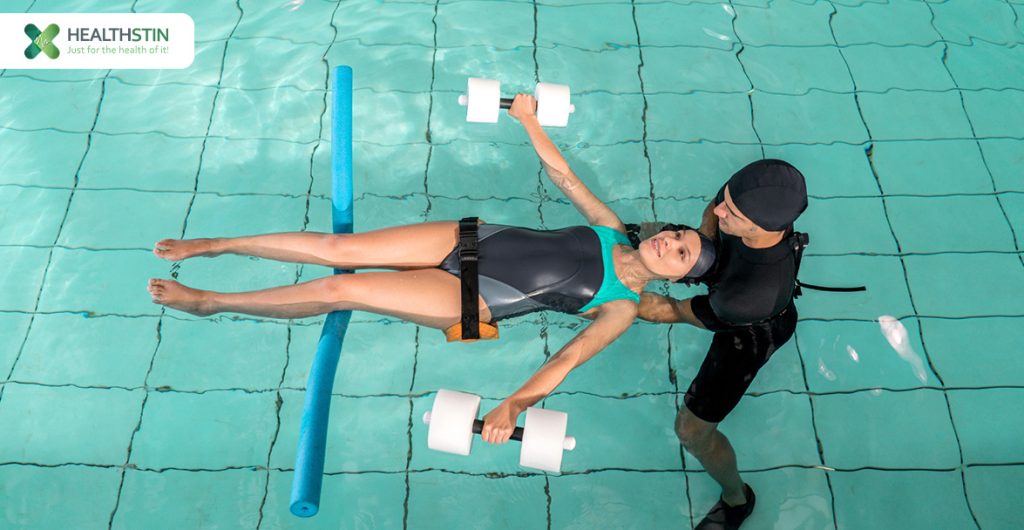
Healthstin, aquatic therapy is delivered by Accredited Exercise Physiologists and Physiotherapists

Taking the Next Step to Independence

Rehabilitation after a spinal cord injury is building capacity, confidence, and function in ways that are safe, sustainable, and meaningful. For many people living with SCI, pool exercises for spinal cord injury rehabilitation can form a valuable part of a broader, goal-driven therapy plan. 

Aquatic therapy does not replace land-based rehabilitation, but it can complement it. The supportive properties of water may allow individuals to practise strength, balance, and functional movement in ways that feel more accessible, particularly when gravity or joint loading limits land-based exercise. These outcomes are best supported when therapy is tailored, supervised, and reviewed regularly. 

At Healthstin, aquatic therapy is delivered by Accredited Exercise Physiologists and Physiotherapists, with a focus on safety, evidence-based practice, and alignment with NDIS goals. Programmes are individualised and responsive, ensuring care remains relevant to each person’s needs over time. 

What to Expect When You Start Aquatic Therapy

When you enquire about our Hydrotherapy services, the process typically includes: 

  • A comprehensive initial assessment 
  • Review of medical history, current capacity, and goals 
  • Screening for safety considerations specific to SCI 
  • Development of an individualised, goal-based programme 
  • Ongoing monitoring and progression under professional supervision 

This structured approach helps ensure aquatic therapy for SCI is clinically appropriate and aligned with long-term rehabilitation objectives. 

FAQs About Pool Exercises for Spinal Cord Injury

Are pool exercises safe for people with spinal cord injury?

When appropriately prescribed and supervised by a qualified professional, pool exercises can be a safe rehabilitation option for many people living with spinal cord injury. Safety depends on individual factors such as level of injury, medical history, skin integrity, and current health status. This is why aquatic therapy should always be delivered by an Accredited Exercise Physiologist or Physiotherapist following a thorough assessment.

How does aquatic therapy help after a spinal cord injury?

Aquatic therapy for SCI uses the properties of water, such as buoyancy, resistance, hydrostatic pressure, and warmth, to support movement and exercise. These properties can reduce load on joints, assist with balance, and allow controlled strengthening in a supportive environment. For some individuals, this makes active rehabilitation more accessible than land-based exercise alone.

Can hydrotherapy help reduce spasticity in water?

Warm water and buoyancy may help some people experience temporary reductions in muscle stiffness or spasticity whilst exercising in the pool. Responses vary between individuals, and Hydrotherapy is not a treatment for spasticity on its own. However, for many people with SCI, water-based exercise can support smoother movement and improved comfort during therapy sessions.

What types of pool exercises are used for paraplegia?

Hydrotherapy exercises for paraplegia are selected based on individual goals and ability. These may include upper-body strengthening, core-stability exercises, supported standing or stepping (if appropriate), balance training, and range-of-motion activities. All exercises should be tailored and progressed under professional supervision to ensure safety and relevance.

How soon can someone start Hydrotherapy after a spinal cord injury?

The timing of when to start Hydrotherapy after spinal cord injury depends on medical stability, wound healing, and individual readiness. A qualified healthcare professional will assess whether aquatic therapy is appropriate and safe at each stage of rehabilitation. Early introduction may be suitable for some people, whilst others may need to wait until specific health considerations are addressed.

Is aquatic therapy covered by the NDIS?

Yes, aquatic therapy may be funded by the NDIS when it is considered reasonable and necessary and aligns with a participant’s goals. Services are typically delivered by registered providers such as Exercise Physiologists or Physiotherapists. Funding eligibility depends on the individual’s plan, goals, and supporting documentation.

Book Your FREE NDIS-Approved Aquatic Therapy Consultation with Healthstin 

If you or a family member is living with a spinal cord injury and exploring rehabilitation options, an aquatic therapy consultation can help determine whether Hydrotherapy is appropriate for your goals and circumstances. 

Call 1300 090 931 or book your FREE aquatic therapy consultation today to discuss NDIS-funded options, safety considerations, and how pool-based rehabilitation may fit into your care plan. 

ALSO READ: Swimming Pool Workouts: 10 Exercises for Older Adults

More Articles

Physiotherapist and participant reviewing an NDIS plan letter together at a clinic desk
Friday 02, October 2026

Understanding NDIS Pricing Changes in 2026-27: A...

Healthstin provides NDIS Services in Midland
Thursday 01, October 2026

NDIS Services in Midland: Comparing NDIS-Funded Therapies...

Healthstin provides Accredited Exercise Physiologist in Perth
Thursday 01, October 2026

Why Choose Accredited Exercise Physiologists (AEPs) in...

Healthstin NDIS Providers in Elizabeth SA – Providing complete guide to finding the right support
Thursday 01, October 2026

A Comprehensive Guide to NDIS-Approved Providers for...

Therapeutic Services in Sydney
Friday 18, September 2026

The Benefits of Therapeutic Services in Sydney:...

Category

  • Exercise Physiology 47
  • Physiotherapy 75
People exercising in a swimming pool

Not sure what the right next step is for your situation?

We’ll help you understand which type of support fits your goals, needs, and circumstances.

University-trained Hydrotherapy & Aquatic Spinal Cord Rehabilitation

Rebuilding motor patterns and managing spasticity requires highly secure, clinical guidance. Healthstin delivers clinical Hydrotherapy programs supervised by experienced exercise physiotherapists, utilising the buoyancy of warm water to reduce joint impact and safely improve trunk stability and functional mobility.

See What Support Fits

Clear advice. Zero commitment.

We’ll review your situation and tell you which service makes sense—and why.

Loading

Find Professional Exercise Physiology and Physiotherapy Near You

Google map interface with options
Map showing Healthstin Allied Health location

Healthstin Sans Souci Clinic

Sans Souci, NSW

Google Maps interface with options
Map showing Healthstin Hurstville location

Healthstin Hurstville Clinic

Hurtsville, NSW

Google map interface with location details
Map showing Healthstin Brimbank location

Healthstin Brimbank Clinic

Keilor Downs, VIC

Google map interface with options
Map showing Healthstin Melton location

Healthstin Melton Clinic

Melton, VIC

Google Maps interface with location details
Map showing Healthstin Elizabeth location.

Healthstin Elizabeth Clinic

Elizabeth, SA

Google map interface with options
Map showing Healthstin Allied Health location

Healthstin Salisbury Clinic

Salisbury, SA

Map with Google logo overlay
Map showing Healthstin Belmont location

Healthstin Belmont Clinic

Belmont, WA

Map of Australia with states outlined

Coverage Areas for Home Visits

Type in your post code in the search bar and find out if we service your area.
RESULT:
Facebook-f Youtube Linkedin
Call Us

1300 090 931

Email Us

[email protected]

Healthstin Logo for footer

Our mission at Healthstin is to empower your abilities. We remove the barriers so you can take control of your health, maximise results and achieve optimal physical and mental well-being.

Book An Appointment
Quick Links
  • Home
  • About Us
  • Our Team
  • Contact Us
  • Blog
  • Clinics
  • FAQs
Our Clinics
  • Sans Souci
  • Hurstville
  • Brimbank
  • Melton
  • Elizabeth
  • Salisbury
  • Belmont
Services
  • Exercise Physiology
  • Hydrotherapy
  • Group Classes
  • Heal Program
  • Physiotherapy
  • Remedial Massage Therapy
  • Acupuncture
  • Insurances
  • NDIS
  • Home Care Packages
  • Commonwealth Home Support Programme
  • Workers’ Compensation
  • Support at Home
  • Department of Veterans' Affairs
  • Delivery Methods
  • In Clinic
  • Hydrotherapy Pool
  • Gym
  • Mobile
  • In-home Visits
  • Local Community Visits
  • Telehealth
Clinic Hours
New South Wales & Victoria
  • Monday-Friday 08:00AM - 6:00PM
  • Saturday 10AM - 3 00PM by appointment only
  • Sunday Closed
South Australia & Western Australia
  • Monday-Friday 08:00AM - 6:00PM
  • Saturday-Sunday Closed
Office Hours
New South Wales, Victoria, South Australia & Western Australia
  • Monday-Friday 09:00AM - 6:00PM
  • Saturday-Sunday Closed
@ Copyright 2026 Healthstin PTY LTD
  • Terms and Conditions
  • Privacy Policy
a white arrow in a green circle
Free 10-Min Phone Consultation
Accessibility Adjustments

Powered by OneTap

How long do you want to hide the toolbar?
Hide Toolbar Duration
Select your accessibility profile
Vision Impaired Mode
Enhances website's visuals
Seizure Safe Profile
Clear flashes & reduces color
ADHD Friendly Mode
Focused browsing, distraction-free
Blindness Mode
Reduces distractions, improves focus
Epilepsy Safe Mode
Dims colors and stops blinking
Content Modules
Font Size

Default

Line Height

Default

Color Modules
Orientation Modules
We use cookies on our website to give you the most relevant experience by remembering your preferences and repeat visits. By clicking “Accept”, you consent to the use of ALL the cookies.
Do not sell my personal information.
Cookie SettingsAccept
Manage consent

Privacy Overview

This website uses cookies to improve your experience while you navigate through the website. Out of these, the cookies that are categorized as necessary are stored on your browser as they are essential for the working of basic functionalities of the website. We also use third-party cookies that help us analyze and understand how you use this website. These cookies will be stored in your browser only with your consent. You also have the option to opt-out of these cookies. But opting out of some of these cookies may affect your browsing experience.
SAVE & ACCEPT
People exercising in a swimming pool

Not sure what the right next step is for your situation?

We’ll help you understand which type of support fits your goals, needs, and circumstances.

University-trained Hydrotherapy & Aquatic Spinal Cord Rehabilitation

Rebuilding motor patterns and managing spasticity requires highly secure, clinical guidance. Healthstin delivers clinical Hydrotherapy programs supervised by experienced exercise physiotherapists, utilising the buoyancy of warm water to reduce joint impact and safely improve trunk stability and functional mobility.

See What Support Fits

Clear advice. Zero commitment.

We’ll review your situation and tell you which service makes sense—and why.

Loading

Real Experts. Real Results.

Not sure if you need Physio, Exercise Physiology or Hydro? We’ll tell you exactly what will work best—for free.

  • Get a customised care plan with just a single call
  • No referrals needed
  • Covered by NDIS, Aged Care, DVA, and Workcover or Private Health

Whether you’re dealing with pain, mobility issues, falls, or recovery, let us take the guesswork out. One of our experts will match you with the right service — at the right location and with the right funding — in under 10 minutes.

Loading
Healthstin Team members in a black suit
Quick Apply Form

Drag & Drop Files, Choose Files to Upload You can upload up to 100 files.
Loading

