A spinal cord injury can change almost everything about daily life within moments: how you move, how you manage everyday tasks, and how independent you feel getting through an ordinary day.
For many people and their families, the hardest part isn’t the initial injury—it is everything that happens afterward. Leaving the hospital can feel like walking off the edge of a cliff, leaving you with very few clear answers about what recovery looks like next, which health professionals you should call, or how funding through programs like the NDIS, workers’ compensation, veterans’ affairs, or aged care actually works.
The good news is that a clear picture of spinal cord injury treatment options, paired with the right multidisciplinary team, can make a genuine difference. This guide walks through what treatment for a spinal cord injury typically involves, why ongoing rehabilitation matters so much, and how to find spinal cord injury rehabilitation support in Australia that fits your goals and your funding.
[MAIN BODY]
What Is a Spinal Cord Injury?
[Featured snippet target: “What is a spinal cord injury?”]
A spinal cord injury (SCI) happens when damage to the spinal cord disrupts the messages travelling between the brain and the rest of the body. Depending on where the injury occurs and how severe it is, this can affect movement, sensation, bladder and bowel function, and in more serious cases, breathing and blood pressure control.
Doctors break spinal cord injuries down into two main types: complete and incomplete.
- Complete injury: No movement or feeling is left below the point of injury.
- Incomplete injury: Some nerve signals still get through, meaning the person can usually still move a little bit, feel some sensation, or both.
About two-thirds of all spinal cord injuries in Australia are incomplete. Knowing this difference is crucial because it helps doctors and patients set realistic goals for recovery and physical therapy.
In Australia, how a spinal cord injury happens usually depends on a person’s age:
- Under 65: Most injuries are caused by sudden trauma, such as car crashes, bad falls, or sports accidents.
- 65 and older: Non-traumatic causes—like tumors, infections, or wear-and-tear conditions in the spine—become much more common.
Spinal Cord Injuries Australia, roughly 20,800 Australians are currently living with a spinal cord injury, and the impact reaches well beyond the person injured, touching families, carers, and entire support networks.
The level and completeness of the injury heavily influence long-term function, but they don’t tell the whole story. Two people with a similar diagnosis can end up with very different day-to-day abilities, which is exactly why an individualised rehabilitation plan matters more than a standard protocol.
How Does a Spinal Cord Injury Affect Daily Life?
The practical impact of a spinal cord injury usually shows up well before the medical detail does. It’s less about the diagnosis and more about what changes at home, at work, and out in the community.
Mobility Challenges
Simple everyday movements—like getting out of bed, using the bathroom, getting into a car, or walking on bumpy ground—can suddenly go from second nature to major challenges. Depending on how much movement and feeling a person keeps after their injury, some rely on a wheelchair full-time, while others are able to walk with the help of braces, canes, or other support.
Muscle Weakness and Paralysis
When the brain’s signals can’t properly reach the muscles below an injury, it can cause muscle weakness, tight or jerky spasms (spasticity), or complete paralysis. If these issues aren’t managed, they can lead to secondary health problems like stiff joints, painful pressure sores, and rapid muscle loss from lack of use.
Paralysis rehabilitation is designed to protect whatever movement and strength a person still has, while keeping muscle tightness under control and preventing further physical decline.
Balance and Coordination Difficulties
Even simple, everyday movements—like reaching for something on a high shelf or turning around to answer the front door—can feel a bit wobbly or unsteady, especially when you are trying to manage changes in your core stability right alongside muscle weakness in your arms or legs.
Activities of Daily Living (ADLs)
Dressing, showering, cooking, and personal care often need to be relearned using new techniques, adaptive equipment, or a different order of steps altogether.
Community Participation and Independence
Heading to work, meeting up with friends, or just running a quick errand can suddenly require a lot more upfront planning. You have to factor in accessible transport, whether a venue has wheelchair access, how much energy you have left for the day, and sometimes coordinating assistance from another person.
Common Treatments for Spinal Cord Injury
Spinal cord injury treatment isn’t one single therapy. It’s a sequence of interventions that starts in hospital and, for most people, continues for years afterwards.
Acute Medical Management
Right after an injury happens, the main focus is emergency medical care—getting stable, running scans, and often performing surgery to relieve pressure on the spine or keep it steady. Hospital staff also monitor and treat immediate risks like swelling, infections, and breathing difficulties.
While this initial phase is handled entirely by hospital doctors and surgeons rather than everyday community health providers, it lays the crucial groundwork for all the recovery that comes later.
Physiotherapy
Once medically stable, spinal cord injury physiotherapy typically becomes central to recovery. A physiotherapist works on:
- Mobility training to rebuild safe movement patterns, whether that’s walking, wheelchair propulsion, or transfers
- Building Strength: Working on muscles located both above and below the level of your injury to maximise your physical capacity.
- Safe Transfers: Practising how to move smoothly and safely between different surfaces, such as your bed, a chair, your car, and the shower.
- Getting Around: Mastering wheelchair mobility techniques and learning safe handling methods so you can navigate your day with confidence.
Physiotherapy can support improved movement and function over time, though the pace and extent of progress varies considerably between individuals and injury types.
Exercise Physiology
Exercise physiology looks at the big picture of physical health after a spinal cord injury. Instead of just focusing on the injury itself, it centers on:
- Customized movement: Creating workouts tailored to the strength and movement a person still has.
- Cardio fitness: Adapting heart-healthy exercises for people who may have limited use of their legs or torso.
- Everyday stamina: Building the strength and endurance needed to get through daily activities.
Because lower mobility increases the long-term risk of health issues like heart disease and metabolic changes, working with an exercise physiologist provides vital, protective support for the years ahead.
Hydrotherapy
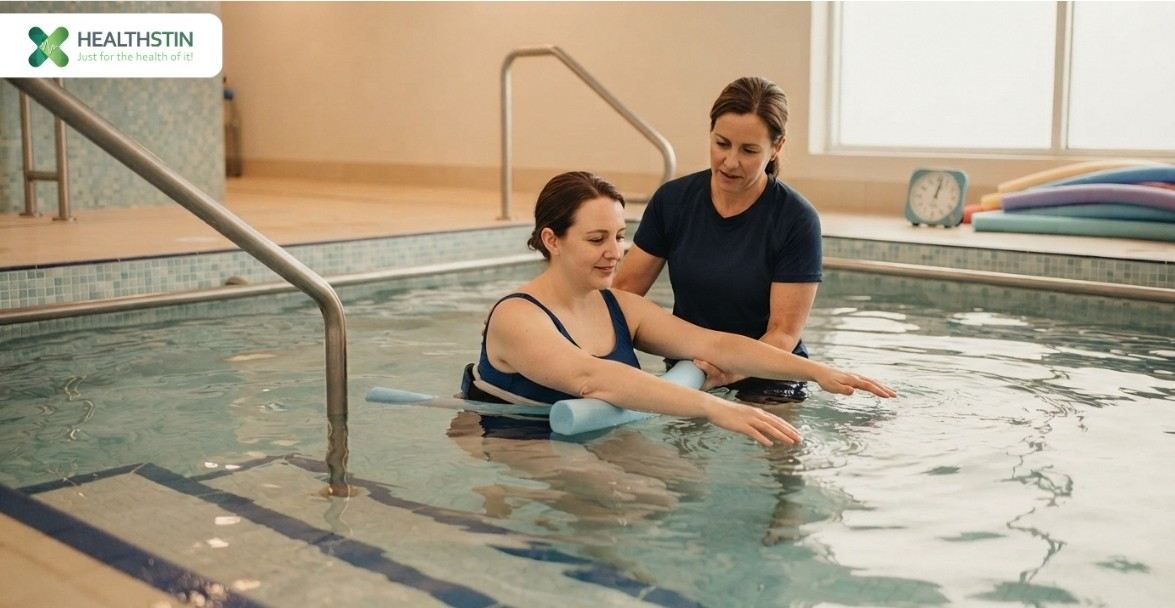
Hydrotherapy for spinal cord injury uses the buoyancy and warm water to make movement easier than it is on dry land. A scientific review published on PubMed Central found that water-based exercise may help relax tight muscles (spasticity), improve underwater walking patterns, and boost heart health for people with spinal cord injuries, though researchers note that more large-scale studies are still needed.
When you take your routine into the pool, water gives you a few distinct advantages:
- Lighter on the Joints: Water naturally supports your body weight, which takes a massive amount of pressure off your joints and muscles.
- A Safer Space to Move: You can practice challenging movements and exercises completely free from the worry of losing your balance or taking a fall.
- A stepping stone: It serves as a gentle bridge to building strength and mobility that eventually translates back to dry land.
[MID-CTA]
Looking for Ongoing Rehabilitation Support After a Spinal Cord Injury?
Living with mobility changes, muscle weakness, or ongoing pain after a spinal cord injury is genuinely hard to navigate alone, and it’s common to feel unsure where community-based support even starts once hospital care winds down. Healthstin’s physiotherapy and exercise physiology team works alongside people at every stage of that journey, from early mobility goals through to long-term strength and independence.
A free, no-obligation 30-minute consultation is a low-pressure way to talk through your situation, your funding (NDIS, aged care, or DVA), and what a realistic rehabilitation plan could look like for you.
Book Your Free 30-Minute Consultation or Contact Our Team to ask a question first.
The Importance of Early and Ongoing Rehabilitation
Rehabilitation isn’t a box to tick once and move past. For most people with a spinal cord injury, it’s an ongoing part of life that shifts in focus over time.
Your nervous system has an incredible, natural ability to adapt and rewire itself after an injury—a process called neuroplasticity. Neurological rehabilitation is based on this process. PubMed Central reseach shows that when you practice specific movements over and over again through structured training, you actually encourage your brain and spinal cord to form new connections.
This is why sticking to a consistent therapy routine tends to lead to much better long-term results than doing sessions only every once in a while. That said, every recovery journey is entirely unique, and while rehabilitation helps you reach your highest potential, it cannot guarantee a specific outcome for any one person.
Beyond helping with everyday movement, ongoing rehabilitation acts as an essential shield for overall health.
- Preventing complications: Regular stretching, movement, and proper positioning help avoid painful pressure sores, stiff joints, and breathing difficulties.
- Protecting long-term health: Staying active keeps the heart strong, helps maintain bone density, and supports mental wellbeing—all of which can drop quickly when someone is inactive for long periods.
Ongoing, structured rehabilitation of a spinal cord injury can help improve strength, independence, and overall function over time.
However, how much progress someone sees depends on a few key factors:
- The injury itself: Where the injury is located and whether it is complete or incomplete.
- General health: The person’s overall physical condition.
- Timing and consistency: How quickly therapy begins and how regularly it is maintained.
Where to Find Professional Spinal Cord Injury Care in Australia
Care for a spinal cord injury usually moves through several settings over time, and knowing what each one offers helps in planning the road ahead. Australia has a reasonably well-established network of spinal cord injury support services, spanning hospital-based units, community providers, and national organisations, though exactly what’s available can vary depending on where you live.
Spinal Rehabilitation Units
Every state runs at least one specialised spinal rehabilitation unit attached to a major public hospital. These centres provide intensive, all-in-one care right after an injury happens, bringing together doctors, nurses, and various therapists under a single roof.
To ensure high standards, most of these units team up with the Australasian Rehabilitation Outcomes Centre, a national organisation that tracks and compares recovery progress across the country to keep care consistent and effective.
Community-Based Rehabilitation Providers
Once you leave the hospital, therapy doesn’t stop—it just moves into your local community. Local providers pick up right where the hospital left off by helping you build on your progress, tweaking your exercise routines as your needs change, and practising real-world skills in your everyday environment instead of a clinic room.
This transition is where many people find the most value in community rehabilitation and dedicated spinal cord injury recovery programs that look at your whole life and routine, rather than just treating you during isolated appointments.
Home-Based Allied Health Services
For people dealing with severe mobility challenges, travel hurdles, or constant fatigue, home visit services allow physiotherapists and exercise physiotherapists to come straight to your door. Official health networks like Healthdirect recognise these home- and community-based services as a key part of spinal care, alongside assistance with medical equipment and home modifications.
Getting care at home also offers a massive practical advantage: you get to practice everyday skills in your actual living space—like moving safely in your own bathroom or navigating your front steps—instead of trying to replicate them in a simulated clinic room.
Telehealth Rehabilitation Services
Telehealth supports check-ins, program reviews, and education sessions without the physical demands of travel, and can be particularly useful for people in regional or remote areas without local access to professional spinal services.
How NDIS Supports People with Spinal Cord Injuries
For many working-age Australians with a spinal cord injury, the NDIS spinal cord injury support pathway becomes central to funding ongoing rehabilitation. Full detail on eligibility and current supports is available on the NDIS website. It’s worth noting that NDIS eligibility is generally for people who acquire their disability before age 65; people injured later in life, or those with a work-related or motor vehicle-related injury, may instead access support through aged care (the Support at Home program), workers compensation, or DVA depending on the circumstances of the injury.
Capacity Building Supports
This is where the bulk of funding for therapy goes. It pays for long-term health services—like physical and exercise therapy—designed to help you build lasting strength, skills, and independence, rather than just offering quick, temporary fixes.
Improved Daily Living Supports
A specific funding category that usually covers therapy to help you build skills for personal care, getting around, and managing everyday tasks on your own.
Assistive Technology Funding
Wheelchairs, pressure-care equipment, communication devices, and other equipment generally sit under Capital Supports, usually following an assessment and formal quote process.
Home Modifications
Home changes—like installing ramps, widening doorways, or rebuilding an accessible bathroom—can be fully or partially funded if they are proven necessary for your daily independence and your home can realistically be modified.
Allied Health Funding
Services like physiotherapy and exercise physiology are generally covered by your funding when they are considered reasonable, necessary, and directly tied to helping you reach your personal goals. See the NDIS New Framework Planning
Multidisciplinary Rehabilitation: Why It Matters
Recovering from a spinal cord injury rarely happens with just one type of therapy working on its own. True progress usually comes when different health professionals team up and coordinate their efforts, rather than working separately in their own bubbles.
Physiotherapy
Focuses on movement, strength, and physical function: the foundation most other therapy builds on.
Exercise Physiology
Builds long-term physical capacity, cardiovascular health, and sustainable activity habits beyond the initial rehabilitation phase.
Collaborative Goal Setting
The strongest results tend to come when practitioners share information and align their input around the participant’s own goals, rather than each discipline working from a separate plan.
Practical Strategies for Living Well with a Spinal Cord Injury
Living with a spinal cord injury involves much more than just formal therapy sessions. Over time, building a few consistent, practical habits can make a tremendous difference in daily life:
- Staying physically active, within whatever range of movement is available, to support cardiovascular and muscular health
- Managing fatigue by pacing activities across the day rather than pushing through and crashing later
- Maintaining social connections, since isolation is a genuine risk when mobility and transport become harder
- Building independence gradually, one functional goal at a time, rather than expecting everything to return at once
- Preventing secondary health complications, particularly pressure injuries, through regular position changes and skin checks
Questions to Ask When Choosing a Rehabilitation Provider
Choosing who supports your rehabilitation is a genuinely important decision. Useful questions to ask a prospective provider include:
- Do you have experience working with spinal cord injuries specifically, not just general rehabilitation?
- Can services be delivered at home, or only from a clinic?
- Do you provide reports suitable for NDIS, workers compensation, or DVA plan reviews?
- How do you measure progress, and how often will I get an update?
- Do you offer multidisciplinary care, or will I need to coordinate multiple providers myself?
Why Choose Healthstin for Spinal Cord Injury Rehabilitation?
Healthstin offers in-community support for spinal cord injury rehabilitation through physiotherapy, exercise physiology, hydrotherapy, and remedial massage. They work hand-in-hand with you, your family, and your support coordinators every step of the way to help you reach your goals.
Key differentiators:
- Experience supporting neurological conditions, including spinal cord injury, stroke, and multiple sclerosis
- Home, clinic, and telehealth delivery options to suit mobility and location
- A coordinated allied health team working towards shared, participant-led goals
- Familiarity with NDIS, workers compensation, and DVA documentation and reporting requirements
- Long-term rehabilitation support, not just short blocks of care
Meet the people behind the plans on our team page.
Take the Next Step Towards Greater Independence and Mobility
Whether you’re a few weeks out from hospital discharge or years into managing a spinal cord injury, a clear rehabilitation plan built around your own goals can support steadier movement, more manageable daily routines, and greater confidence getting out into your community.
Booking an assessment is the first step towards a plan that’s actually built around you: your injury level, your funding, your living situation, and what matters most to you day to day.
Book Your Spinal Cord Injury Rehabilitation Assessment or complete our referral form if you’re transitioning from hospital or another provider.
KEY TAKEAWAYS
- Spinal cord injury treatment spans acute medical care through to years of community-based rehabilitation, and the plan should shift as needs change.
- Multidisciplinary care (physiotherapy, exercise physiology, hydrotherapy, and coordinated allied health support working together) tends to outperform any single therapy working alone.
- Funding can come from NDIS, aged care, workers compensation, or DVA depending on individual circumstances, so it’s worth checking what applies to you specifically.
Frequently Asked Questions
What treatments are available for spinal cord injuries?
Care usually begins with emergency medical treatment—such as urgent care, surgery, and stabilisation. Once you are stable, ongoing recovery brings in a mix of physical therapy, exercise programs, occupational therapy, water-based therapy, and specialised equipment to help you regain independence.
Can physiotherapy help after a spinal cord injury?
Yes. Physiotherapy can help improve movement, strength, and your ability to move safely between surfaces (like getting from a bed to a wheelchair). However, how much recovery you will see depends heavily on the specific level of your injury and whether it is complete or incomplete.
Is hydrotherapy beneficial for spinal cord injury rehabilitation?
Evidence suggests hydrotherapy may help reduce spasticity and support movement and cardiorespiratory function, using water’s buoyancy to reduce joint loading during exercise.
Does NDIS fund spinal cord injury rehabilitation?
Yes, if you qualify, funding is generally available through specific support categories—specifically for daily living skills and major equipment or home changes—as long as the care is considered reasonable and necessary for your situation. [VERIFY FUNDING CLAIM]
How long does spinal cord injury rehabilitation take?
There is no set timeline for recovery. The first round of inpatient rehabilitation in a hospital usually lasts anywhere from several weeks to a few months. After that, community-based therapy often continues for years, adapting and shifting as your personal goals and needs change over time.
What is the best rehabilitation provider for spinal cord injuries?
Finding the right care team comes down to your specific injury, your personal goals, and how your funding works. Look for a provider with real, hands-on experience in spinal cord injury, flexible options for where therapy takes place, and a well-rounded team of different health professionals working together.
Supporting Recovery, Independence, and Long-Term Wellbeing
Every spinal cord injury is entirely unique, meaning no two recovery journeys are exactly alike. However, having access to spinal cord injury treatment Australia—delivered by a team that truly understands the condition and sticks with you for the long haul—can make a profound difference in supporting your mobility, independence, everyday participation, and overall quality of life.
If you or someone you care for is navigating life after a spinal cord injury, getting the right team in place early, and keeping them involved for the journey ahead, makes a meaningful difference.
DISCLAIMER ADDED
This article is general information only and does not replace individual medical or allied health advice. Spinal cord injury presents differently for everyone, and any treatment or rehabilitation plan should be developed with your treating medical and allied health team based on your specific diagnosis, needs, and NDIS, aged care, workers compensation, or DVA funding arrangements.