Recovering from a stroke requires patience, persistence, and, most importantly, the right kind of physical activity. A stroke can drastically change a person’s life, but it doesn’t have to define it. Physiotherapy for stroke plays a truly crucial role in retraining the brain and body to work together again, harnessing the incredible power of neuroplasticity.
This article highlights 10 evidence-based Physiotherapy exercises that can help stroke survivors rebuild strength, balance, and coordination. More than just a list of movements, this is a roadmap to regaining independence, guided by the university-qualified care of Healthstin Physiotherapy, a trusted NDIS provider supporting meaningful stroke recovery exercises across multiple Australian locations.

The Power of Movement After a Stroke
A stroke occurs when blood flow to the brain is interrupted, leading to the death of brain cells. This often results in the loss of function on one side of the body. While the damage can be daunting, the brain has an extraordinary ability to heal and adapt—a process called neuroplasticity.
Post-stroke mobility exercises and consistent therapy are the engines that drive this adaptation. They encourage the brain to form new neural pathways, essentially “rewiring” itself to take over the functions once handled by the damaged area.
Even small, consistent movements can lead to significant, life-changing improvements, and research indicates that roughly 10% of stroke survivors experience an almost complete recovery . Another 25% of patients recover with only minor impairments. The journey requires commitment, but with structured support, independence is a reachable goal
This is where Healthstin steps in. As a dedicated NDIS provider, we focus on helping stroke survivors recover through structured Physio and Exercise Therapy programs. Our qualified Physiotherapists ensure every exercise is adapted to the individual’s abilities and recovery goals, making us a leader in NDIS stroke rehabilitation. We believe in an empowering approach that focuses on what you can do, not what you can’t.
Why Exercise is Key After a Stroke
Exercise is not just about strengthening muscles; it’s about restoring function and independence. Following a stroke, muscles on the affected side can become weak or even paralysed. Regular therapy is essential because it helps:
- Restore Movement: Re-establish the connection between the brain and the affected limbs.
- Rebuild Muscle Strength: Prevent atrophy and improve the power required for daily tasks.
- Improve Coordination: Train the body to perform complex movements like walking and gripping smoothly.
- Prevent Complications: Regular therapy prevents muscle stiffness, reduces the risk of painful contractures (permanent tightening of muscles), and enhances overall confidence.
The ultimate goal of every Physio for stroke survivors program is to regain independence, one focused movement at a time.
|
Recovery Goal |
Exercise Focus |
|
Improve Walking & Balance |
Lower limb strengthening and dynamic balance activities. |
|
Strengthen Affected Limbs |
Repetitive, goal-directed strength training. |
|
Regain Grip & Fine Motor Control |
Precision tasks and repetitive hand exercises. |
|
Prevent Muscle Tightness (Spasticity) |
Stretching, range-of-motion, and controlled movements. |
10 Best Physio Exercises to Boost Stroke Recovery
The following are best exercises for stroke patients—a collection of evidence-based movements proven to accelerate recovery. Remember: Always consult with a qualified Healthstin Physiotherapist before starting any new exercise routine to ensure it is safe and appropriate for your current level of recovery.
1. Seated Marching
- Purpose: Improve hip flexor and leg strength, coordination, and circulation.
- How to: Sit tall in a sturdy chair with your feet flat on the floor. Alternately lift your knees toward your chest, as if marching.
- Physio Tip: Keep the pace steady and controlled. Focus on maintaining good posture throughout the exercise, avoiding slouching.
2. Shoulder Rolls
- Purpose: Increase shoulder mobility, reduce stiffness, and improve range of motion.
- How to: Sit or stand comfortably. Slowly roll your shoulders forward in a circular motion 10 times, then reverse and roll backward 10 times.
- Physio Tip: Do the movement slowly and deliberately. Focus on the stretch and smooth rotation; breathe naturally.
3. Hand Squeezes (with Stress Ball)
- Purpose: Regain grip strength, improve dexterity, and fine motor control in the affected hand.
- How to: Hold a soft stress ball or rolled-up towel in your affected hand. Squeeze it firmly for 3–5 seconds, then slowly release.
- Physio Tip: Consistency is key. Focus on slow, controlled movements. Repeat until fatigue is felt, then rest.
4. Bridging Exercise
- Purpose: Strengthen core muscles, glutes (hips), and the lower back—foundational for standing and walking.
- How to: Lie on your back with knees bent and feet flat on the floor, hip-width apart. Lift your hips upward until your body forms a straight line from your shoulders to your knees. Hold briefly, then lower slowly.
- Physio Tip: Engage your core muscles as you lift. Avoid arching your lower back; the movement should be driven by the hips and glutes.
5. Heel Slides
- Purpose: Improve lower limb movement, flexibility in the knee and hip, and range of motion.
- How to: Lie on your back. Slowly slide the heel of your affected leg toward your glutes, bending your knee. Slide it back to the starting position.
- Physio Tip: Use a thin towel or a smooth surface under the heel to reduce friction and make the slide easier. Maintain control on the return motion.
6. Wall Push-Ups
- Purpose: Strengthen the arms, chest, and shoulders while improving standing balance and stability.
- How to: Stand arm’s length from a sturdy wall. Place your hands on the wall, shoulder-width apart. Slowly bend your elbows, lowering your chest toward the wall. Push back to the starting position.
- Physio Tip: Keep your feet stable and your body straight (like a plank). Control the speed of the movement; keep your elbows close to your body.
7. Standing Balance Holds
- Purpose: Crucial for improving stability, coordination, and confidence when standing and walking.
- How to: Stand with your feet hip-width apart, ensuring your weight is shifted evenly between both feet. Hold this position for 10–20 seconds. Progress by moving feet closer together.
- Physio Tip: Safety First: Stand near a sturdy kitchen counter, wall, or a high-backed chair so you can quickly reach for support if needed.
8. Knee Extensions (Seated Leg Lifts)
- Purpose: Strengthen the thigh muscles (quadriceps), which are vital for straightening the leg during walking.
- How to: While seated, slowly straighten one leg until it is parallel to the floor. Hold for a few seconds, feeling the contraction in your thigh. Slowly lower the leg.
- Physio Tip: As your strength improves, a Healthstin Physio may recommend adding a light ankle weight to provide gentle resistance.
9. Toe & Heel Raises
- Purpose: Strengthen the calf muscles and the muscles at the front of the shin, essential for safe walking and preventing foot drop.
- How to: Stand holding onto a stable support (like a chair back). Slowly lift onto your toes (heel raise), hold, and lower. Then, lift the front of your feet, standing on your heels (toe raise), hold, and lower.
- Physio Tip: Focus on slow, controlled lifts and descents—not speed. “Exercise therapy after stroke” should always prioritise control over momentum.
10. Reaching & Grasping Tasks
- Purpose: Improve functional coordination, hand-eye control, and precision for daily living tasks.
- How to: Practice reaching for various-sized objects (blocks, cups, pegs) and placing them on a table or shelf. Gradually increase the distance or height.
- Physio Tip: Start with light, larger objects and gradually increase the difficulty by moving to smaller items that require finer control.
How Healthstin Customises These Exercises
It is a core philosophy at Healthstin that every stroke survivor’s recovery journey is unique. A generic exercise plan will only achieve generic results. Our Physiotherapists are duly accredited in developing personalised “stroke rehab programs Australia”-wide.
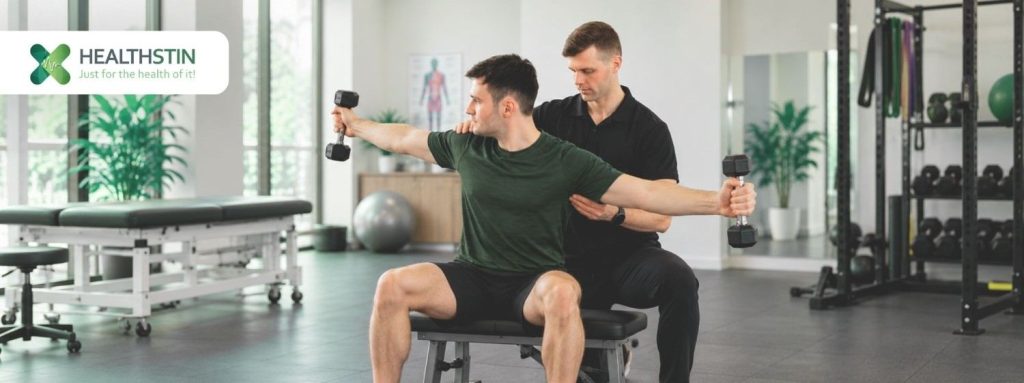
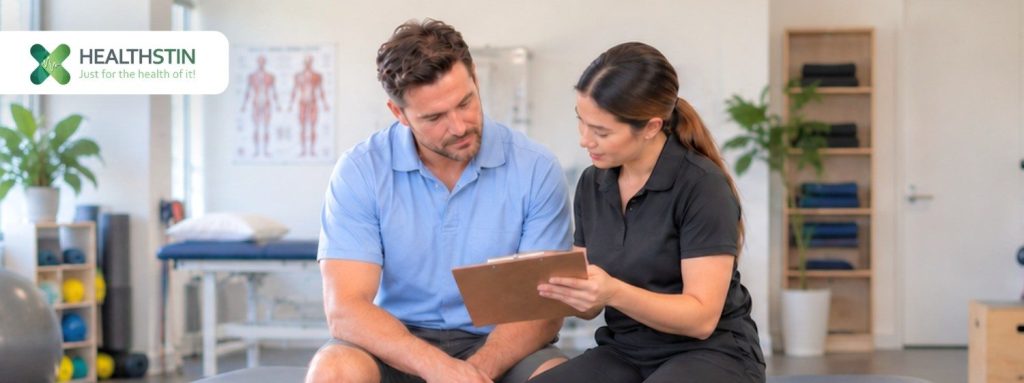
We begin with a detailed assessment to understand the specific neurological deficits, existing strength, and the individual’s personal goals. Based on this, we tailor the intensity, duration, and level of support for every exercise.
Personalised Approach Includes:
- Balance Retraining: Targeted drills to improve stability and reduce the risk of falls.
- Functional Movement Drills: Practising the specific movements required for everyday life, such as getting in and out of a chair, dressing, and reaching.
- Upper & Lower Limb Coordination Activities: Exercises to help the affected limbs move smoothly and deliberately.
- Pain and Posture Management: Strategies and stretches to prevent secondary complications like muscle tightness and joint pain.
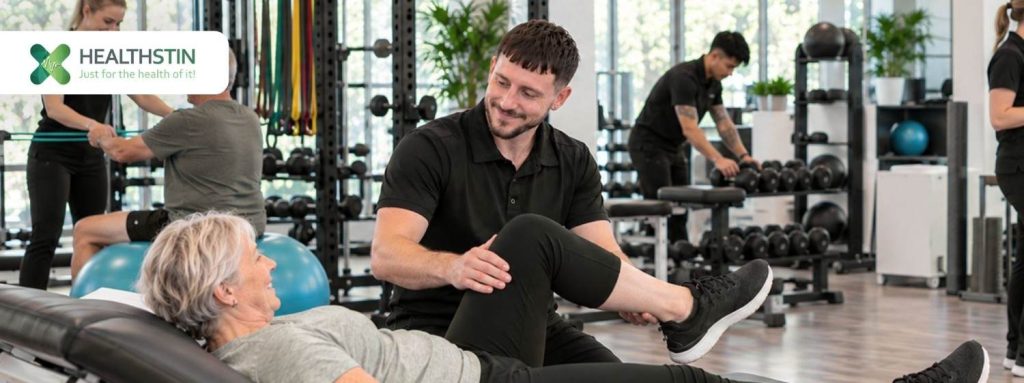
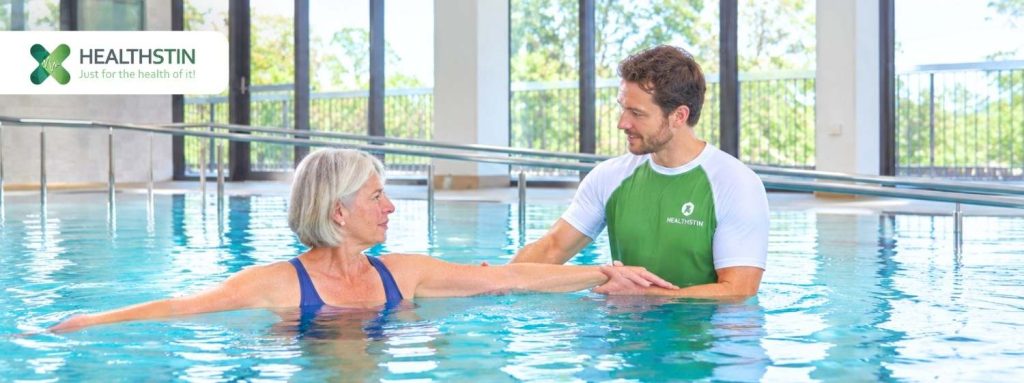
We combine various modalities, including in-clinic sessions, therapeutic hydrotherapy, and structured home-based programs, ensuring a consistent and holistic approach to Physiotherapy for stroke.
Safety Tips & When to Seek Professional Help
The journey of stroke recovery exercises is a marathon, not a sprint. Safety and consistency matter more than intensity.
- Warm Up: Always begin with gentle stretching or light movement to prepare your muscles and joints.
- Listen to Your Body: Stop immediately if you feel sharp pain, dizziness, or overwhelming fatigue. Recovery is about gradual progress, not pushing through pain.
- Stay Consistent: A few short, regular sessions throughout the week are far more effective than one long, exhausting session.
- Hydration: Keep water close by and drink regularly, especially during longer sessions.
- Work with a Professional: To ensure correct technique, safe progression, and the most effective program, work with an Accredited Physiotherapist.
At Healthstin, each program is carefully monitored for safety, ensuring gradual and sustained improvement in your recovery. We are committed to making sure your journey is as safe and effective as possible.
NDIS Support for Stroke Rehabilitation
Navigating support can be challenging, but the NDIS is designed to fund essential therapies for eligible participants.
The NDIS may fund Physiotherapy and Exercise Physiology under Capacity Building Supports (Improved Daily Living). These funds allow participants to access crucial, ongoing therapy that helps them achieve their recovery goals and increase their independence.
Healthstin is a fully registered NDIS provider. We offer hydrotherapy sessions and clinic-based appointments. We also help participants and their support coordinators manage the necessary documentation and progress reports, ensuring smooth continuity of care under their NDIS plan.

Why Choose Healthstin for Your Stroke Recovery?
Choosing the right partner is the most critical step in your recovery journey. At Healthstin, we don’t just provide therapy; we provide a customised roadmap to independence, backed by expertise and genuine care. Here is why stroke survivors and their families choose Healthstin for their rehabilitation:
- Experienced Physiotherapists: Our team consists of qualified Physiotherapists with deep experience in neurological rehabilitation, and we are dedicated to designing the best exercises for stroke patients. We understand the intricacies of neuroplasticity and how to stimulate it effectively.
- Truly Personalised Programs: We know a one-size-fits-all approach fails. We conduct detailed assessments to create a stroke rehab program uniquely suited to your level of function, specific deficits, and personal goals. This includes customising the intensity and type of stroke recovery exercises.
- Trusted NDIS Provider: As a registered NDIS provider, we are experts in accessing and utilising your funding under Capacity Building Supports. We handle the necessary documentation and reporting, ensuring your journey toward independence is fully supported.
- Flexible and Convenient Care: We offer flexibility to suit your needs, providing therapy at our clinics, in the comfort of your own home (home visits), or through beneficial hydrotherapy sessions. We proudly support multiple Australian locations.
- A Positive, Empowering Approach: Our professional voice is encouraging and hopeful. We focus on celebrating your progress, building your confidence, and empowering you to regain control over your daily life, one movement at a time.
With Healthstin, you are choosing dedicated expertise, compassionate support, and a clear path toward maximising your independence after a stroke.
Healthstin provides stroke recovery programs across multiple states in Australia.
- Sans Souci, NSW – Supporting southern Sydney residents
- Hurstville, New South Wales (NSW) – Conveniently located for serving the St George community
- Salisbury & Elizabeth, South Australia (SA) – Accessible for Adelaide’s northern suburbs
- Brimbank & Melton, Victoria (VIC) – Supporting communities in Melbourne’s west
- Belmont, Western Australia (WA) – Expanding to meet growing local demand
RELATED ARTICLE: Top 4 Stages of Rehabilitation in Physiotherapy
Know Someone Who Could Benefit from Our Services?
At Healthstin, we’re here to support every step of your rehab and wellness journey—from personalised physiotherapy and exercise physiology to ongoing NDIS support tailored to your needs. If you know a friend, client, or loved one who could use expert care, simply complete our quick Referral Form
Don’t wait to start recovering. Book online now and we’ll get your personalized stroke recovery program underway within 7 days, hassle-free.
FAQ about Stroke Recovery Exercises
How soon after a stroke should I start Physiotherapy?
Therapy should begin as soon as medically stable. The sooner rehabilitation begins, the better the outcomes, as the brain is most responsive to change (neuroplasticity) in the early stages. Your Healthstin Physiotherapist will work closely with your medical team to start an appropriate stroke rehab program safely, often while you are still in hospital or shortly after discharge.
Can the NDIS fund all my stroke recovery exercises?
The NDIS may fund Physiotherapy for stroke and other essential therapies, such as Occupational Therapy and Speech Pathology, under the Capacity Building Supports category (Improved Daily Living). Funding covers supports that are reasonable and necessary to help you achieve your goals. Healthstin is an experienced NDIS stroke rehabilitation provider and can guide you on using your plan effectively for your recovery.
How long does stroke recovery typically take?
Recovery is highly individual. While the most significant gains often occur in the first few months, meaningful improvement can continue for years with consistent exercise therapy after stroke. The key is commitment to your personalised program and maintaining hope. We focus on celebrating small victories and continuous progression toward independence.
Are the best exercises for stroke patients performed at home or in a clinic?
An effective recovery plan typically involves a combination of both. Healthstin Physios may use clinic or hydrotherapy sessions for intensive, supervised work, and then provide a structured home-based program for daily practice. Consistency with post-stroke mobility exercises at home is crucial for maximising recovery speed.
How is Healthstin Physiotherapy different from other providers?
We focus on neurological rehabilitation and operate as a dedicated NDIS provider. This means our Physios have specific expertise in stroke recovery, focusing on functional goals and long-term independence. We offer flexible services, including home visits across multiple Australian locations, ensuring we can deliver expert, client-centred care right where you need it.
Get expert Exercise Physiology, Physiotherapy, and Hydrotherapy support at Healthstin
Feel Better, Function Better, and Sleep Better. Book Your Stroke Recovery Exercise Sessions with Healthstin.
If you or a loved one is recovering from a stroke, the right, tailored Physiotherapy for stroke program can make a life-changing difference. The evidence is clear: consistent, guided movement is the best exercise for stroke patients to stimulate recovery.
Don’t wait to start your journey back to a more independent life. Take the first, most important step today:
- Call 1300 090 931 or email [email protected]
- Claim your FREE Initial Consultation and discover how Healthstin’s accredited Physios can help and guide your stroke recovery.
- Book Online now to start your personalised stroke recovery program within 7 days — no waitlists, all admin handled.
Disclaimer & Terms of Use
The content in this blog is for general information about exercise physiology/physiotherapy and does not constitute personal medical advice. You should not rely on this information to make decisions about your health care without consulting a qualified practitioner.
Use of our services is subject to our Terms & Conditions. Healthstin Allied Health does not guarantee any particular outcome or result. We will provide services with due care and skill.
If you are considering engaging our services, you should review the full Terms & Conditions available here and seek independent advice if necessary.