It is well known that exercise has numerous health benefits. However, people with physical and mental disabilities, especially those who experience severe injuries, can find it challenging to engage in exercise due to various barriers related to their unique abilities. So, is there a solution to increasing physical activity for people living with a disability?
Whether it is a sensory, intellectual, physical, or mental health condition, any physical activity can impact people’s ability to live an active lifestyle due to its number of benefits. But, before we get into the benefits of exercise for people with disabilities, as with everyone else, we suggest taking precautions. We recommend seeking advice from your medical practitioner before commencing an exercise program or physical activity.
Consider, physical activity and exercise for people living with a disability can benefit from the guidance of an Exercise Physiologist. If you want to learn more about how an Exercise Physiologist can assist you in living an active and healthy lifestyle by reducing barriers, click this link to learn more about Exercise Physiology in Melton.
It can be daunting at first, or you may not know where to start, but there are a multitude of types of physical activities and exercises for adults with various disabilities to engage in. Let’s start off with the benefits of exercise for people living with a disability to get you motivated!

The Advantages of Physical Activity for People with Disabilities
Physical activity is essential for everyone, regardless of age or ability. In fact, exercise can help maintain independent living for people with a disability and ageing adults as it instigates a variety of benefits. Here are the following benefits of physical activity for people with a disability:
- It increases endorphins and mood, which improves your mental health.
- Can support independence and activities of daily living.
- Reduces the risk of long-term health diseases such as high blood pressure, diabetes, obesity, etc.
- Preventing unhealthy weight gain and promoting weight loss
- Improves balance, muscle, and joint strength to prevent injuries.
Exercise for people with disabilities can improve stamina and muscle strength in people suffering from chronic conditions like arthritis, back pain, diabetes, mental health conditions, etc. When you work out, your body releases endorphins, which make you feel good in general, improve your mood, boost your self-esteem, and relieves stress.
If you’re a regular exerciser who is currently injured, you’ve probably recognised how inactivity has affected your energy and mood. This is reasonable given that exercise has such a positive effect on mood that it has been suggested by the Black Dog Institute to be as effective in treating depression as antidepressant medication. It can even be a beneficial activity for people with learning disabilities because exercise can change the way a person thinks to make them more alert, focused, and motivated. Furthermore, it facilitates the development of new nerve cells from stem cells in the hippocampus which is the biological basis for memory storage.
It is completely understandable, however, that engaging in physical activities can be overwhelming and challenging. So, are there some forms of exercise that are easy? And engaging? Check out the exercise ideas for people with disabilities.
ALSO READ: Exercises for Enhancing the Lives of People with Learning Disabilities
Physical Activities for Individuals with Disabilities
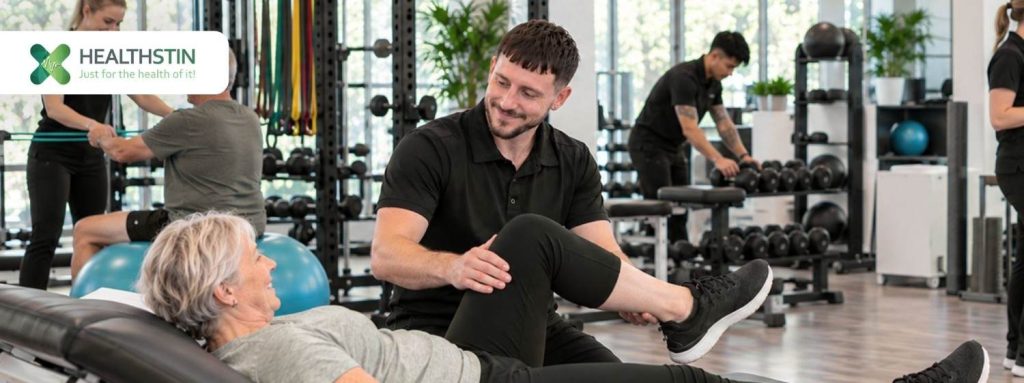
There is a plethora of activities for individuals who have physical disabilities that are fun and engaging, which helps them reap the benefits of exercise. These exercises can be done at home with the guidance of an exercise physiologist via a home-visit service to ensure safety and convenience, or you can join a group program, which has the added benefits of fostering social interaction and boosting confidence.
Consider the following physical exercise suggestions:
Exercise Ideas for People with Disabilities
It is important to remember that any physical activity is preferable to none at all. Just like everyone else, people living with a disability may have to navigate certain barriers or follow specific safety guidelines.
Here are some general and simple exercises that professional exercise physiologists prescribe on a daily basis for people living with a disability:

Cardiovascular Exercises
Cardiovascular exercise raises your heart rate, which improves the function and performance of your heart, lungs, and circulatory system. Cardio exercises also improve many aspects of health, which include heart health, mental health, sleep, mood, and metabolism.
Some of these exercises include:
- Walking
- Cycling
- Running
- Water Aerobics or “aqua jogging”
- Dancing
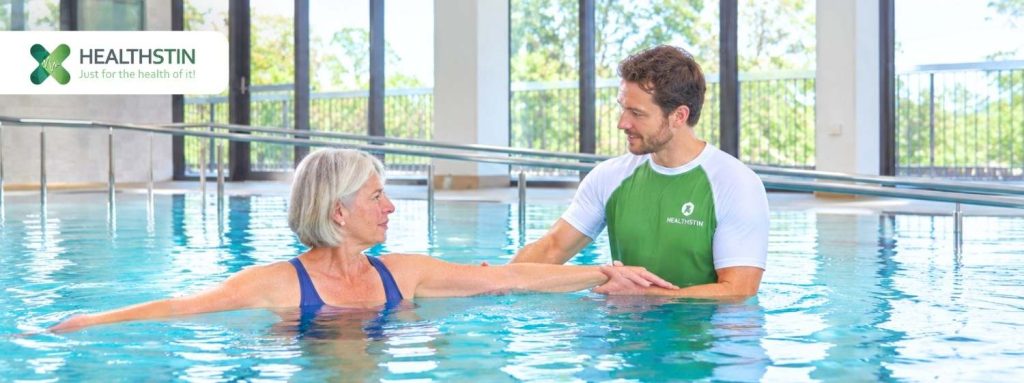
People with disabilities can get the most out of water exercise because it continues to support the body and decreases the chance of muscle or joint pain. Even if you’re a wheelchair user, you can still work out your heart and lungs with cardio exercises. You can do sitting exercises, swim, sprint in a wheelchair, or play wheelchair-related sports like badminton or basketball.

Strength Training
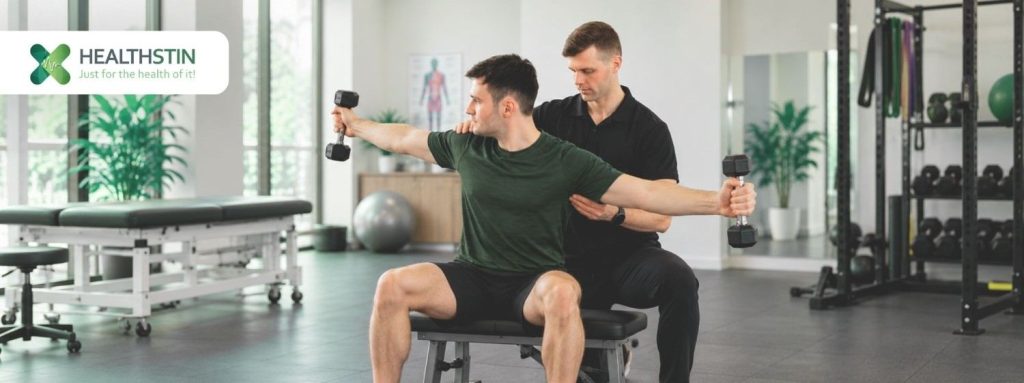
Weights or other forms of resistance are used to improve balance, prevent falls, and increase bone and muscle mass. To improve mobility, people with lower-limb disabilities can focus more on upper-body strength training.
- Seated triceps dips involve placing your hands on the armrests of your wheelchair or another chair while sitting, then pushing yourself up until your arms are fully extended, and then slowly lowering yourself back to your seated position.
- Seated shoulder press necessitates the use of weights (or cans of food!). It is important to hold one in each hand and sit upright. Hold the weights on either side of your head or at the same level as your ears, palms facing forward. Lift the weights above your head, palms facing forward, until they meet in the middle (without touching). Lower them slowly back to the starting position and repeat.
Consequently, if you have impaired mobility in your upper body or limbs, then here are some lower-body exercises you can try:
- Resistance band leg presses are done by wearing your loop or 8-shaped resistance band like handcuffs. Using the strength of your wrists, stretch the band as far as possible. Relax and repeat. If you have a leg power, you can do this exercise with your legs. You can do it by wrapping the band around your ankle and then around your knee.
- Kneel To Stand begins in a kneeling position on the floor, but this time standing rather than sitting. Step forwards with one leg until your foot is flat on the floor. Push yourself to a stand, then step down with the same leg, kneeling first. Then, in the same order, return the other leg to the knee. After finishing a set of leading with one leg, repeat the exercise.
Flexibility Exercises
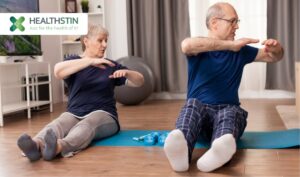
Exercises to improve flexibility assist with your range of motion, avoiding further injuries, and alleviate stiffness and pain. These can be done in the form of:
- Yoga and,
- Stretching exercises
Stretching and flexibility exercises can assist in preventing or delaying further muscle damage even if you have limited mobility in your legs.
Performing these exercises, may require medical clearance for healthcare professionals. Other activities also require proper assistance and programs that are advised by an exercise physiologist.
A Home Exercise Program with the help of Exercise Physiologists
If you need to engage in physical activity with the assistance of an accredited exercise physiologist but do not have time to visit the clinic or prefer to do the exercise programme in the comfort of your own home, you can always rely on an Allied Health Professional who can provide in-house visit exercise physiology service.
Here at Healthstin Melton, our Exercise Physiologists offer home-visit services instead of making patients travel far from their homes. For more information, please contact us at 1300 090 931 or email us at [email protected].
Disclaimer: The information is general and does not take into account your personal situation. This information is intended to show you the correct exercise technique and should not be used to self-diagnose or self-treat any medical condition. If your pain persists or you have difficulty performing exercise, see your experienced Exercise Physiologist for proper guidance on 1300 090 931.