Getting Started: Exercise for People Living with Disability
Getting started with physical activity can be challenging, especially if you aren’t sure where to start or overwhelmed with what you can and can’t do. Exercise may seem daunting, but to reap its benefits, consistency and discipline are key.
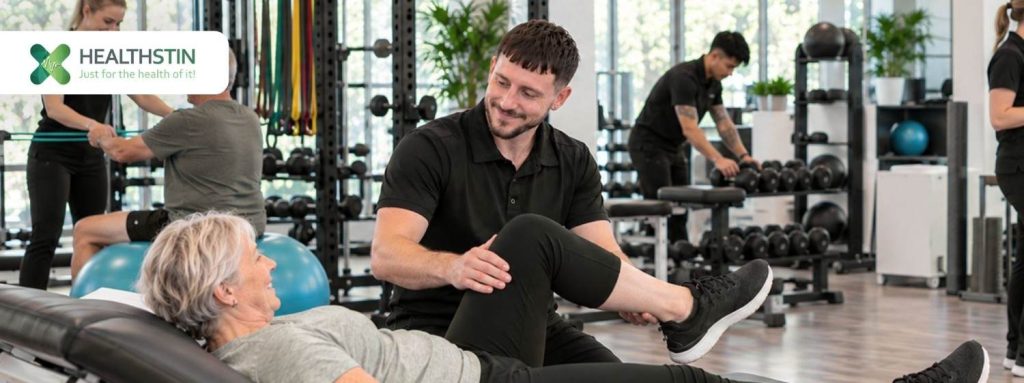
Exercise for beginners with limited mobility or with disabilities can be difficult but not impossible. There are ways in which you can acquire the needed motivation to start exercising. At Healthstin Clinic, we are dedicated to providing Exercise Physiology services in Hurstville. Our goal is to help improve their lifestyle through tailored exercise programs.
Modifying your environment to make it more conducive to exercise
Environmental factors, such as temperature and surroundings, can act as barriers to physical activity for beginners with disabilities.(1) These constraints can affect their mood and ability to participate in exercise. For instance, some individuals with disabilities may face difficulty accessing certain areas or receiving the support they need to exercise.
To overcome these barriers, fitness facilities may need to evaluate and make necessary changes to accommodate individuals with disabilities. Exercise Physiologists and fitness instructors play a crucial role in tailoring exercise programs to meet the abilities of each participant.
Once the environment is conducive to exercise, it’s essential to learn the right exercise routine for beginners with disabilities.
Exercise Ideas/Routines for Beginners with Disabilities
Finding the right exercise routine for beginners with disabilities requires careful consideration and guidance. Despite limited mobility, there are still options available. Here are some ideas:
Cardiovascular Exercises
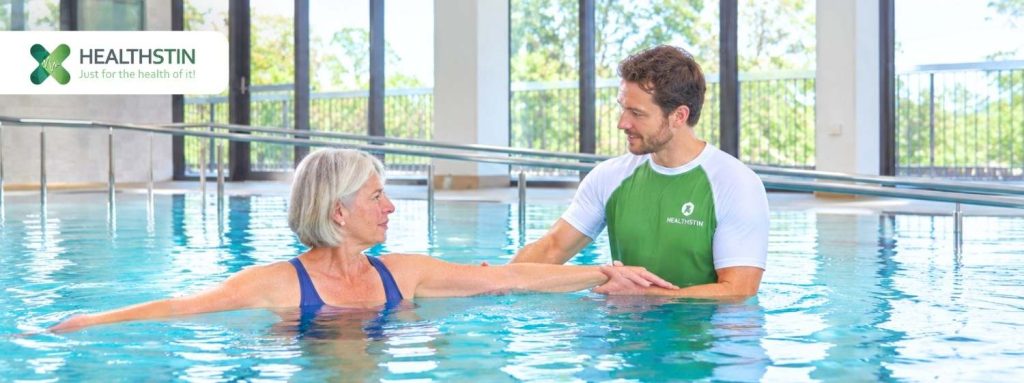
Walking, running, cycling, swimming, or water aerobics are all effective cardiovascular exercises that don’t require much equipment. Exercising in water can provide a range of benefits for people with differing levels of mobility, as the buoyancy of the water supports the body and reduces joint and muscle discomfort, making it easier for those who struggle with certain movements on land.
Strength Training
Strength training uses weights and equipment to improve muscles at a specific volume and intensity. For people with limited mobility, focus can be placed on the upper body and core, while those with injuries in the upper body can target the leg muscles. Beginners with disabilities may start with core-strengthening exercises such as spinal twists, side bends, and back extensions.
Flexibility Exercises
Flexibility exercises such as stretching and yoga can improve motion range and reduce pain and stiffness. These types of exercises require focus and can be performed even with limited mobility.
These are just a few of the exercise ideas and routines that people with disabilities can follow to improve their physical health. But for beginners, the biggest challenge would be to find ways to keep up with their exercise routine.
Finding ways to stay engaged with your exercise routine over time
Staying committed to an exercise routine can be a challenge for many beginners, particularly if they lack access to resources, face inaccessible facilities, or fear injury.(2) To help maintain motivation, it’s important to develop a beginner’s exercise and diet plan to follow.(3) Here are some strategies that could help:
Choosing Activities That Will Make You Feel Happy and Confident
Unenjoyable workout routines could be demotivating, especially for those with disabilities who may be limited in their movements. Finding an activity that you enjoy, that is challenging, and that makes you feel good about yourself is essential for maintaining a consistent exercise routine.
Starting Small and Gradually Increasing the Intensity
It is not necessary for individuals with disabilities to spend prolonged hours working out at the gym. Keeping your exercise routines simple and achievable is recommended. If you wish to increase the intensity level of your workout, we encourage you to seek guidance from your fitness instructor or exercise physiologist.
Rewarding Yourself
Although exercise provides long-term and extensive benefits, immediate rewards are important for staying motivated and sticking to your routines. These rewards don’t have to be extravagant; they can be as simple as a hot bath or a cup of coffee to look forward to.
Despite these methods, there may still be common challenges in exercise that can disrupt your flow and rhythm. Here are ways to overcome them.
Overcoming common challenges and barriers to exercise
Various environmental factors may limit exercise for people with disabilities, including:
- Inaccessible physical environment,
- Lack of assistive devices, such as adaptive and rehabilitative technologies,
- Individuals who hold negative attitudes towards disabilities,
- Policies and services that could hinder participation in physical activity
Seeking out resources and support is vital in overcoming these common challenges, and we at the Healthstin Clinic have services that can provide it for you.
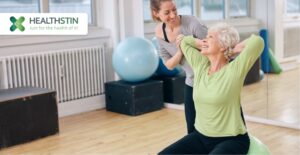
Seeking out resources and support from Exercise Physiologist in Hurstville
We have an accessible physical environment that delivers an assistive environment and supportive exercise physiology for people living with disabilities in Hurstville.
At Healthstin, we are on a mission to improve your every functional capacity so you can enjoy life to the fullest; hence, we are guaranteed to employ the best exercise physiologist to help people with disability. If you need an Exercise Physiologist in Hurstville, give us a call at 1300 090 931, or email us at [email protected].
Reference:
1 Cao Y, Walker EA, Krause JS. Environmental barriers and subjective health among people with chronic spinal cord injury: A cohort study. J Spinal Cord Med. 2015 Jul;38(4):526-31. doi: 10.1179/2045772314Y.0000000275. Epub 2014 Oct 20. PMID: 25329423; PMCID: PMC4612208. https://www.ncbi.nlm.nih.gov/pmc/articles/PMC4612208/
2 Brand R; Cheval B (21st of May, 2019): Theories to Explain Exercise Motivation and Physical Inactivity: Ways of Expanding Our Current Theoretical Perspective: https://www.frontiersin.org/articles/10.3389/fpsyg.2019.01147/full (Status as of 18th of January, 2023)
3 Mayo Clinic Staff (15th of January, 2021): Fitness: Tips for staying motivated: https://www.mayoclinic.org/healthy-lifestyle/fitness/in-depth/fitness/art-20047624 (Status as of 18th of January, 2023)