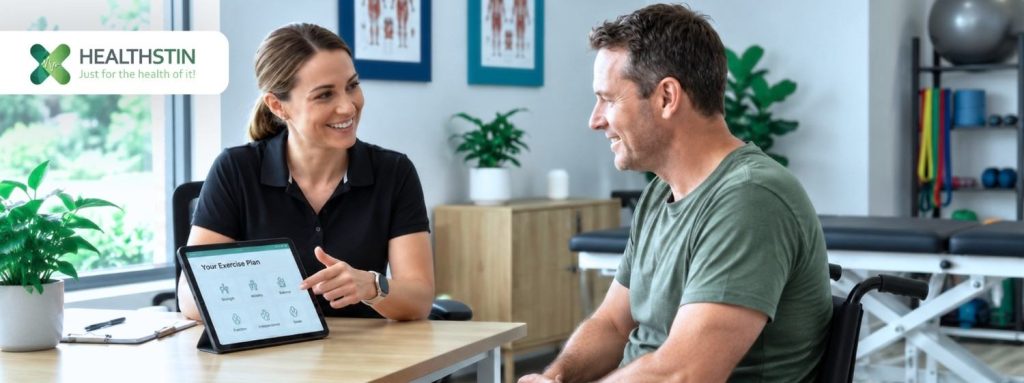
You may not notice how much weak forearms can impact your daily life. Tasks like lifting weights, carrying groceries, typing, or opening a tight jar all get harder if your grip and wrist strength are low. If you tend to focus only on bigger muscles and ignore your forearms, you might be missing a chance to build real strength and improve your performance.
The good news is that doing the right forearm workout routine can really help. A simple routine of grip and wrist exercises will strengthen your muscles, improve wrist stability, and support your tendons. In this guide, you’ll find seven effective forearm exercises, including ones you can do at home to safely build strength with resistance training.
Why Forearm Strength Matters
When your forearms are strong, daily activities and workouts get easier and more satisfying. Forearm muscle training helps improve your grip, stabilises your wrists, and helps you open tight jars or carry heavy bags with ease.
Building forearm strength also helps prevent injuries and improves your overall performance. When your forearms are stronger, there is less strain on your wrists and tendons, especially during weight training or repeated movements. Doing grip and wrist exercises, even at home, can give you better muscle control, boost muscle growth, and help you feel more confident when you move.
Muscles Worked in the Forearms
Your forearms use several muscles whenever you grip, lift, carry, or twist. Knowing what each muscle does can help you get more out of your forearm workouts. A well-rounded routine makes your wrists and tendons stronger, too.
Flexors
The flexor muscles let you bend your wrist and fingers. They give you most of your gripping power, so they are important for grip strength exercises and many daily tasks.
Extensors
The extensors are on the back of your forearm. They straighten your wrist and fingers and help balance the work of the flexors. Doing exercises for the extensors can improve muscle balance and help prevent injuries.
Wrist Stabilisers
The muscles around your wrist help keep the joint steady when you move. Strong wrist stabilisers give you better control when lifting, pushing, or pulling and help reduce strain. Strengthening these muscles improves wrist stability and helps you move better.
7 Best Forearm Exercises for Strength
1. Wrist Curls
Wrist curls are an easy and effective forearm exercise for strength, whether you’re at home or at the gym. They focus on the forearm flexors, which help you improve your grip and wrist control. Doing wrist curls regularly can boost muscle growth, make your arms stronger for daily tasks, and support tendon health over time.
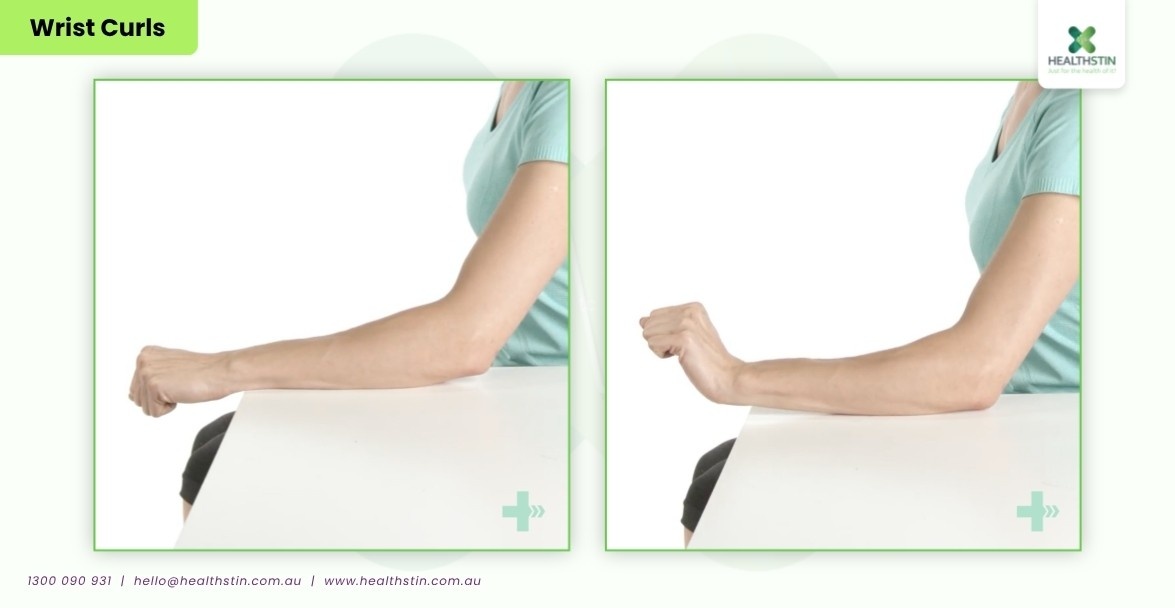
Instructions:
- Sit up straight in a sturdy chair.
- Rest your affected forearm on a table or flat surface so your wrist hangs just over the edge.
- Let your palm face down and keep your fingers relaxed and slightly curled.
- Slowly lift your wrist up toward the ceiling, only as far as it feels comfortable.
- Hold for a moment at the top.
- Slowly lower your wrist back down to where you started, keeping the movement steady.
- Repeat this movement as many times as your therapist recommends.
Helpful Tip:
Keep your forearm steady on the surface and move just your wrist. Take your time so your muscles work as they should.
2. Reverse Wrist Curls
Reverse wrist curls work the forearm extensors, which balance the muscles on the other side of your forearm. Adding them to your routine can improve wrist stability, support tendon strength, and help prevent injuries. You can also easily do them at home.
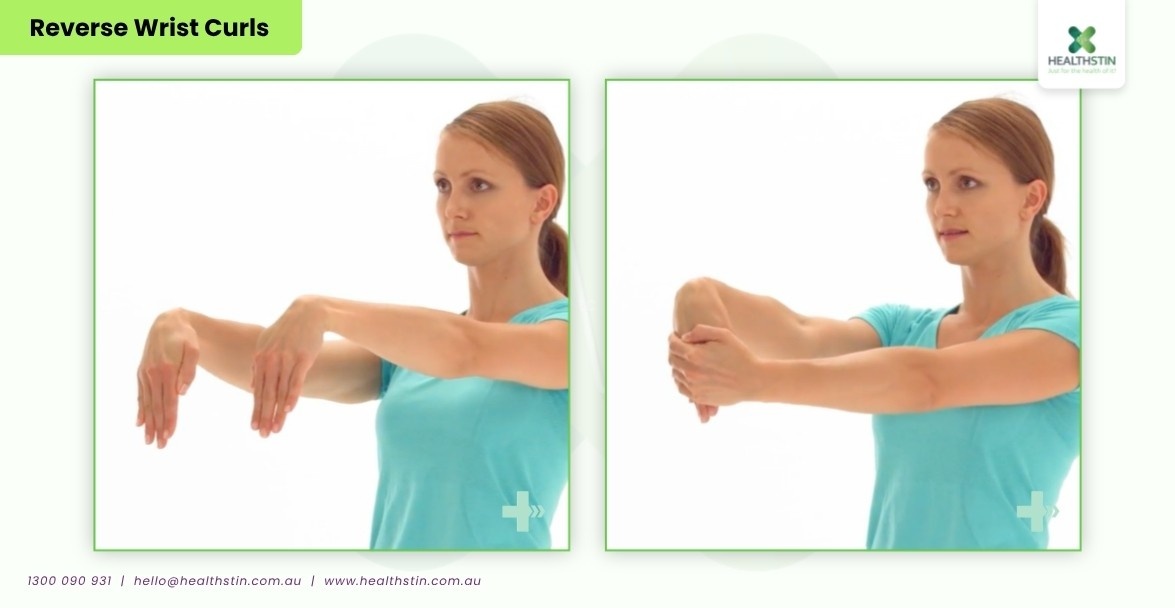
Instructions:
- Reach your arm straight out in front of you, keeping your palm facing down.
- Let your hand slowly drop toward the floor so your wrist bends down.
- With your other hand, gently press on the back of your hand to deepen the stretch.
- Hold this position until you feel a gentle pull along the back of your forearm.
- Slowly let go of the stretch and bring your arm back to the starting position.
- Repeat this exercise as your provider recommends.
Helpful Tip:
Stretch only until you feel a gentle pull, not pain. Keep your elbow straight, and your shoulders relaxed the whole time.
3. Farmer’s Carries
Farmer’s Carries is a simple exercise that helps you build a stronger grip, better balance, and more coordination. Carrying a weight in each hand also builds strength you can use in everyday lifting and carrying.
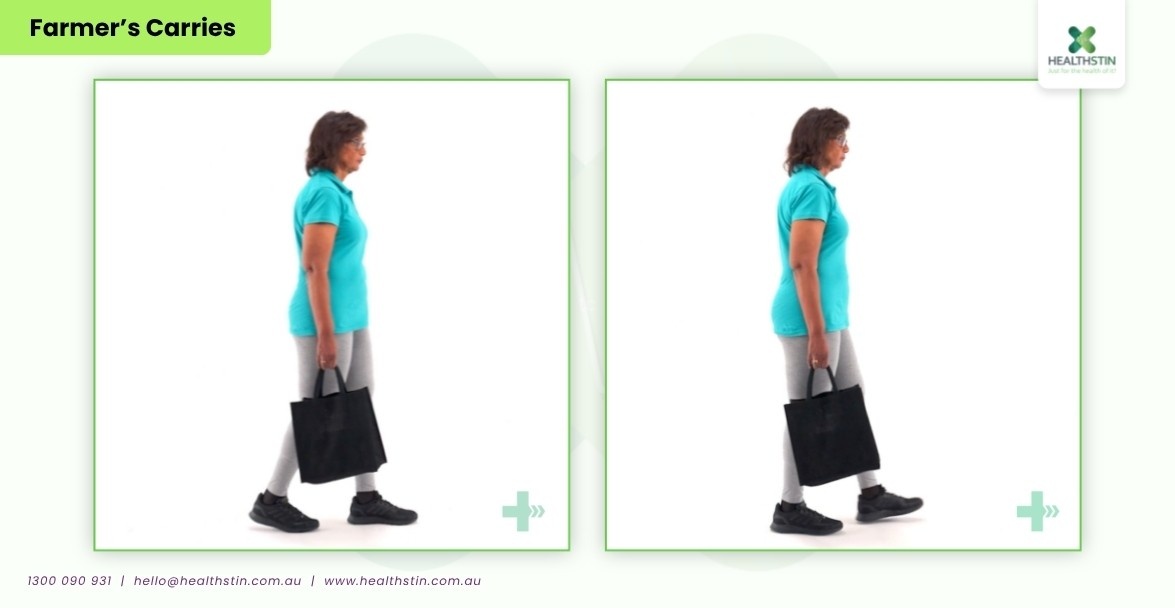
Instructions:
- Put a heavy object into a strong bag that has handles.
- Stand up straight and pick up the bag with one hand.
- Hold your arm close to your side and keep your shoulders even.
- Walk forward slowly and steadily whilst carrying the bag.
- Stay upright and keep your core muscles tight as you walk.
- When you finish the set distance or time, gently put the bag down.
- If needed, repeat the exercise on the other side.
Helpful Tip:
Pick a weight that is tough but still lets you keep good posture. Try not to lean to one side as you carry the bag.
Want to Build Strength Safely?
If you’re new to strength training, coming back after an injury, or want to boost your performance, our experienced exercise team are here to help. We’ll look at your needs and create a programme tailored to you, focusing on better movement, injury prevention, and lasting results.
Talk to our exercise team today to find the right programme for you, or book an appointment online to start moving stronger and feeling healthier.
4. Hammer Curls
Hammer curls target your forearms and biceps, so they are a good choice for building upper arm strength. They also help you get stronger for everyday lifting and carrying, and they support muscle growth. You can do hammer curls at home with a pair of dumbbells or a resistance band.
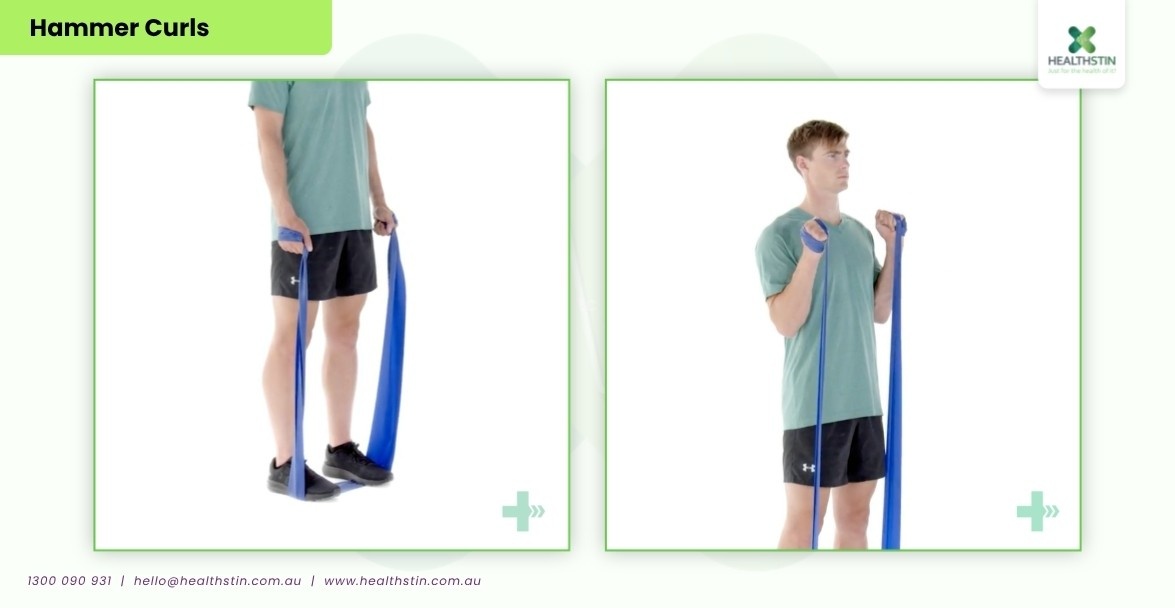
Instructions:
- Stand up straight and place the resistance band securely under your feet.
- Hold one end of the band in each hand, with your palms facing your thighs.
- Keep your elbows tucked in at your sides.
- Slowly bend your elbows and lift your hands up toward your shoulders. Keep your palms facing each other the whole time.
- Pause for a moment at the top of the curl.
- Lower your hands back down slowly and with control.
- Repeat the exercise as many times as recommended.
Helpful Tip:
Keep your upper arms steady and avoid swinging your body. Move slowly and with control to get the most out of your forearms and biceps.
5. Plate Pinches
Plate pinches are an easy way to work on your grip. Just hold a weight plate between your fingers and thumb. This exercise helps your grip last longer, makes your forearms stronger, and can help your muscles grow. If you don’t have weight plates, try using any flat, heavy object you have at home.
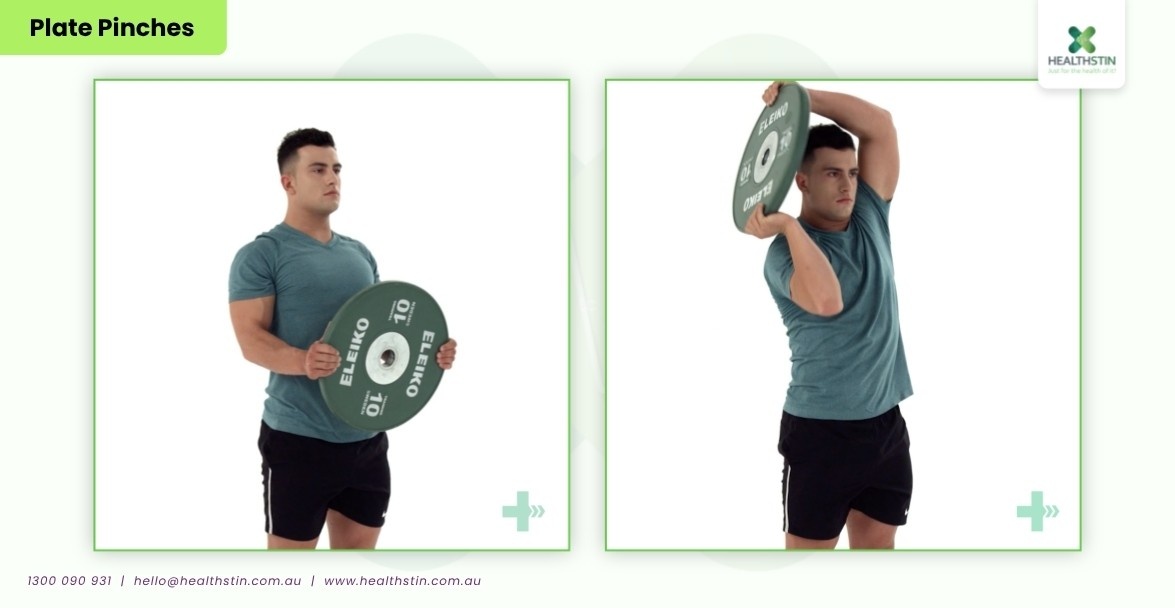
Instructions:
- Stand up straight and place your feet about shoulder-width apart.
- Hold a weight plate in both hands and keep it in front of your chest.
- Pull your shoulder blades back and down gently.
- Tighten your core and glutes to help keep your body steady.
- Slowly move the weight plate in a smooth, controlled circle around the back of your head.
- Finish the circle in one direction.
- Go back to the starting position and repeat the movement in the other direction.
- Keep switching directions as instructed.
Helpful Tip:
Move slowly and keep your head and neck relaxed. Try not to lean or arch your back whilst moving the weight around your head.
6. Resistance Band Wrist Supination
Resistance band wrist exercises help you build strength in your forearms and wrists without straining them. They are a good choice if you are just starting out or coming back from an injury. You can easily add these simple wrist strengthening exercises to your home routine, and you only need minimal equipment.
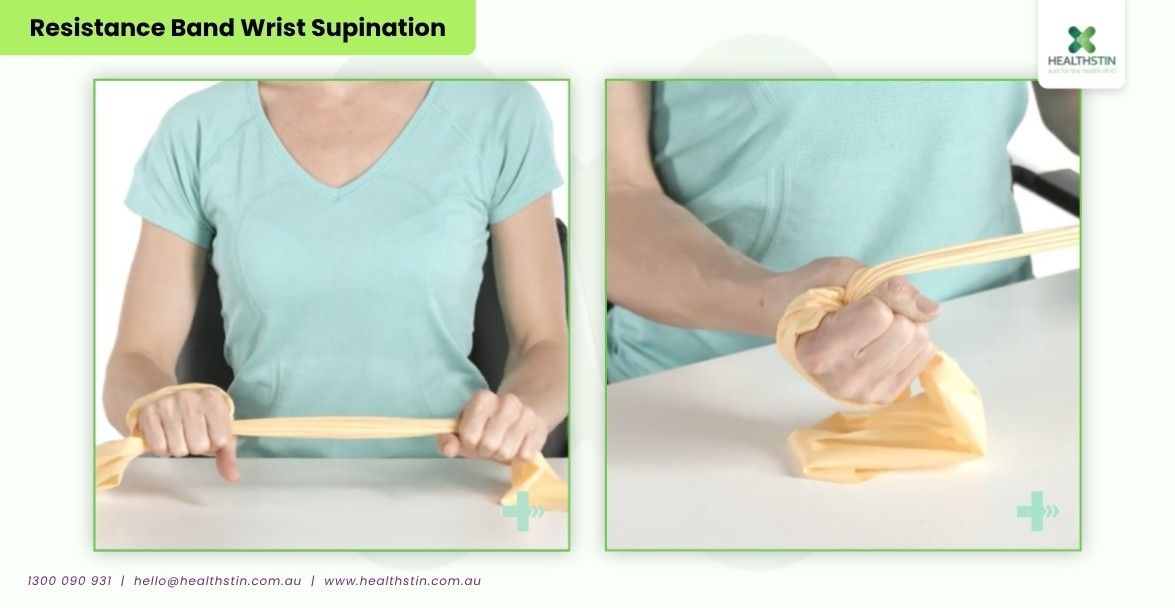
Instructions:
- Sit up straight in a sturdy chair and let your arms relax at your sides.
- Bend your elbows so your forearms rest comfortably, and your palms face down.
- Hold a resistance band in both hands, keeping a gentle tension.
- Slowly turn your affected hand so your palm faces up toward the ceiling, stretching the band as you move.
- Pause for a moment at the end of the movement.
- Slowly turn your palm back down, keeping control and resisting the band the whole time.
- Repeat this movement as many times as your therapist or instructor recommends.
Helpful Tip:
Keep your elbows by your sides and try not to move your upper arms. Pay attention to turning your wrist slowly and with control.
7. Dead Hangs
Dead hang test your grip because you have to hold your entire body weight whilst hanging from a bar. This exercise helps you build strong forearms, better control, and more functional strength for lifting and carrying. It’s a simple move, but it works well for improving your grip.
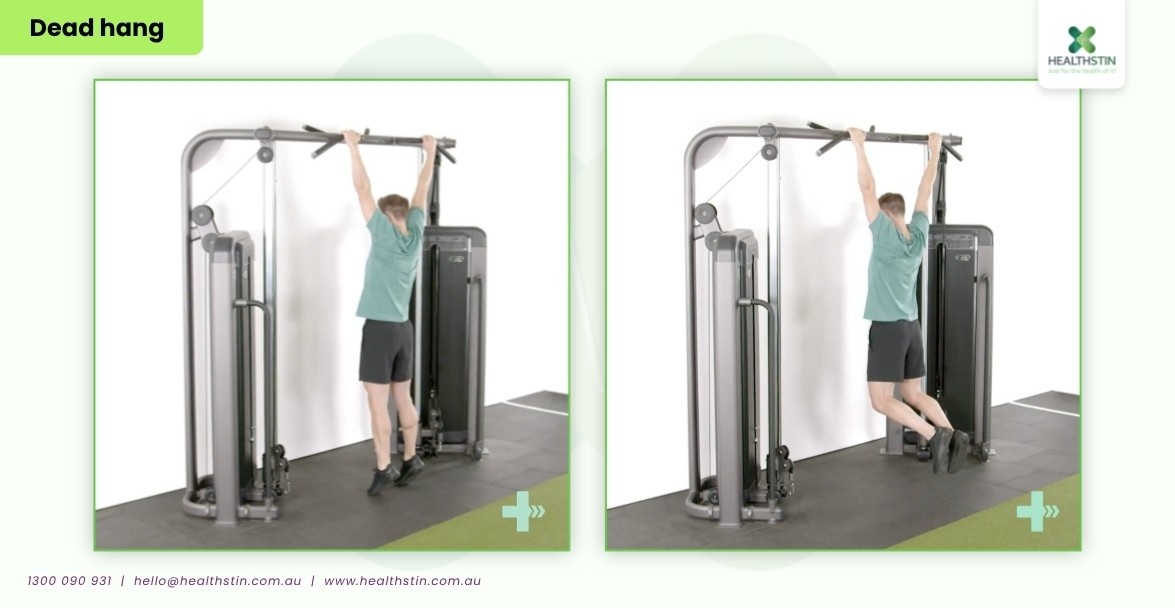
Instructions:
- Stand right under a sturdy hanging bar or a set of rings.
- Grab the bar with your hands about shoulder-width apart.
- Keep your arms straight and slowly lift your feet off the ground.
- Tighten your core and gently squeeze your glutes to help keep your body steady.
- Remember to breathe deeply and steadily whilst you hold the position.
- Hold this position for as long as it feels comfortable, then slowly lower your feet back down with control.
Helpful Tip:
Try not to swing or shrug your shoulders. Keep your body steady and your grip strong the whole time.
How to Structure a Forearm Workout
To get the most out of your forearm workout, start with a clear plan. Instead of guessing or doing too much, focus on your sets, reps, and training frequency. Slowly increase the resistance so your muscles can grow and stay healthy.
| Training Element | Recommendation | Why It Matters |
| Sets & Reps | 2–3 sets of 10–15 reps per exercise | Helps build strength and muscle without putting too much pressure on the wrists |
| Frequency | 2–3 times per week | Gives your muscles enough time to rest and get stronger |
| Progressive Overload | Slowly add more weight, resistance, or hold the position longer | Important for continuous progress and muscle hypertrophy over time |
Common Mistakes to Avoid
To get the most out of forearm training, focus on good form and balance. Even basic home forearm exercises may not work as well if you make these common mistakes.
- Overtraining – If you train too often without enough rest, your muscles can get tired and take longer to recover.
- Poor technique – Using the wrong form can make your results worse and put extra strain on your wrists and tendons.
- Ignoring rest – Your muscles need time to recover and get stronger between workouts.
- Using too much weight – If you lift weights that are too heavy too soon, you might lose control and raise your risk of injury.
Can Forearm Exercises Help Prevent Injury?
Yes, when you do them properly, forearm exercises can lower your risk of injury. Building up the muscles around your wrists gives you better control and helps you move more easily in everyday life.
These exercises also make your wrists more stable, which protects your joints when you lift, carry, or do the same movements over and over. As a result, your muscles and tendons feel less strain, and you can move more safely and confidently.

How Healthstin Can Help You Train Safely
At Healthstin, we help you build strength safely and with a clear plan. Whether you are just starting out, coming back after an injury, or want to get better results, our experienced exercise physiologists are here to guide you at every stage.
Personalised strength programmes
We design exercise plans that match your goals, fitness level, and any pain or limits you may have. This way, your training stays safe and works for you.
Injury prevention
We teach you the right way to move and use proper technique, which helps reduce the risk of strain, especially in your wrists, forearms, and upper body.
Rehab support
If you are recovering from an injury, we create programmes that help you regain your strength slowly and safely.
Ongoing guidance
We stay with you every step of the way, checking in often and updating your programme as you improve.
FAQs About Forearm Exercises for Muscle and Strength
1. How often should I train my forearms?
Training your forearms two or three times a week is usually enough. This schedule lets your muscles recover and get stronger between workouts.
2. Can I train my forearms at home?
Yes, you can do many forearm exercises at home using dumbbells, resistance bands, or just your bodyweight.
3. Do I need weights?
No, you can begin with light resistance or even household items. Weights are helpful later on as you get stronger.
4. How long before I see results?
Most people start to see better grip and strength after a few weeks of regular training.
5. Are these exercises safe for beginners?
Yes, these exercises are safe for beginners as long as you start with light resistance and focus on good form. Go at your own pace and gradually make things harder to help prevent injuries.
Build Strength That Lasts
Building stronger forearms can make daily activities easier. The best way to see results is to follow a safe and organised plan. With expert help, you can get stronger, keep your wrists stable, and train with confidence.
At Healthstin, our Exercise Physiologists create personalised programmes to help you move better, feel stronger, and stick with your training. We give you clear plans, ongoing support, and easy steps you can follow at your own pace.
You can book flexible appointments easily, with no waitlists, extra fees, or complicated paperwork.
Call us at 1300 090 931 or book an appointment online with Healthstin today to begin building lasting strength.
*Disclaimer: The exercises and information in this article are meant as general guidance only and do not replace advice from a qualified healthcare professional. Exercise programmes should always be personalised. Before starting any new exercises, talk to a physiotherapist, exercise physiologist, or your healthcare provider to make sure they are safe and right for you.