As we get older, everyday tasks can feel much harder when joint pain sets in. Knee problems can make it tough to stay active and do the things you need to do each day. Simple actions like standing up from a chair or taking a walk down the street can suddenly feel like major chores that take a ton of effort.
When dealing with these knee problems, many people try traditional workouts on land. Unfortunately, hard-hitting exercises can actually make the pain worse, leaving you feeling stiffer and less able to move.
This creates a frustrating trap: moving hurts too much to do it, but sitting still only makes your muscles weaker and your joints even stiffer. Over time, staying inactive causes your muscles to shrink, which can leave you feeling unsteady on your feet and increase your risk of taking a fall.
Fortunately, there are proven, step-by-step ways to handle these long-term knee problems. Using pool exercises for seniors with knee problems is a gentle, easy-on-the-joints way to build strength, manage pain, and stay active safely. Getting into the water gives your body a supportive environment where you can carefully work on making your knees feel better.
The Main Content Body
Why Pool Exercises Are Ideal for Knee Conditions
The unique physical properties of water make the aquatic environment a suitable setting for physical rehabilitation and movement support. Water naturally provides a reduced weight-bearing environment that counteracts the heavy downward pull of gravity.
When you stand in chest-deep water, the water floats and supports up to 90% of your body weight. This relief takes almost all the stress off your joints. It lets you move your legs normally without grinding damaged cushioning or putting a heavy load on painful, irritated knees
Because of this, water therapy stands out as a joint-friendly exercise. Unlike walking on concrete or using a traditional gym treadmill, the water cushions your every move. This completely gets rid of sudden jolts, sharp twists, or harsh, heavy impacts on your knees.
Plus, water pressure gently squeezes your body, effectively applying snug compression around your knee, and helping to push trapped fluid out of the swollen area and reduce puffiness.
The warmth of a heated therapy pool also does wonders for your body. The warm water helps relax tight muscles, boosts blood flow directly to your legs, and provides quick, soothing relief for your sore spots.
Together, these benefits help you move more freely, allowing you to gently stretch and bend your joints farther than you can on land, all within a safe, warm environment.
Common Knee Conditions Encountered in Clinical Practice
The knee is a complex hinge joint that endures a lifetime of repetitive motion, exposing it to an anatomical wear and chronic irritation. To understand how aquatic therapy supports the lower body, it is helpful to examine the specific issues that commonly affect our joints as we age.
1. Osteoarthritis
The most common cause of long-term lower-body pain is osteoarthritis. This is a condition in which the protective cushioning (cartilage) between your thigh and shin bones gradually wears away.
When this cushioning gets thin, the hard thud of walking or exercising on land exerts pressure on the bones together. Without that smooth padding, your bones tend to scrape against each other, causing direct irritation and swelling to the joint area.
2. Post-Surgery Recovery
Rebuilding your leg strength and getting your knee moving again after a total or partial knee replacement takes careful, controlled exercise. Working out too hard or putting all your weight on your feet too early on land can irritate healing tissues and upset the surgeon’s hard work.
Because water floats your body, it lets you exercise without putting strain on your new knee.
3. General Wear and Tear
Without the right medical care and targeted support, everyday tasks such as walking, kneeling, standing, and climbing become more difficult over time.
Your knees naturally experience normal wear and tear. This long-term wear often shows up as slightly loose ligaments, a kneecap that doesn’t slide smoothly in its track, or thinning of the shock-absorbing pad (meniscus) in your joint.
Best Pool Exercises for Seniors with Knee Problems
Incorporating targeted, low-impact movements into your weekly routine can support your daily physical performance and help you work toward your functional goals. Here is a step-by-step clinical guide to six safe and effective aquatic exercises developed for mature adults.
1. Walking in Water
To get the most out of this exercise, walk forward for 20 steps, take a brief pause, and then carefully walk backward using the same smooth movements.
To do this correctly, start by standing up straight in chest-deep water with your shoulders relaxed. As you move forward and backward, take slow, careful paces—lifting your knees a little higher than normal, rolling each foot smoothly from heel to toe, and letting your arms swing naturally to stay balanced.
Why It Helps: This simple exercise is a great way to help you walk more easily and naturally, without the heavy thud of gravity pounding down on your joints.
Because water pushes back against you gently from every direction, it gives your legs a safe workout while naturally pumping fluid into your knee joints, keeping them well-lubricated and moving smoothly.
2. Leg Lifts
To do this exercise, start by standing sideways next to the pool wall and lightly holding the edge with one hand for balance.
Turn around and switch legs after doing this 10 times. For each repetition, slowly lift your outside leg out to the side away from your body, hold it for one second, and then slowly lower it back down. Just make sure to keep that lifting leg straight with your toes pointing forward.
Why It Helps: This exercise is great for strengthening the muscles around your knee, specifically your thighs and your outer hips. By building these supporting muscles, they can take on more of the heavy lifting, relieving pressure on your knee joint when you stand and move around during the day.
3. Knee Bends
To do this exercise, you will bend one knee, lift your heel toward your backside, hold it for a moment, and lower it back down. Repeat this 10 times before switching to the other leg.
Before you start moving, make sure you are in the proper position: stand facing the pool wall and hold onto the edge tightly with both hands to keep your body completely steady. When you are ready, perform the leg lifts in a smooth, straight line, only as high as you can comfortably reach.
Why It Helps: Knee bends address stiffness in the joint capsule directly. It offers a gentle strengthening effect for the hamstrings while elongating the tight connective tissues surrounding the kneecap (patella).
Not Sure If Hydrotherapy Is Right for Your Condition?
If you are managing chronic knee discomfort, navigating a new exercise routine on your own can feel overwhelming. You do not have to guess which movements are safe for your specific joint profile. At Healthstin, our qualified clinical professionals provide personalised support to help you work toward your movement goals safely.
Contact our clinical team today to learn more about our customised clinical programs, including NDIS, DVA, and home care package support.
4. Step-Ups in Water
Locate the shallow pool steps and hold the handrail securely with at least one hand. Step up onto the first step with your stronger foot, lift your body weight using your leg muscles, and bring your opposite foot to meet it on the step. Step back down carefully, leading with the same foot. Repeat 10 times.
Why It Helps: This exercise is recommended for training your balance because it teaches your legs and hips to stay steady against the swirling water. This activity builds the everyday strength you need to safely and confidently do things like climb stairs or step up onto curbs.
5. Gentle Kicking
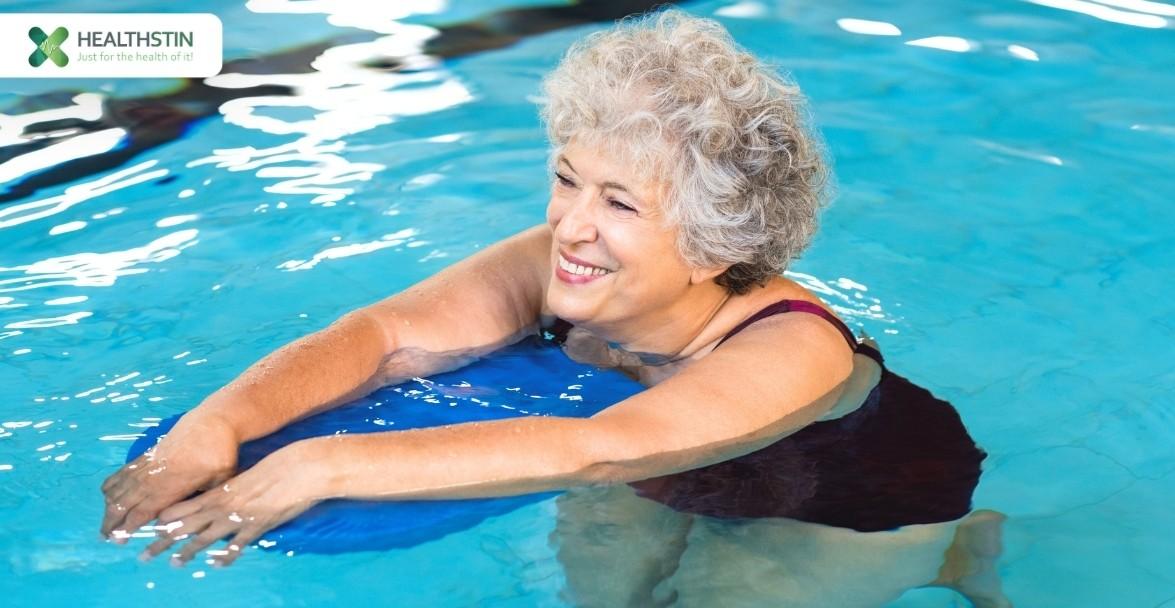
While submerged from the waist down, keep your knees relaxed by kicking from the hips, not by bending your knees. Keep this smooth, steady kicking going for 1 to 2 minutes to protect your joints. To get into position, hold onto the edge of the pool and let your legs float up horizontally behind you, or use a supportive kickboard to keep your upper body floating.
Why It Helps: Gentle kicking helps your knee move more freely and comfortably without any harsh jars or heavy thuds. It also gives your calves, thighs, and buttocks a deep workout, which boosts healthy blood flow all the way down your legs.
6. Balance Training
Stand near the pool wall so you can easily grab onto it if you need to. Lift one foot off the floor and balance on your other leg for at least 15 seconds. Rest firmly to the wall lightly, and slowly let go when you feel more confident. You know when you feel steadier. Do it on the other leg.
Why It Helps: Water suppresses your movement, creating support to your core, hip, and ankle stability. This exercise focuses heavily on reducing fall risk, giving you greater functional confidence when returning to dry land.
How Often Should Mature Adults Do Pool Exercises?
To give your body enough time to rest, heal, and get stronger between workouts without overworking yourself or irritating your joints, you should aim for 2 to 3 pool sessions a week. Sticking to this steady routine within a professional plan is the ultimate key to feeling lasting improvements in your body.
Always focus on gradual, systematic progression. Begin with short, 20-minute sessions to see how your joints respond to the aquatic environment. As your physical stamina increases and your joint discomfort is managed effectively, you can gradually extend your session time to 45 minutes and incorporate more advanced variations under qualified clinical guidance.
Safety Tips for Exercising in the Pool While water provides a protective, buoyant environment, safety should always remain your top clinical priority.
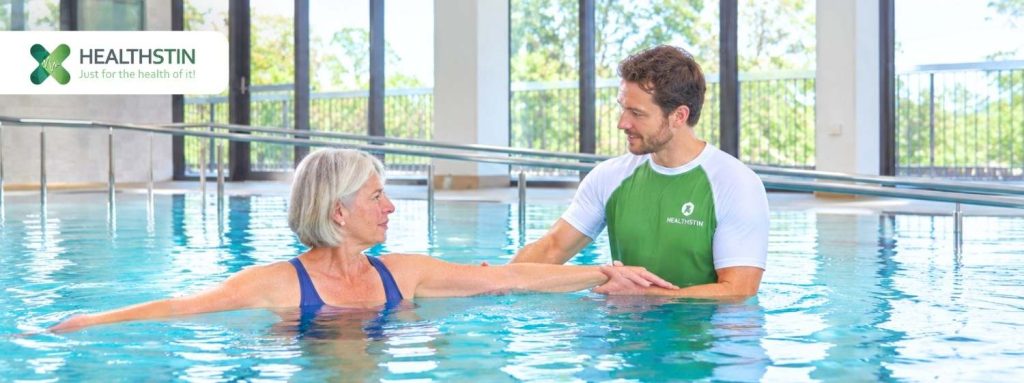
Clinical Supervision: Don’t exercise alone. Having a professional, such as an exercise physiologist or clinician, right there carefully guides you in performing the movements correctly. This keeps your form safe and protects your specific injury from worsening.
Avoid Slippery Surfaces: Always wear proper water shoes with non-slip rubber soles. This gives you a good grip so you don’t slip on the wet pool deck, in the changing rooms, or on the slick pool floor.
Start Slow: Allow your body a few minutes to acclimate to the water temperature and hydrostatic pressure before starting resistive or high-repetition movements.
Listen to Your Body: Because you float in water, it can sometimes trick you into feeling like you aren’t working as hard as you are. If you feel sharp joint pain, sudden dizziness, tightness in your chest, or get unusually tired, stop exercising right away and let your therapist or doctor know.
Pool Exercises vs. Land-Based Exercises
Water helps you float; becoming a soft cushion reduces the pull of gravity. On dry land, your joints bear the full weight of your body, which can make moving around feel painful or uncomfortable. By understanding this key difference between water and land, you can use the pool to comfortably practice specific exercises that would otherwise hurt too much to do on land, allowing you to get the most out of your recovery.
You do not have to choose between exercising only in the pool or only on land; a great recovery plan actually combines both.
The pool builds your foundation by improving your joint flexibility and muscle strength. By strengthening knee muscles from the water workouts, those benefits carry over to dry land, making your daily activities much safer and more stable. Once you reach this point, you can easily add light, structured land exercises to your routine for a complete, well-rounded recovery.
How Healthstin Supports Mature Adults with Knee Conditions
At Healthstin, we focus on helping older adults support their daily functional capacity through qualified clinical care. We develop personalised hydrotherapy programs tailored specifically to your unique medical history, joint health markers, and personal movement goals.
Our dedicated exercise physiology support confirms that every session is conducted safely, effectively, and in alignment with Australian clinical standards. Whether you visit us at a convenient local community pool or have our mobile service come directly to you, we offer flexible choices to fit your daily routine. Once you start, we will keep a close eye on your progress so we can continually adjust your pool exercises to match your growing strength and energy.
Frequently Asked Questions
Are pool exercises safe for arthritis?
Yes. Buoyancy reduces heavy work of the joints. Aquatic therapy is a joint-friendly exercise is therefore an option for safely managing arthritis symptoms and joint stiffness.
Can hydrotherapy help manage knee discomfort?
Yes! The warm water softens your tight, stiff muscles, while the water’s natural pressure gently squeezes your legs to improve blood flow and reduce swelling. Together, this creates the ideal environment for your joint to heal.
Do I need clinical supervision?
It is highly recommended to have a professional coach or therapist guide you. They will make sure you perform the movements correctly and help you choose the exact exercises you need to reach your long-term health goals.
How long will it take before I notice physical changes?
Many people notice their joints feel less stiff after just a few sessions. If you stick with it consistently, you can typically expect to feel noticeably stronger and steadier on your feet within 4 to 6 weeks.
Is it suitable to begin aquatic exercise after a knee replacement?
Yes, it is highly suitable once your surgical incisions are fully closed, healed, and your orthopedic surgeon or doctor provides explicit clearance for pool submersion.
Maintain an Active Lifestyle with the Right Clinical Support
Don’t let chronic knee conditions dictate how you live your life or limit your daily physical activities. Working toward comfort, flexibility, and physical movement begins with taking a safe, guided first step under qualified care.
Book your clinical hydrotherapy assessment with Healthstin today, and let our dedicated team develop the appropriate aquatic program to support your movement goals.
DISCLAIMER : The information and exercises provided in this article are for educational and informational purposes only and do not constitute professional medical advice, diagnosis, or treatment.
Knee problems are highly individual. Always seek the advice of your physician, physiotherapist, or other qualified health provider before starting any new exercise routine or making changes to your rehabilitation plan. If you experience pain, dizziness, shortness of breath, or increased discomfort while performing these exercises, stop immediately and consult a healthcare professional. Healthstin assumes no liability for injuries sustained while practicing these movements without professional supervision.
Healthstin provides exercise programs for participants with knee problems looking for water therapy across multiple states in Australia.
- Sans Souci, NSW – Supporting southern Sydney residents
- Hurstville, New South Wales (NSW) – Conveniently located for serving the St George community
- Salisbury & Elizabeth, South Australia (SA) – Accessible for Adelaide’s northern suburbs
- Brimbank & Melton, Victoria (VIC) – Supporting communities in Melbourne’s west
- Belmont, Western Australia (WA) – Expanding to meet growing local demand
Our team can deliver therapy in our clinics or within the community.
Know Someone Who Could Benefit Our Services?
Help someone take the first step. If you know a friend, a former subbie, or a loved one who is struggling to stay active or feeling socially isolated, we make the referral process simple. Whether they need physiotherapy for cerebral palsy, we’ll help them navigate the D904 or NDIS requirements with ease.
Refer Someone Today and help them start their path to better health and independence.
ALSO READ: Swimming Pool Workouts: 10 Exercises for Older Adults