A torn meniscus can make movement uncomfortable and limit your capacity to engage in physical activity. When every step feels uncertain and simple activities like climbing stairs or going for a walk cause discomfort, it is natural to feel frustrated. You want to stay active, but the concern of exacerbating the injury often leads to inactivity. Ironically, a lack of movement can lead to muscle atrophy and stiffer joints, which further complicates the path toward your functional goals.
High-impact activities may worsen the injury—leaving many people unsure how to stay active safely. Traditional cardio, like running or high-intensity training, puts significant pressure on the knee and can worsen the tear or increase inflammation. This leaves many participants in a clinical “rehab limbo,” caught between the requirement to strengthen the leg and the inability to tolerate weight-bearing stress on land.
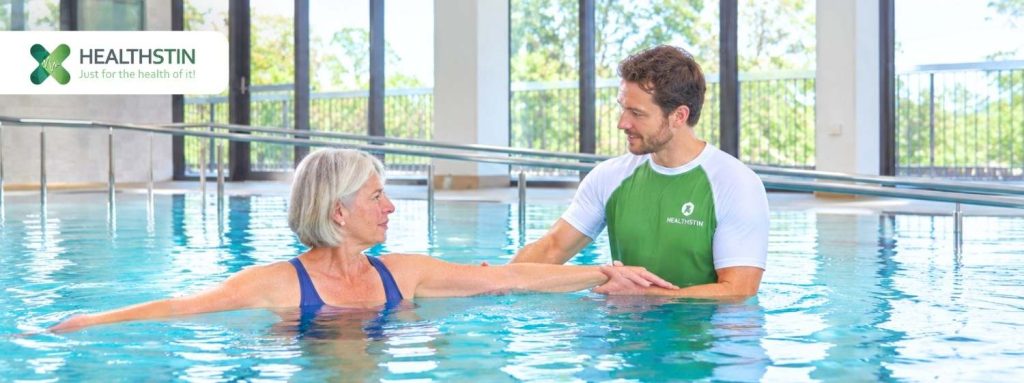
Water aerobics torn meniscus recovery programs offer a low-impact, supportive environment that can help maintain movement and support recovery when done correctly. By using water’s unique physical properties, you can keep moving, build strength, and support recovery without the risks of land-based exercise.
The Main Content Body
What Is a Torn Meniscus?
The meniscus is a C-shaped piece of tough, rubbery cartilage that acts as a shock absorber between your shinbone (tibia) and your thighbone (femur). Each knee has two menisci—one on the inner side (medial) and one on the outer side (lateral). They distribute weight across the knee joint and provide stability during daily movement.
Common Causes
Meniscus tears are among the most common knee injuries encountered in clinical practice. They typically occur during activities that involve forceful twisting or rotating the knee, especially while bearing weight. Common causes include:
- Quick turns or twists during sports like football, netball, or tennis.
- Lifting heavy objects without professional advice or doing very deep squats.
- Natural wear and tear in older adults, where the joint cushioning (cartilage) thins over time and can tear easily, even during normal movement.
Symptoms
If you have sustained a meniscus tear, you might experience:
- A “popping” sensation at the time of injury.
- Swelling or stiffness in the knee joint.
- Discomfort, particularly when twisting or rotating the knee.
- Difficulty fully straightening the leg.
- The sensation of the knee “locking” or giving way during weight-bearing tasks.
Is Water Aerobics Safe for a Torn Meniscus?
The short answer is yes—but with clinical conditions. A water aerobics torn meniscus routine is generally considered one of the safer ways to support the knee because it minimises the risk of further mechanical irritation. However, safety depends heavily on injury severity and the timing of the exercise program.
For an acute tear with significant swelling, you may need to delay even water exercise for several days. Conversely, for chronic or degenerative tears, getting into the water is often recommended to support the surrounding muscles (such as the quadriceps and hamstrings) and help prevent further weakening. It is vital that a qualified clinical professional, such as an exercise physiologist, guides your program to ensure you aren’t performing movements that could catch or pinch the torn cartilage.
Why Water Aerobics Can Support Knee Recovery
Hydrotherapy, or clinical aquatic exercise, utilises the physical properties of water—buoyancy, hydrostatic pressure, and resistance—to create an ideal support environment.
One of the most significant advantages is reduced weight-bearing exercise. On land, your knees must support your full body weight plus gravity. In waist-deep water, you are only bearing about 50% of your weight. In chest-deep water, that number drops to around 25%. This “unloading” of the joint lets the meniscus move with less compression between the femur and tibia, enabling movements that would be difficult on land.
Furthermore, water provides natural resistance. Unlike weights, which provide resistance in only one direction, water resists movement in all directions. This allows for strengthening without strain, as the resistance is proportional to the effort you apply, making it a highly adaptable clinical tool.
5 Safe Water Exercises for Meniscus Tear Recovery
Perform these gentle aquatic exercises in waist- to chest-deep warm water:
- Supported Water Walking – Walk slowly forward and backward across the pool, focusing on a natural heel-to-toe gait.
- Seated / Floating Leg Extensions – Hold onto the pool edge or a pool noodle and gently extend your injured leg forward to activate the quadriceps.
- Pool Wall Squats – With your back against the pool wall and water supporting your weight, lower into a quarter-squat position without bending past 90 degrees.
- Gentle Hip Abduction – Stand near the pool wall for balance and slowly sweep your leg outward to the side to strengthen the outer glutes and stabilising muscles.
- Calf Raises in Water – Rise onto your toes, using the water’s support to strengthen your calves with minimal joint compression.
Key Benefits of Water Aerobics for a Torn Meniscus
1. Reduced Pressure on the Knee Joint
By offloading the body’s weight, water aerobics provides essential knee joint support. This buoyancy prevents the vertical compression that typically causes discomfort in people with meniscus tears. It allows the joint surfaces to “distract”, or pull slightly apart, creating space and reducing friction on torn tissue during movement.
2. Improved Range of Motion
Stiffness is a major hurdle in knee rehabilitation. In the warmth of a heated pool, muscles can relax, and the water supports the limb, making range-of-motion exercises easier. You can practice bending and straightening the knee through its full range without worrying about the joint “giving way” under your weight.
3. Gentle Strength Building
To get better, you need strong surrounding muscles to help carry the load so your injured knee doesn’t have to do all the work.
Water is great for this because it lets you work your glutes, thighs, and hamstrings without putting too much pressure on the joint. Because water is denser than air, even simple movements become a real workout. This strengthening without strain helps build the muscle support your knee needs to stay healthy and function well for a long time.
Not Sure If Hydrotherapy Is Right for You? Recovering from a meniscus injury requires a balance of rest and movement. Our qualified clinical team can help you determine the exact stage of your recovery and develop a safe, water-based plan developed for your needs. Book a free 10-minute phone call; we’ll help you understand your options and what’s likely to work best at NO COST.
4. Support for Swelling and Discomfort
The water acts like a gentle, built-in bandage that hugs your leg. This constant squeeze helps push swelling out of your knee, easing pressure on your nerves and reducing pain. On top of that, the relaxing feel of the water on your skin helps “quiet” the pain signals in your brain, making it much easier to move around comfortably.
5. Improved Circulation
The combination of warm water and gentle underwater pressure helps improve blood flow to your legs. While the inner part of your knee’s cushioning (the meniscus) doesn’t get much blood, the outer part can heal better with good circulation and proper movement.
Moving around in the water helps “pump” nutrients into your joint tissues. This is one of the main benefits of aquatic therapy, as it helps the area stay healthy and recover.
Best Water Exercises for a Torn Meniscus
When performing a water aerobics torn meniscus program, focus on slow, controlled movements.
- Walking in Water: Walking forward, backward, and sideways in chest-deep water is a foundational exercise. It retrains your gait pattern without the impact of walking on land. Focus on a “heel-to-toe” strike.
- Gentle Leg Swings: Holding onto the side of the pool, swing your leg forward and backward, then side to side. This supports hip mobility and gently engages the muscles surrounding the knee joint.
- Step Movements: Practice “stepping up” as if onto a curb. The water provides buoyancy to help you lift the leg and resistance to help you control the descent.
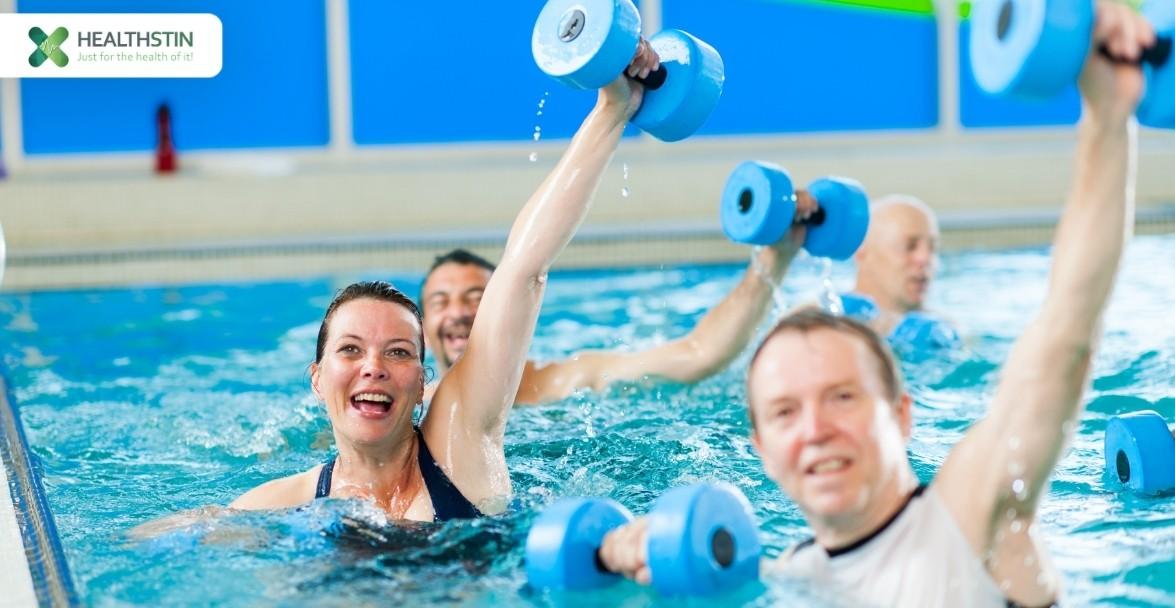
- Light Resistance Exercises: Gentle “cycling” motions with your legs while leaning against the pool wall are a common way to build endurance without joint impact.
When to Avoid Water Aerobics
While highly beneficial, there are times when you should remain out of the pool:
- Acute Injury Phase: If the injury occurred very recently and the knee is hot, red, and significantly swollen.
- Severe Discomfort: If any movement in the water causes sharp, catching sensations, the tear may be unstable and require further clinical assessment.
- Post-Surgery Restrictions: If you’ve had a repair, wait until your incisions are fully closed and your surgeon clears you for submersion to avoid infection.
How to Exercise Safely
- Start Slow: Your first few sessions should focus on acclimation and gentle movement, not a high-intensity workout.
- Avoid Twisting Movements: The meniscus is sensitive to “pivoting.” Keep your toes and kneecaps pointing in the same direction during all exercises.
- Follow Professional Guidance: A qualified clinician can confirm you aren’t overextending the joint.
- Progress Gradually: Increase your time in the water or the intensity of the resistance only when you can complete a session without discomfort the following day.
Water Aerobics vs Land-Based Exercise
Water aerobics is often the “bridge” to land-based recovery. While land-based exercise is eventually necessary to meet daily demands and support bone density, water provides a safe starting point. Many participants utilise aquatic therapy benefits in the first 4–6 weeks of rehabilitation before slowly introducing land-based strengthening. In post-surgery knee rehab, water is often the first environment where early movement is permitted.
How Healthstin Supports Knee Injury Rehabilitation
At Healthstin, we provide a clinical approach to knee discomfort. Our post-surgery knee rehab and injury recovery programs are built on clinical evidence and personalised care.
- Personalised Rehab Programs: We assess your specific clinical requirements and functional goals.
- Hydrotherapy Sessions: We provide guided sessions in dedicated pools to confirm your form is appropriate.
- Integrated Care: Our team of exercise physiologists works together to help you transition from the pool back to daily life.
- Progress Tracking: We use objective measures to confirm you are working toward your functional capacity.
Frequently Asked Questions
- Can water aerobics make a meniscus tear worse? It’s possible if you’re doing high-impact jumping or sharp twisting. However, a solid water aerobics torn meniscus plan focuses on straight-line movements that are very safe for your knee.
- How soon can I start hydrotherapy? Once the initial inflammatory phase has subsided and any surgical wounds are closed, you can typically begin following a clinical assessment.
- Is it safe after surgery? Yes, it is often a preferred method for early rehabilitation, provided your surgeon has cleared you for pool use.
- How often should I exercise? Initially, 2–3 times a week is often recommended to allow the joint to adapt to the new stimulus.
- Do I need supervision? For the first few sessions, qualified clinical supervision is recommended to learn the “safe zones” of your movement.
Start Your Recovery the Safe Way
The right environment makes a difference in how you work toward your goals. By utilising the properties of hydrotherapy, you can support your mobility and work toward a more resilient knee.
Take the first step toward supporting your movement. Our qualified clinical professionals are ready to guide you through a structured, low-impact recovery plan.
DISCLAIMER: The information and exercises provided in this article are for educational and informational purposes only and do not constitute professional medical advice, diagnosis, or treatment.
Stroke recovery is highly individual. Always seek advice from your physician, physiotherapist, or other qualified health provider before starting any new exercise routine or changing your rehabilitation plan. If you experience pain, dizziness, shortness of breath, or increased discomfort while performing these exercises, stop immediately and consult a healthcare professional. Healthstin assumes no liability for injuries sustained while practising these movements without professional supervision.
Healthstin provides exercise programs for participants looking for water therapy across multiple states in Australia.
- Sans Souci, NSW – Supporting southern Sydney residents
- Hurstville, New South Wales (NSW) – Conveniently located for serving the St George community
- Salisbury & Elizabeth, South Australia (SA) – Accessible for Adelaide’s northern suburbs
- Brimbank & Melton, Victoria (VIC) – Supporting communities in Melbourne’s west
- Belmont, Western Australia (WA) – Expanding to meet growing local demand
Our team can deliver therapy in our clinics or within the community.
Ready to Move Pain-Free Again?
Don’t let knee pain hold you back. Speak with a Healthstin Exercise Physiologist today to book a comprehensive hydrotherapy assessment or arrange a low-friction 10-minute consultation.