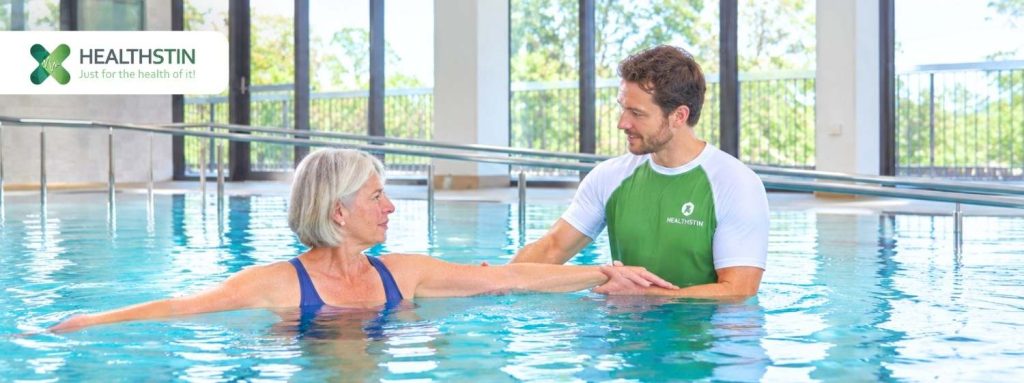
Living with Motor Neurone Disease (MND) can make movement, comfort, and everyday tasks increasingly difficult, but many people still hope to stay mobile, reduce stiffness, and enjoy a greater sense of ease in their body. Hydrotherapy for Motor Neurone Disease (MND) offers a gentle, supportive way to achieve this by using warm water to lighten the body, reduce strain, and make movement feel safer and more achievable.
Across NSW, Hydrotherapy is helping people with MND maintain mobility, ease muscle tightness, and feel more confident during exercise. In this guide, you’ll learn how Hydrotherapy works, why it’s especially beneficial for MND, what services are available locally, and how to access sessions through the NDIS, HCP, private health, or self-funded options, along with how Healthstin’s neurological physiotherapists can support your journey.
What Is Hydrotherapy? (And Why It Matters for MND)
Hydrotherapy, also known as aquatic therapy, involves guided exercises performed in warm water under the supervision of a qualified physiotherapist. The warmth and buoyancy of the water help support the body, reduce pressure on joints and muscles, and make movement easier, especially for people experiencing weakness, stiffness, or fatigue.
For people living with Motor Neurone Disease, Hydrotherapy offers a safe and low-impact way to stay active without overloading the muscles. Warm water helps relax tight or spastic muscles, improve circulation, and support mobility exercises that may feel too difficult on land. According to MND Australia, regular movement and gentle, energy-conserving exercise can help manage stiffness and maintain function for longer, and Hydrotherapy is an ideal environment for this. With the right guidance, Hydrotherapy becomes a controlled, supportive space where individuals with MND can move more freely, conserve energy, and experience greater comfort during exercise.
How Hydrotherapy Helps People Living With Motor Neurone Disease
Hydrotherapy offers several meaningful benefits for people with MND, supporting mobility, comfort, and confidence in a way that land-based exercise often can’t. Gentle, low-impact movement can help manage symptoms and maintain function for as long as possible.
1. Improves Mobility and Movement Confidence
The buoyancy of water reduces the load on weakened muscles and joints, allowing individuals with MND to move more freely. This support helps maintain mobility and provides a safe space to practise movements that may feel difficult or risky on land.
2. Reduces Muscle Stiffness and Spasticity
Warm water helps relax tight or spastic muscles—a common challenge for many people with MND. Reduced stiffness can make daily tasks more manageable and improve overall comfort. The relaxing effects of warm-water exercise are also recognised for supporting musculoskeletal and neurological conditions.
3. Helps Maintain Strength and Balance
Whilst Hydrotherapy cannot stop MND progression, gentle resistance from the water allows for safe muscle activation without overexertion. Physiotherapists trained in neurological care can target key muscle groups to help maintain strength, balance, and safe movement patterns for longer.
4. Supports Breathing and Fatigue Management
Hydrotherapy enables slower, controlled movements that reduce physical strain. This energy-conserving approach is consistent with exercise recommendations from MND Australia, helping individuals manage fatigue whilst still benefiting from therapeutic activity.
5. Enhances Quality of Life and Emotional Wellbeing
Hydrotherapy sessions often create a calming, uplifting environment where people feel supported, secure, and more in control of their movement. This sense of ease can improve mood, reduce anxiety, and support overall wellbeing—factors that are increasingly important as MND progresses.
Is Hydrotherapy Safe for People With MND?
Hydrotherapy is generally considered safe and beneficial for people living with Motor Neurone Disease when delivered by trained physiotherapists who understand neurological conditions. Gentle, supervised exercise in warm water can help manage stiffness, support mobility, and improve comfort without placing excessive strain on the body.
Because MND affects everyone differently, safety begins with a personalised assessment to ensure the exercises match the person’s abilities, energy levels, and breathing needs. Hydrotherapy should always be guided by a qualified physiotherapist, especially as the condition progresses.
Safety Considerations for Hydrotherapy in MND
A hydrotherapy physiotherapist will monitor:
- Current mobility levels
- Strength and muscle fatigue
- Respiratory needs
- Presence of spasticity or stiffness
- Temperature tolerance
- Balance and fall risk
- Ability to safely enter and exit the pool
These checks help ensure the session is both safe and effective.
Common Contraindications (When Hydrotherapy May Not Be Suitable)
Hydrotherapy may be paused or avoided if the person has:
- Open wounds or active skin infections
- Uncontrolled pain or severe respiratory symptoms
- Significant temperature sensitivity
- Recent surgery without clearance
- Heart or kidney conditions that limit safe water immersion
If unsure, a GP, neurologist, or physiotherapist can help assess suitability. More guidance on safe exercise for neurological conditions can be found here.
Hydrotherapy Safety at a Glance
| Safe When… | Avoid or Delay When… |
| Sessions are supervised by a neuro-trained physiotherapist | There are open wounds or infections |
| Water temperature is warm and comfortable | There is severe breathing or swallowing difficulty |
| Entry/exit support is provided | There is uncontrolled pain or rapid symptom change |
| Exercises are tailored to reduce fatigue | A doctor has advised against water therapy |
When delivered correctly, Hydrotherapy becomes a controlled, supportive, and low-risk environment where people with MND can experience relief, improved comfort, and gentle movement without unnecessary strain, helping them maintain a better quality of life for longer.
Top Hydrotherapy Services for MND in NSW
People living with Motor Neurone Disease often benefit most from Hydrotherapy programmes that are supervised, gentle, and personalised. In NSW, several types of services are available to support mobility, comfort, and quality of life. Warm-water exercise is most effective for neurological conditions when guided by qualified clinicians who understand fatigue, respiratory needs, and movement limitations.
One-on-One Neurological Hydrotherapy Physiotherapy
This is the most suitable option for people with MND, as it offers close supervision and customised exercises based on strength, mobility, and energy levels. A neuro-trained physiotherapist guides every movement, ensuring the session is safe whilst helping reduce stiffness, maintain mobility, and support breathing control.
Small Group Hydrotherapy Programmes (When Suitable)
Group sessions can be helpful for individuals in the earlier stages of MND who feel confident moving with minimal assistance. These programmes provide structure, social connection, and gentle exercise in warm water. A physiotherapist will usually assess whether a group setting is appropriate based on mobility, fatigue, and safety needs.
Community Pool–Based Hydrotherapy Sessions
Many clinics in NSW, like Healthstin, run Hydrotherapy programmes in local community pools, offering convenient access for clients and carers. These sessions still follow clinical guidelines and supervision requirements, giving people with MND the opportunity to exercise in accessible and familiar locations.
Multidisciplinary MND Rehabilitation Programmes
Hydrotherapy is often included as part of a broader neurological rehabilitation programme that may combine aquatic therapy with physiotherapy, exercise physiology, and mobility training. This integrated approach aligns with recommendations from MND Australia, supporting wellbeing across different stages of the condition.
Home-Visit Planning and Hydrotherapy Referrals
For individuals who have difficulty travelling or require additional support, physiotherapists may conduct home visits to assess readiness for Hydrotherapy, plan safe transport and pool entry, or provide referrals to suitable facilities across NSW. This ensures each person receives safe and appropriate access based on their current needs.
How to Access Hydrotherapy for MND in NSW
Accessing Hydrotherapy in NSW is straightforward when you have the right clinical guidance and an understanding of your funding options. The first step is to undergo an assessment with a qualified physiotherapist, preferably one experienced in neurological conditions, who can determine whether Hydrotherapy is suitable, outline safety considerations, and design a personalised programme.
NDIS Funding
For NDIS participants, Hydrotherapy can be funded under Capacity Building supports when it is delivered by a registered physiotherapist or exercise physiologist. This may include one-on-one sessions, multidisciplinary programmes, or pool-based therapy that supports functional goals such as mobility, strength, or daily activity performance.
Home Care Package (HCP) Funding
Older adults with MND who hold a Home Care Package may be able to use their funding for Hydrotherapy when it directly supports mobility, comfort, or maintaining independence. This must be arranged through the care provider, and sessions should be delivered by qualified clinicians with relevant expertise. Guidance on HCP support is available through My Aged Care.
Private Health Insurance
Many private health insurance policies include physiotherapy extras that can help cover part of the cost of Hydrotherapy sessions. Coverage varies between providers, so it’s best to confirm the level of benefits directly with your insurer.
Self-Funded Options
Self-funded Hydrotherapy is available for individuals who prefer flexible access or are not eligible for funding programmes. This can be arranged directly with the clinic or physiotherapist, with options for both individual and group sessions depending on suitability.
Referrals and Clinical Pathways
A referral is not always required to begin Hydrotherapy in NSW, but people with MND often benefit from coordinated care involving their GP, neurologist, or allied health team. These clinicians can provide additional insights into respiratory health, fatigue management, and safe movement planning.
If you are a healthcare provider or carer looking to arrange tailored Hydrotherapy support for someone with MND, submit a Referral Form to get the care process started efficiently.
What to Expect in a Hydrotherapy Session for MND
Hydrotherapy for Motor Neurone Disease is designed to be gentle, supportive, and tailored to each person’s physical capabilities. Sessions often take place in a heated pool, though the pool temperature (typically 33–35°C) and duration will vary depending on the specific requirements of the programme, following evidence-based principles recommended by organisations such as the Australian Physiotherapy Association.
Warm-Up and Safety Check
Before entering the water, your physiotherapist will review your breathing, fatigue levels, mobility, and any recent changes in symptoms. They may use safety frameworks aligned with the APA’s Hydrotherapy guidelines to ensure the session is appropriate for your condition.
Assisted Water Entry
Clients with MND are assisted into the pool using ramps, handrails, or hoists if required. This ensures safe and supported access, especially for individuals with weakness, balance concerns, or advanced mobility changes.
Gentle, Individualised Exercises
Once in the water, the physiotherapist will guide slow, controlled movements such as:
- Supported walking
- Upper and lower limb mobility exercises
- Reaching and balance tasks
- Gentle stretching to reduce muscle stiffness
The buoyancy of water helps reduce strain on weak muscles whilst the warmth promotes relaxation.
Breathing and Fatigue Management
Hydrotherapy programmes are modified to prevent over-exertion. Strategies follow principles from the MND Australia, such as pacing, energy conservation, and monitoring respiratory effort.
Cool-Down and Exit Support
The session ends with guided slow movements and stretches to help the body transition out of warm water. Your physiotherapist will assist you in safely exiting the pool, providing additional equipment as needed.
Post-Session Review
After drying off and resting, your clinician will check in about comfort levels, breathing, and fatigue, and may adjust your programme for the next visit.
Why Choose Healthstin for Hydrotherapy for Motor Neurone Disease in NSW
Choosing the right provider is essential when supporting someone living with Motor Neurone Disease. Healthstin offers person-centred, evidence-informed Hydrotherapy care tailored to meet the needs of people with progressive neurological conditions. Our approach aligns with best-practice guidelines endorsed by organisations such as MND Australia and the Australian Physiotherapy Association.
Neurological Physiotherapists Experienced in MND
Our team includes physiotherapists and exercise physiologists who have extensive experience in neurological rehabilitation. They understand the complexities of MND, such as fatigue, respiratory changes, and mobility decline, and design individualised Hydrotherapy programmes to support comfort, movement, and safety.
Warm, Accessible Hydrotherapy Facilities Across NSW
Healthstin provides clinic-based and community Hydrotherapy services across multiple NSW locations, offering accessible warm-water pools suitable for people with varying mobility needs. From hoist access to quiet, low-sensory pool environments, we ensure each client feels safe and supported.
Our NSW clinic locations include:
- Sans Souci, NSW – Supporting residents across southern Sydney
- Hurstville, NSW – Conveniently located for the St George community
Integrated Multidisciplinary Care
We work closely with carers, support coordinators, OTs, GPs, and other allied health providers to help clients manage symptoms more effectively. This collaborative approach reflects recommendations from NSW Health for coordinated care in progressive neurological conditions.
Funding Support Through NDIS, HCP, and Private Health
Healthstin assists clients in navigating funding pathways, whether through:
- the NDIS,
- Private health insurance rebates.
Our team can help you determine eligibility, understand your plan, and integrate Hydrotherapy into your support or care programme.
Personalised Programmes That Prioritise Comfort and Quality of Life
Every Hydrotherapy plan is created with a focus on maintaining mobility, reducing stiffness, protecting energy levels, and enhancing day-to-day comfort. We adjust each session depending on how you feel, ensuring safety and dignity at every stage of the condition.
Easy Referrals and Fast Bookings
Healthstin accepts referrals from GPs, specialists, support coordinators, and allied health providers.
If you’re ready to book or refer a client, you can submit a request through our Referral Form. Our team will respond promptly with availability, options, and next steps—no waitlists, all admin handled.
FAQs About Hydrotherapy for Motor Neurone Disease
- Is Hydrotherapy safe for people with Motor Neurone Disease?
Yes. Hydrotherapy is generally considered safe for people with MND when delivered by trained physiotherapists or exercise physiologists. Warm water reduces pressure on the joints and muscles, making movement easier and more comfortable. Sessions are always tailored to each person’s fatigue levels, mobility, and stage of the condition.
- Can hydrotherapy slow the progression of MND?
Hydrotherapy cannot slow or reverse MND progression. However, research shows it can help maintain mobility, reduce stiffness, support circulation, and improve comfort. These benefits contribute to better day-to-day functioning and an improved quality of life.
- What should I wear or bring to my Hydrotherapy session?
You’ll need comfortable swimwear, a towel, non-slip footwear, and any mobility aids you use. If required, carers are welcome to assist during pool entry or exit. Your clinician will let you know if additional support equipment is needed.
- Is Hydrotherapy suitable for people with advanced MND?
Yes, many people with advanced MND still benefit from warm-water therapy, especially for comfort, relaxation, pain relief, and easing muscle tension. Sessions focus on gentle, supported movement and may include passive techniques to avoid fatigue.
- Do I need a GP referral for Hydrotherapy?
A GP referral is not required for private or NDIS-funded Hydrotherapy sessions. However, referrals from GPs, specialists, or allied health providers are welcome and can help with coordinated care.
Book Your Hydrotherapy for Motor Neurone Disease Session
Feel Better, Move Better, and Live with Greater Comfort. Book Your Hydrotherapy for Motor Neurone Disease Session with Healthstin Today.
Regain movement, confidence, and day-to-day comfort with our evidence-based Hydrotherapy and neurological physiotherapy programmes, designed specifically for people living with Motor Neurone Disease (MND). Start within 7 days at our accessible, warm-water pool locations across NSW. Every session includes personalised programming, hands-on support, and over $150 in value-added inclusions—no extra fees, no waitlist frustrations, no admin headaches.
Whether you’re searching for hydrotherapy near me or looking for a trusted neurological rehab provider, Healthstin is here to support you every step of the way.
Call 1300 090 931 or book online to start your personalised Hydrotherapy programme.
*Disclaimer: Results vary based on individual goals, health needs, and condition severity. Many clients report improvements, depending on their personalised programme and consistency.
ALSO READ: Swimming Pool Workouts: 10 Exercises for Older Adults